

Choosing the right pathway into business ownership can feel daunting, especially when every investment counts. For UK entrepreneurs exploring franchise opportunities, understanding the franchise model becomes a key step in reducing risk and maximising success. Each model offers a unique balance of brand support, operational guidelines, and entrepreneurial freedom, making it crucial to identify which approach matches your ambitions and resources.
What Is a Franchise Model?
A franchise model is a strategic business arrangement where an established company (the franchisor) grants legal permission to an independent entrepreneur (the franchisee) to operate a business using its proven brand, systems, and operational framework. Franchise business models represent a sophisticated pathway for business expansion that benefits both parties.
Under this model, the franchisee receives several critical advantages:
- Access to an established brand identity
- Comprehensive operational training
- Ongoing business support systems
- Proven business methodology
- Marketing and promotional resources
The fundamental structure involves the franchisee paying an initial licensing fee and subsequent royalty payments to the franchisor in exchange for these comprehensive business resources. This arrangement allows entrepreneurs to start a business with a significantly reduced risk profile compared to launching an entirely new independent venture.
The franchise model transforms individual entrepreneurial ambition into a structured, supported business opportunity with established success pathways.
Franchise models differ from other business expansion strategies like joint ventures, as the franchise association highlights, by maintaining clear operational boundaries while providing extensive support and brand consistency guidelines.
Pro tip: Before committing to a franchise, thoroughly research the specific model, understand all financial obligations, and speak with existing franchisees about their real-world experiences.
Primary Franchise Model Types in the UK
The United Kingdom features several distinctive franchise model types that cater to diverse business strategies and entrepreneurial goals. These models provide entrepreneurs with flexible pathways to business ownership while leveraging established brand infrastructures.
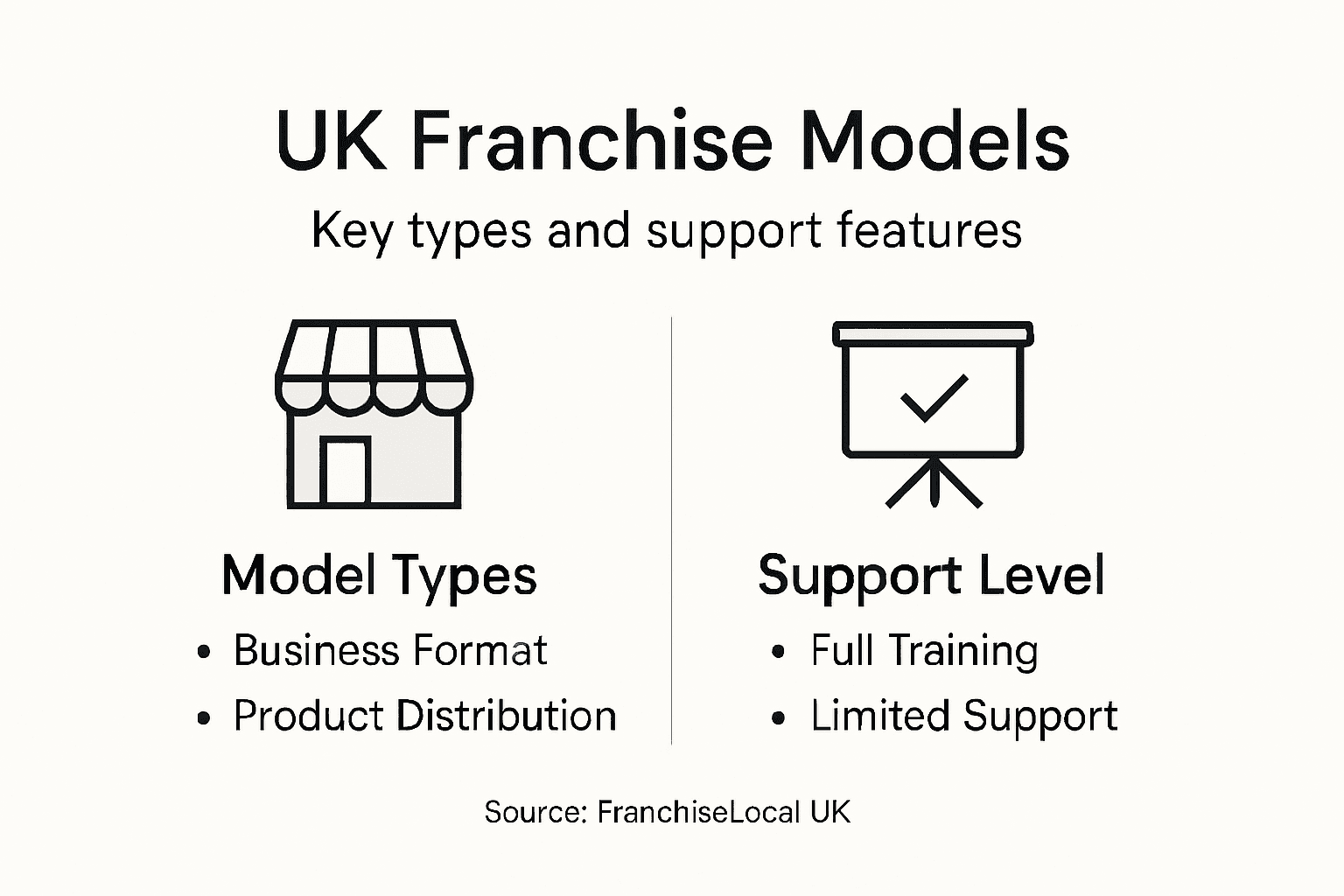
The primary franchise model types in the UK include:
- Product Distribution Franchises: Where franchisees sell specific products under the franchisor’s brand
- Business Format Franchises: Comprehensive models providing complete operational systems and brand guidelines
- Management Franchises: Opportunities for entrepreneurs to manage multiple franchise units
- Single-Unit Franchises: Individual franchisees operating one specific location
- Multi-Unit Franchises: Entrepreneurs managing multiple franchise locations within a defined territory
UK franchising contract models demonstrate remarkable complexity, with each model offering unique advantages and operational frameworks. Business format franchises represent the most common approach, providing franchisees with comprehensive training, marketing support, and established operational protocols.
Successful franchise models in the UK balance structured support with entrepreneurial flexibility, creating win-win scenarios for franchisors and franchisees.
Business format franchises typically require significant initial investment but offer the most comprehensive support structure. These models include detailed operational manuals, ongoing training programmes, marketing assistance, and continuous brand development support.

Here is a comparative overview of the main franchise model types in the UK:
| Franchise Model Type | Typical Investment Level | Franchisee Role | Support Provided |
|---|---|---|---|
| Product Distribution | Moderate to high | Product sales and inventory | Limited operational |
| Business Format | Often high | Full business management | Extensive training |
| Management Franchise | High | Overseeing multiple units | Ongoing support |
| Single-Unit Franchise | Lower to moderate | Operates one location | Core business tools |
| Multi-Unit Franchise | High | Manages several locations | Regional resources |
Pro tip: Conduct thorough due diligence by speaking with existing franchisees and carefully examining the specific support structures offered within each franchise model.
Key Features and How Each Model Works
Understanding the intricate franchise model mechanics requires deep insight into the contractual relationships and operational frameworks that define each model. Franchise agreement structures reveal complex arrangements of control, risk, and financial responsibilities between franchisors and franchisees.
Key operational features of franchise models include:
- Comprehensive operational manuals
- Standardised training programmes
- Defined territorial boundaries
- Performance measurement criteria
- Financial reporting requirements
- Brand consistency guidelines
The financial dimensions of franchise models typically involve several critical components:
- Initial franchise fee
- Ongoing royalty payments
- Marketing fund contributions
- Performance-based incentives
- Territory-specific revenue sharing
Successful franchise models balance prescriptive operational guidelines with entrepreneurial flexibility, creating sustainable business partnerships.
Franchise models demonstrate varying levels of operational autonomy, with franchise system controls ranging from highly structured systems to more flexible frameworks. Some models provide extensive support infrastructure, while others focus on brand licensing and minimal operational intervention.
Pro tip: Meticulously review the franchise agreement’s fine print, paying particular attention to performance expectations, territorial limitations, and financial obligations before committing.
Legal Requirements and Franchise Agreements
Franchise agreements in the United Kingdom represent complex legal instruments that establish comprehensive frameworks for business relationships between franchisors and franchisees. Franchise legal requirements encompass multiple critical dimensions that protect both parties’ interests and ensure transparent operational standards.
Key legal components of franchise agreements include:
- Precise intellectual property protections
- Comprehensive disclosure of financial obligations
- Explicit territorial boundaries
- Detailed performance expectations
- Specific termination clauses
- Training and support commitments
The legal documentation typically addresses several fundamental aspects:
- Initial franchise fee structures
- Ongoing royalty payment mechanisms
- Trademark and brand usage rights
- Operational compliance requirements
- Dispute resolution procedures
Robust franchise agreements balance legal protection with entrepreneurial opportunity, creating frameworks for sustainable business partnerships.
Statutory franchise regulations in the UK mandate rigorous documentation and compliance processes. These regulations ensure that franchise agreements meet stringent legal standards, protecting both franchisor and franchisee interests through comprehensive contractual frameworks.
Pro tip: Always engage an independent legal specialist with specific franchise expertise to review your agreement before signing, ensuring you fully understand every contractual nuance.
Obligations, Risks and Financial Costs
Franchise models involve intricate financial commitments and complex risk landscapes that potential entrepreneurs must carefully navigate. Franchise operational risks encompass multiple dimensions beyond simple monetary investment.
Financial obligations typically include:
- Initial franchise acquisition fee
- Monthly or quarterly royalty payments
- Mandatory marketing fund contributions
- Local operational setup costs
- Equipment and inventory investments
- Ongoing training programme expenses
Potential financial risks encompass several critical areas:
- Initial capital requirement exceeding expectations
- Potential revenue shortfalls
- Unexpected operational expenses
- Contractual penalty clauses
- Brand reputation management costs
Successful franchise investment requires comprehensive financial planning and realistic risk assessment, balancing potential rewards against potential challenges.
Financial governance standards demand meticulous documentation and transparent reporting mechanisms. Franchisees must demonstrate robust financial management skills, maintaining detailed records and ensuring compliance with contractual performance metrics.
This summary highlights the distinct focuses between franchisor and franchisee obligations:
| Aspect | Franchisor Focus | Franchisee Focus |
|---|---|---|
| Brand | Ensures consistency | Upholds brand standards |
| Operational Control | Sets procedures | Implements local operations |
| Training | Delivers comprehensive support | Applies training in daily activities |
| Financial Reporting | Monitors compliance | Fulfils reporting requirements |
| Marketing | Leads campaigns | Executes local marketing |
Pro tip: Create a comprehensive financial model projecting worst-case, expected, and best-case scenarios to understand your complete potential financial exposure before committing to a franchise.
Choosing the Right Model for Your Goals
Selecting the ideal franchise model requires a strategic approach that aligns with your personal entrepreneurial vision and practical business capabilities. Franchise model selection demands careful consideration of multiple strategic and operational factors.
Key evaluation criteria include:
- Personal financial capacity
- Available time commitment
- Desired level of operational autonomy
- Long-term business growth objectives
- Industry sector specifics
- Personal management skills
Decision-making factors to prioritise:
- Initial investment requirements
- Potential return on investment
- Training and support infrastructure
- Brand reputation and market positioning
- Scalability potential
Successful franchise selection transcends financial metrics, requiring holistic alignment between personal aspirations and business model characteristics.
Franchise readiness assessment involves understanding your unique entrepreneurial profile, risk tolerance, and strategic objectives. Entrepreneurs must critically evaluate their skills, financial resources, and long-term ambitions against each potential franchise model’s specific requirements and constraints.
Pro tip: Create a comprehensive personal scorecard evaluating how each franchise model matches your individual strengths, weaknesses, and professional goals before making a final decision.
Discover Your Ideal Franchise Model with FranchiseLocal
Choosing the right franchise model in the United Kingdom can feel overwhelming given the variety of options and complex factors such as investment level, operational roles, and ongoing financial commitments. This article highlights the critical challenges you face when balancing brand consistency, legal agreements, and financial risks in pursuit of a successful business venture. Whether you are considering business format franchises, product distribution models or multi-unit opportunities understanding these nuances is essential to avoid costly mistakes.
At FranchiseLocal, we simplify your journey by offering a comprehensive directory tailored to your unique goals and budget. From home-based setups to high street ventures, you can filter franchise opportunities by investment, lifestyle preferences, and industry sectors. Take control of your entrepreneurial future by exploring trusted franchise listings and gain access to detailed information to make informed decisions right now. Start your search today on FranchiseLocal to find the franchise model that matches your ambition and secure your path to business ownership.
Frequently Asked Questions
What is a franchise model?
A franchise model is a business arrangement where a franchisor grants legal permission to a franchisee to operate a business using its brand and operational systems.
What are the main types of franchise models?
The main types of franchise models include product distribution franchises, business format franchises, management franchises, single-unit franchises, and multi-unit franchises.
What are the benefits of choosing a business format franchise?
Business format franchises typically offer extensive support, including operational training, marketing resources, and comprehensive operational systems, making them a popular choice for entrepreneurs.
What financial obligations do franchisees typically have?
Franchisees typically have to pay an initial franchise fee, ongoing royalty payments, marketing fund contributions, and costs related to local operational setup and inventory.