

Stepping into the world of franchising can feel daunting when you have limited experience negotiating business deals. For aspiring British franchisees, understanding how to assess opportunities and negotiate terms is vital for protecting your investment and setting up long-term success. This guide walks you through the practical steps to evaluate franchise viability, scrutinise legal documents, and engage confidently with franchisors, helping you unlock the most favourable franchise terms for your future.
Step 1: Assess your franchise opportunity requirements
Launching a successful UK franchise begins with a thorough assessment of potential opportunities. Understanding the critical elements that make a franchise venture viable requires strategic evaluation and meticulous planning.
Starting your franchise journey demands examining several core aspects of the potential business model. You need to evaluate the franchise’s scalability and profitability through a comprehensive lens. This involves analysing the business’s unique selling proposition, examining its track record of success, and determining whether the model can be consistently replicated across different geographical locations. Consider factors such as market demand, competitive landscape, initial investment requirements, potential revenue streams, and operational complexity.

Effective franchise opportunity assessment also requires deep understanding of legal and financial frameworks. Review the franchise’s documentation thoroughly, including the Franchise Disclosure Document and potential franchise agreement. Research the franchisor’s reputation, speak with existing franchisees, and consider consulting legal and financial professionals who specialise in franchise development to gain nuanced insights into the opportunity’s potential risks and rewards.
Expert Recommendation: Conduct detailed due diligence by creating a structured evaluation matrix that objectively scores potential franchise opportunities against your personal business goals and financial capabilities.
To clarify the evaluation process, here is a summary of key factors when assessing franchise opportunities:
| Evaluation Factor | Why It Matters | Example Consideration |
|---|---|---|
| Market Demand | Ensures long-term viability | Is there steady consumer interest? |
| Initial Investment | Affects financial feasibility | Can your budget cover all start-up costs? |
| Replicability | Drives scalable growth | Can the model succeed in other cities? |
| Operational Complexity | Influences management effort | Are training and systems sufficient? |
| Competitive Landscape | Impacts market entry | How crowded is the sector? |
Step 2: Research and analyse franchise agreements
Understanding franchise agreements is a critical step in your UK franchise journey, requiring careful and comprehensive investigation of legal documentation that will define your business relationship with the franchisor. This stage demands meticulous attention to detail and strategic analysis.
Begin by thoroughly examining the key legal components of franchise agreements that govern your potential business venture. These documents typically outline crucial aspects such as territorial rights, financial obligations, operational standards, intellectual property licensing, renewal conditions, and termination clauses. Pay close attention to the franchise scope, duration of the agreement, financial commitments, and any restrictions on your business operations. Scrutinise the franchisor’s requirements for maintaining brand standards, reporting protocols, and performance expectations.
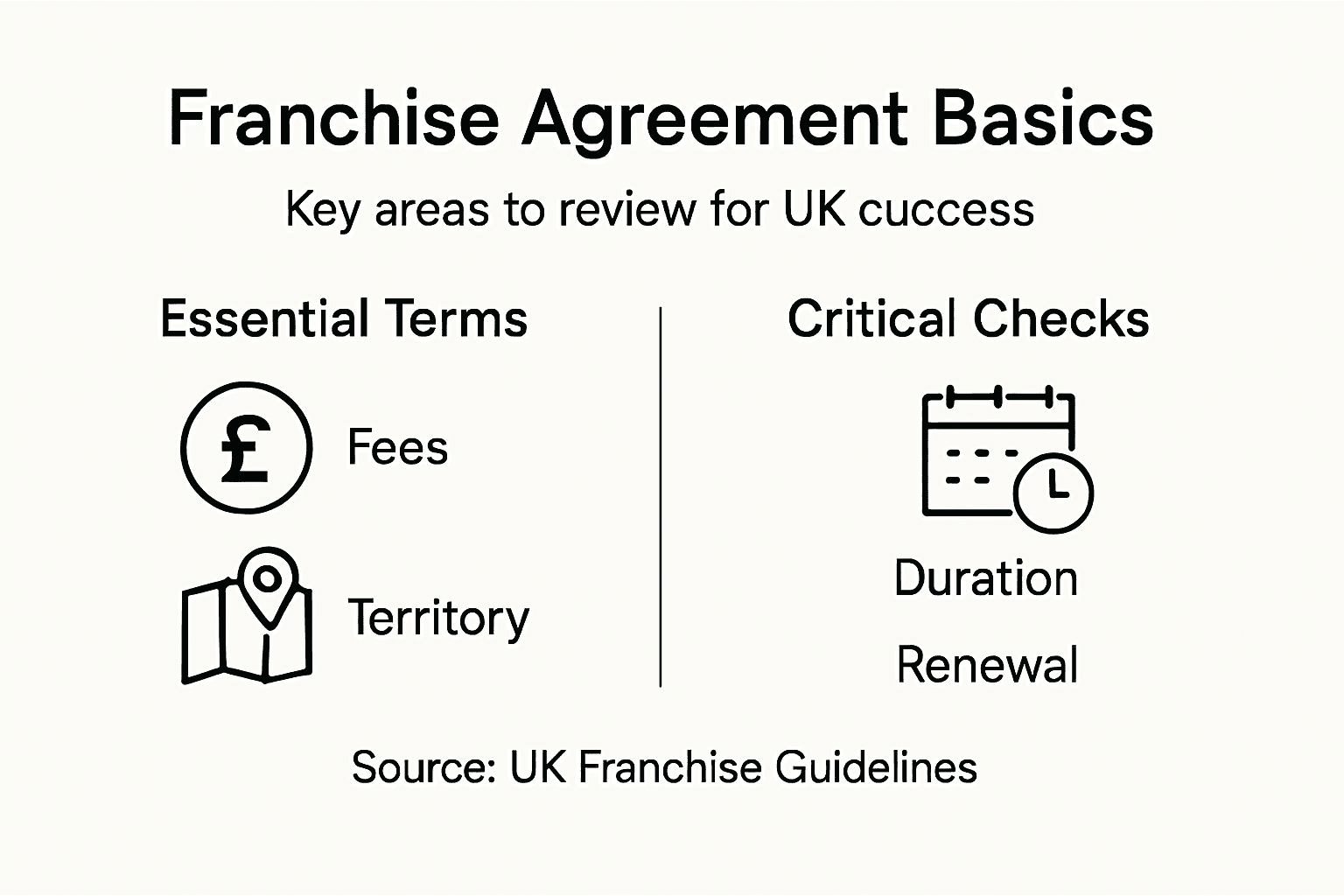
Your research should extend beyond the written agreement to include comprehensive due diligence about the franchisor’s reputation, financial stability, and market performance. Request and review the Franchise Disclosure Document, contact existing franchisees for candid insights, and consider engaging a legal professional specialising in franchise law to provide an independent review of the agreement. Analyse the intellectual property provisions carefully, ensuring you understand the extent of trademark usage, operational system licensing, and your rights and limitations within the franchise framework.
Expert Recommendation: Create a detailed checklist comparing the franchise agreement’s terms against your personal business goals and financial capabilities, ensuring complete alignment before making any commitment.
This table highlights major sections in a UK franchise agreement and their strategic significance:
| Agreement Section | Primary Focus | Why It Is Important |
|---|---|---|
| Territorial Rights | Defines operational boundaries | Prevents overlap with other franchisees |
| Financial Obligations | Specifies payments and fees | Clarifies regular and one-off costs |
| Intellectual Property | Sets brand usage terms | Ensures brand reputation and control |
| Renewal & Termination | Outlines contract lifespan | Provides clarity on ending or extending deal |
| Performance Expectations | Sets targets and reporting duties | Ensures quality and consistent standards |
Step 3: Engage and communicate with franchisors
Successfully navigating franchise negotiations requires developing a strategic and professional approach to communication with potential franchisors. Your ability to engage effectively will significantly impact your franchise journey and potential partnership success.
Initiate your communication by understanding franchise communication protocols through comprehensive and well-prepared interactions. Develop a structured list of targeted questions covering crucial aspects such as initial and ongoing training programmes, operational support, marketing assistance, territory restrictions, financial expectations, and performance metrics. During initial conversations, demonstrate your professionalism by showing genuine interest in understanding the franchise model, its operational nuances, and long term growth potential. Request detailed documentation, including franchise disclosure documents, financial performance representations, and existing franchisee contact information to conduct thorough due diligence.
As you progress through discussions, maintain a balanced approach of professional curiosity and strategic negotiation. Prepare a clear overview of your business background, financial capabilities, and motivations for pursuing the franchise opportunity. Be transparent about your expectations while remaining receptive to the franchisor’s perspective. Seek clarity on all aspects of the potential partnership, including support structures, training programmes, technological resources, and potential expansion opportunities. Document every significant discussion point and request written confirmations to ensure mutual understanding and prevent potential future misunderstandings.
Expert Recommendation: Maintain a professional communication log documenting all interactions, questions, and responses from the franchisor to track the progression of your franchise exploration.
Step 4: Negotiate key terms and conditions effectively
Negotiating franchise terms represents a critical phase where your preparation and strategic approach can significantly influence your future business success. Understanding the nuanced art of negotiation will empower you to secure favourable conditions that align with your entrepreneurial objectives.
Begin by understanding legal negotiation strategies that protect your interests while maintaining a collaborative relationship with the franchisor. Focus on key negotiable elements including initial franchise fees, ongoing royalty structures, territorial rights, performance expectations, training support, and exit provisions. Develop a comprehensive understanding of industry standards and typical contractual frameworks to establish realistic negotiation parameters. Carefully analyse each clause for potential restrictions or obligations that might impact your operational flexibility, paying particular attention to financial commitments, marketing contributions, and exclusivity arrangements.
Approach negotiations with professionalism and strategic preparedness. Come equipped with detailed financial projections, market research, and a clear articulation of your value proposition. Be prepared to discuss specific terms constructively, demonstrating your commitment to mutual success while advocating for terms that provide reasonable protection and growth potential. Listen actively to the franchisor’s perspective, seek to understand their business model and constraints, and aim for solutions that create value for both parties. Request clarifications on ambiguous language, seek written explanations for complex clauses, and do not hesitate to seek legal counsel to review proposed terms before final agreement.
Expert Recommendation: Create a comprehensive negotiation checklist that prioritises your critical requirements and allows for strategic compromise on less essential elements.
Step 5: Verify and finalise your franchise agreement
The final stage of your franchise journey requires meticulous attention to detail and comprehensive verification to ensure you are making a sound business investment. This critical phase transforms your negotiations into a legally binding commitment that will shape your entrepreneurial future.
Begin by conducting a thorough legal compliance review of the entire franchise agreement. Scrutinise each clause with precision, paying particular attention to financial obligations, territorial rights, performance expectations, intellectual property provisions, renewal conditions, and potential termination scenarios. Engage a solicitor specialising in franchise law to provide an independent professional assessment of the document, ensuring that all terms are fair, reasonable, and aligned with your business objectives. Verify that verbal agreements discussed during negotiations are accurately reflected in the written document and seek written clarifications for any ambiguous language or complex contractual provisions.
Before signing, conduct a comprehensive risk assessment that goes beyond the legal document. Evaluate the franchisor’s reputation, financial stability, historical performance, and support infrastructure. Request and contact existing franchisees to gain insights into the practical realities of the business model. Confirm all financial projections, understand the full scope of your obligations, and ensure you have a clear exit strategy. Create a detailed checklist that confirms every critical aspect of the agreement meets your expectations, leaving no room for future misunderstandings or unexpected complications.
Expert Recommendation: Never sign a franchise agreement under time pressure or without a comprehensive independent legal review.
Navigate Your Franchise Negotiations with Confidence and Clarity
Mastering the franchise negotiation process involves grappling with complex agreement terms, strategic communication, and thorough due diligence. This article highlights the crucial steps to assess opportunities, analyse franchise agreements, and negotiate effectively to protect your investment and align with your business goals. If you are feeling overwhelmed by intricate legal documents or uncertain about how to evaluate multiple franchise offers, you are not alone. The challenge lies in finding the right franchise match that fits your budget, lifestyle, and aspirations while equipping yourself with clear, trustworthy information.
At FranchiseLocal, we understand these pain points. Our comprehensive UK franchise directory allows you to explore carefully curated franchise listings filtered by price, industry sector, and operational model to find options that suit your unique criteria. This resource helps you streamline your search and supports informed decision-making during negotiations by presenting transparent franchise profiles and contact details. Don’t let uncertainty stall your entrepreneurial journey. Visit FranchiseLocal today to discover the franchises that meet your needs and take the next confident step towards a successful business partnership.
Frequently Asked Questions
How can I assess a franchise opportunity effectively?
To assess a franchise opportunity effectively, begin by evaluating its market demand, initial investment requirements, and replicability. Create a structured evaluation matrix to score potential opportunities against your business goals, ensuring you identify the best fit for your objectives.
What should I look for in a franchise agreement?
In a franchise agreement, pay close attention to sections detailing financial obligations, territorial rights, and performance expectations. Review these components thoroughly to understand all commitments and ensure they align with your business plans before signing.
How can I prepare for negotiations with franchisors?
Prepare for negotiations with franchisors by developing targeted questions covering key areas like training programmes, operational support, and marketing assistance. Document your questions and responses to ensure you address all critical aspects during conversations.
What are the most important terms to negotiate in a franchise agreement?
Key terms to negotiate in a franchise agreement include initial franchise fees, ongoing royalty structures, and territorial rights. Establish clear priorities for what is essential for your business, allowing flexibility on less critical points to foster collaboration.
How do I verify the details of my franchise agreement?
Verify your franchise agreement by reviewing each clause and confirming that verbal agreements from negotiations are accurately reflected in writing. Engage a legal professional to conduct a thorough assessment and ensure all terms meet your expectations before finalising the document.
What steps should I take if I encounter ambiguous clauses in the agreement?
If you encounter ambiguous clauses in the franchise agreement, seek clarification from the franchisor immediately. Request written explanations for any complex language, and consider consulting a legal expert to ensure you fully understand your rights and obligations.