

Stepping into franchising often starts with big decisions about risk and reward. For British entrepreneurs, a franchise resale can offer a shortcut to an established business, complete with infrastructure, staff, and customers. Understanding the franchise resale process in the United Kingdom sheds light on financial, legal, and operational factors that set this pathway apart from launching a new franchise. This article explains how franchise resales work and what buyers must consider for sound investments and smooth transitions.
Defining Franchise Resale In The UK Context
A franchise resale represents a strategic pathway for entrepreneurs seeking an established business opportunity within the franchising ecosystem. Defining the franchise resale mechanism reveals a nuanced transaction where existing franchise units change ownership, offering prospective business owners an alternative entry route into entrepreneurship.
In the United Kingdom, a franchise resale encompasses more than a simple business transfer. It involves transferring critical business components including operational infrastructure, existing customer relationships, trained personnel, and the remaining duration of the original franchise agreement. This approach differs significantly from launching a brand new franchise, as buyers inherit a functioning business with established operational workflows and potential immediate revenue streams.
The resale process typically involves comprehensive due diligence, where potential buyers thoroughly examine the franchise’s financial performance, existing client base, local market positioning, and potential for future growth. Key considerations include understanding the current franchisee’s reasons for selling, evaluating historical financial statements, assessing equipment and asset conditions, and reviewing the remaining term of the franchise agreement.

Pro tip: When exploring franchise resales, always engage a specialist franchise solicitor to review the transfer documentation and ensure all legal aspects are comprehensively addressed.
Types Of Franchise Resale Opportunities
Franchise resales in the United Kingdom present entrepreneurs with two primary transaction structures: asset sales and share sales. Navigating these sale types requires a nuanced understanding of their distinct legal and financial implications.
In an asset sale, potential franchise buyers have the flexibility to select specific business assets and liabilities they wish to acquire. This approach allows for a more customised transaction, enabling buyers to cherry-pick the most valuable components of the existing franchise. Typical assets might include equipment, customer databases, existing contracts, intellectual property, and goodwill associated with the business location.
Conversely, share sales involve transferring the entire company’s ownership, including all associated debts and liabilities. This approach often represents a more straightforward transaction, as the entire corporate structure remains intact. Share sales can be particularly attractive for buyers seeking a comprehensive business transfer without the complexities of individually negotiating each asset and liability.
Here is a comparison of asset sales and share sales in UK franchise resales:
| Aspect | Asset Sale | Share Sale |
|---|---|---|
| Transaction scope | Select assets and liabilities | All assets, liabilities, and company |
| Legal complexity | Itemised negotiations required | Simpler overall transfer |
| Risk exposure | Lower upfront risk, selective assets | Inherit all existing company risks |
| Transfer speed | Can require more due diligence | Typically quicker if documentation clear |
Pro tip: Engage a specialist franchise solicitor and accountant to thoroughly evaluate the financial and legal implications of asset versus share sales before finalising any franchise resale transaction.
The Legal Process For Transfer Of Ownership
The legal journey of transferring franchise ownership involves multiple critical steps and documentation, requiring meticulous legal preparation. At the core of this process are two pivotal legal documents: the franchise agreement and the sale and purchase agreement, each serving distinct yet interconnected purposes.
The franchise agreement represents the foundational legal relationship between the franchisee and franchisor. Typically non-negotiable, this document outlines the operational parameters, rights, and responsibilities of the franchise. Most franchisors have standardised agreement templates that new owners must accept, ensuring consistency across their franchise network. The agreement will detail crucial aspects such as territorial rights, operational standards, training requirements, and ongoing financial obligations.
Parallel to the franchise agreement, the sale and purchase agreement becomes the transactional blueprint for the ownership transfer. This document meticulously details the specific terms of the asset or share sale, including financial considerations, asset valuations, and transfer of specific business components. Comprehensive ownership transfer requires negotiation between the buyer, seller, and franchisor to ensure all legal and financial risks are appropriately mitigated and transparently addressed.
Pro tip: Always engage a solicitor specialising in franchise law to review all transfer documentation, ensuring no hidden legal complexities compromise your business acquisition.
Costs, Valuation And Financial Implications
Valuing a franchise resale requires a comprehensive analysis of multiple financial dimensions. Understanding franchise valuation factors involves examining critical elements that collectively determine the business’s market worth and potential for future growth.
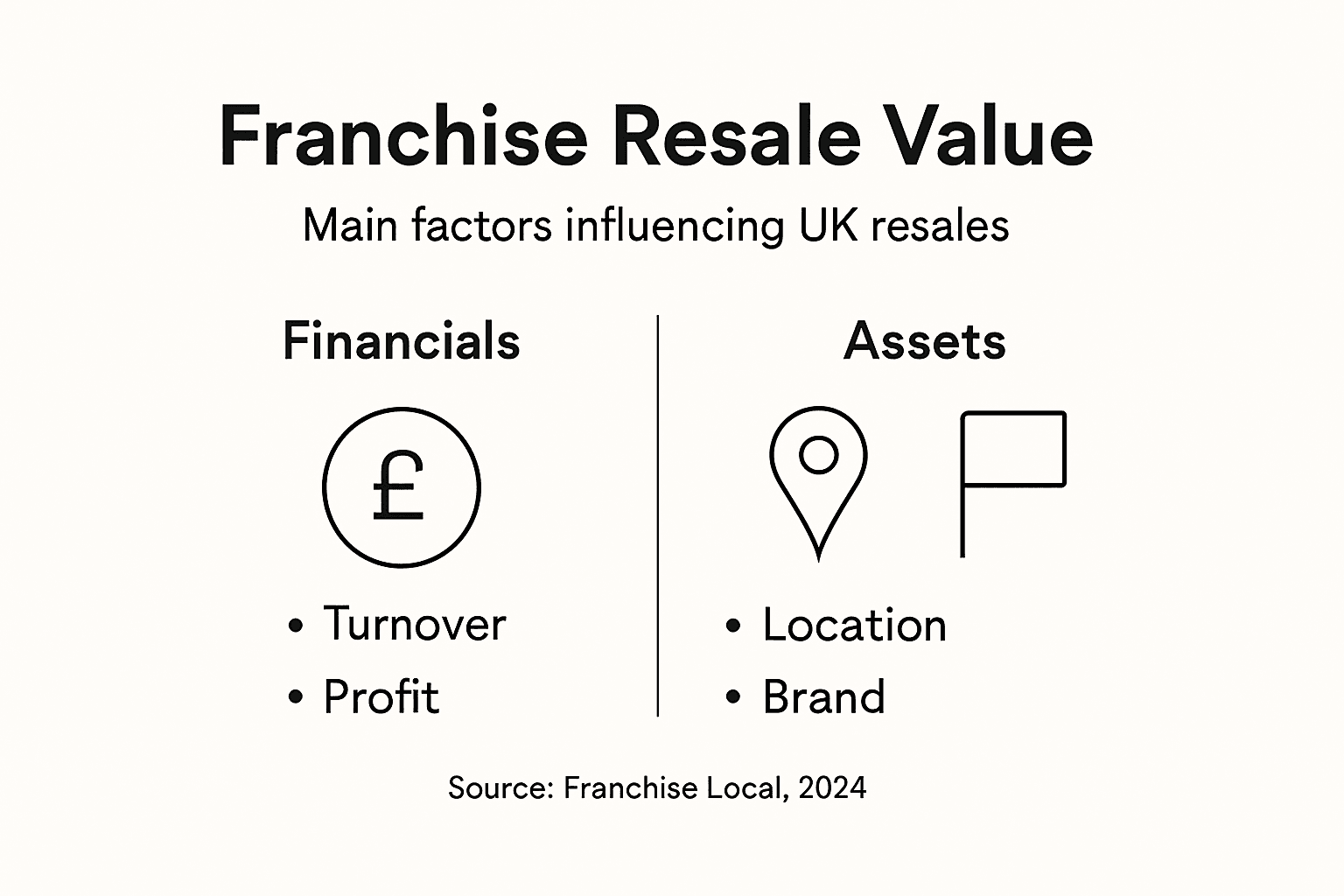
The primary financial components influencing franchise valuation include annual turnover, net profitability, geographic location, brand reputation, and the remaining duration of the existing franchise agreement. Potential buyers must conduct thorough financial due diligence, analysing historical financial statements, profit margins, revenue trends, and potential for future earnings. Additional considerations include assessing the current equipment value, existing customer base, local market positioning, and potential for expansion.
Beyond the purchase price, entrepreneurs must budget for numerous ancillary expenses associated with franchise resales. These typically encompass franchisor transfer fees, legal documentation costs, professional valuation expenses, initial training programmes, and potential licensing charges. Prospective buyers should also factor in potential tax implications, working capital requirements, and potential investment needed to modernise or optimise the existing business infrastructure.
Below is a summary of costs and financial factors in a franchise resale:
| Factor | Description | Potential Impact |
|---|---|---|
| Purchase price | Agreed value for business | Initial outlay, affects ROI |
| Transfer and legal fees | Franchisor and solicitor charges | Increases total acquisition cost |
| Training/licensing | Fees for onboarding and compliance | Ongoing operational readiness |
| Tax implications | Stamp duty, CGT considerations | May affect net investment returns |
Pro tip: Engage an independent franchise accountant to perform a comprehensive financial due diligence audit, ensuring you have a transparent and accurate understanding of the franchise’s true financial position.
Common Risks And Mistakes To Avoid
Franchise resales present a complex landscape of potential pitfalls that can derail even the most promising business acquisitions. Navigating franchise purchase risks requires a comprehensive understanding of the potential challenges that can emerge during the transfer process.
One of the most critical mistakes potential buyers make is conducting insufficient due diligence. This oversight can lead to significant financial and operational complications. Entrepreneurs must thoroughly investigate the franchise’s historical financial performance, existing customer relationships, equipment condition, and potential hidden liabilities. Key areas of investigation include examining profit margins, understanding reasons for the sale, assessing current market positioning, and identifying any pending legal or operational challenges that might not be immediately apparent.
Additionally, buyers frequently underestimate the importance of understanding franchisor conditions and contractual obligations. Many entrepreneurs neglect to carefully review the franchise agreement, overlooking critical clauses related to territorial rights, operational standards, ongoing training requirements, and potential restrictions on business modifications. Some sellers may also strategically omit material information about the business’s challenges, making it crucial for buyers to independently verify all presented information and seek professional legal and financial advice throughout the acquisition process.
Pro tip: Engage independent legal and financial professionals specialising in franchise transactions to conduct a comprehensive forensic review of all documentation and business performance metrics before finalising any franchise resale.
Discover Smarter Franchise Resale Opportunities with Franchise Local
Navigating the complex world of franchise resale requires clarity and confidence. The article highlights critical challenges such as evaluating asset versus share sales, understanding lengthy legal processes, and managing valuation and financial risks. If you want to avoid costly mistakes and make an informed decision, gaining access to a broad, trusted marketplace is vital. Franchise resale transactions call for precision when choosing the right opportunity that suits your budget, lifestyle, and growth goals.
At Franchise Local, we specialise in connecting you with a comprehensive directory of UK franchise opportunities, including resale listings. Whether you are seeking established businesses with proven revenue or franchise brands that align with your ambitions, our platform makes the search straightforward with powerful filters by price, business model, and sector. Don’t wait until uncertainty holds you back. Explore how you can enter the franchise market smarter with detailed listings, expert insights, and tailored options available now at Franchise Local. Your journey towards a well-informed franchise resale purchase starts here.
Frequently Asked Questions
What is a franchise resale?
A franchise resale refers to the transfer of ownership of an existing franchised business, allowing new entrepreneurs to acquire a functioning operation with established workflows and customer relationships, rather than starting from scratch.
What are the different types of franchise resale transactions?
Franchise resales typically involve two types of transactions: asset sales, where buyers select specific business assets and liabilities, and share sales, which transfer the entire company’s ownership including all assets and liabilities.
What should I consider when evaluating a franchise resale?
Key considerations include the financial performance of the franchise, reasons for the current owner’s sale, condition of equipment and assets, remaining duration of the franchise agreement, and market potential for growth.
What legal documents are needed for a franchise resale?
The primary legal documents involved in a franchise resale are the franchise agreement, which outlines the obligations between the franchisee and franchisor, and the sale and purchase agreement, which details the specific terms of the transaction.