

Securing affordable funding is often the biggest challenge for British first-time franchise buyers. With more than 40 percent of UK food franchises relying on specialist finance options, understanding your choices can make or break your investment plans. If you are considering a food and beverage franchise, knowing how franchise funding works will help you plan confidently and avoid costly mistakes that many new entrepreneurs encounter.
Funding a Franchise Purchase Defined
A franchise purchase represents a strategic business investment where an entrepreneur acquires the rights to operate a pre-established business model within a specific geographical area. In the UK food sector, this typically involves purchasing the operational permissions, branding, and support systems from an established food service or restaurant franchise. Understanding funding mechanisms is crucial for prospective franchise owners looking to enter this dynamic market.
Funding a franchise purchase involves multiple financial strategies tailored to the UK market. Entrepreneurs can explore diverse financing routes including traditional bank loans, specialist franchise finance providers, and government-backed lending programmes. The food sector funding landscape offers multiple pathways for aspiring franchisees, with organisations like the Food & Drink Federation connecting businesses to innovative funding resources.
The financial approach to franchise acquisition requires careful assessment of personal capital, borrowing capacity, and potential return on investment. Prospective franchisees must typically prepare a comprehensive business plan demonstrating their financial understanding and commitment. This plan should outline projected revenues, expected operational costs, and a clear strategy for repaying any borrowed capital. Additionally, most franchise agreements require an initial investment covering franchise fees, equipment purchases, and working capital.
Pro tip: Research multiple funding sources and prepare a robust financial portfolio before approaching potential lenders, as comprehensive preparation significantly increases your chances of securing franchise investment.
Key Funding Types and Pathways
Franchise funding in the UK food sector encompasses multiple financial approaches designed to support entrepreneurs at different stages of business development. These funding pathways are strategically crafted to address the unique challenges and opportunities within the food franchise market, offering tailored solutions for aspiring business owners.
The primary funding types include government-backed innovation financing that span several critical categories. Non-equity grants represent a significant opportunity, providing capital without diluting business ownership. Debt financing through specialised business loans offers another robust pathway, allowing franchisees to secure necessary capital with structured repayment terms. Equity investment options, including crowdfunding and venture capital, provide additional mechanisms for businesses seeking more substantial financial backing.
For food sector franchises, funding strategies often integrate multiple approaches. Start-up loans support new franchise ventures, while innovation loans facilitate more advanced research and development initiatives. Regional support schemes and sector-specific programmes from organisations like the Food & Drink Federation offer targeted financial resources. Entrepreneurs must carefully assess their specific business model, growth potential, and financial requirements to select the most appropriate funding combination.
Pro tip: Consult with multiple financial advisers specialising in franchise investments to create a comprehensive funding strategy that balances grants, loans, and potential equity investments.
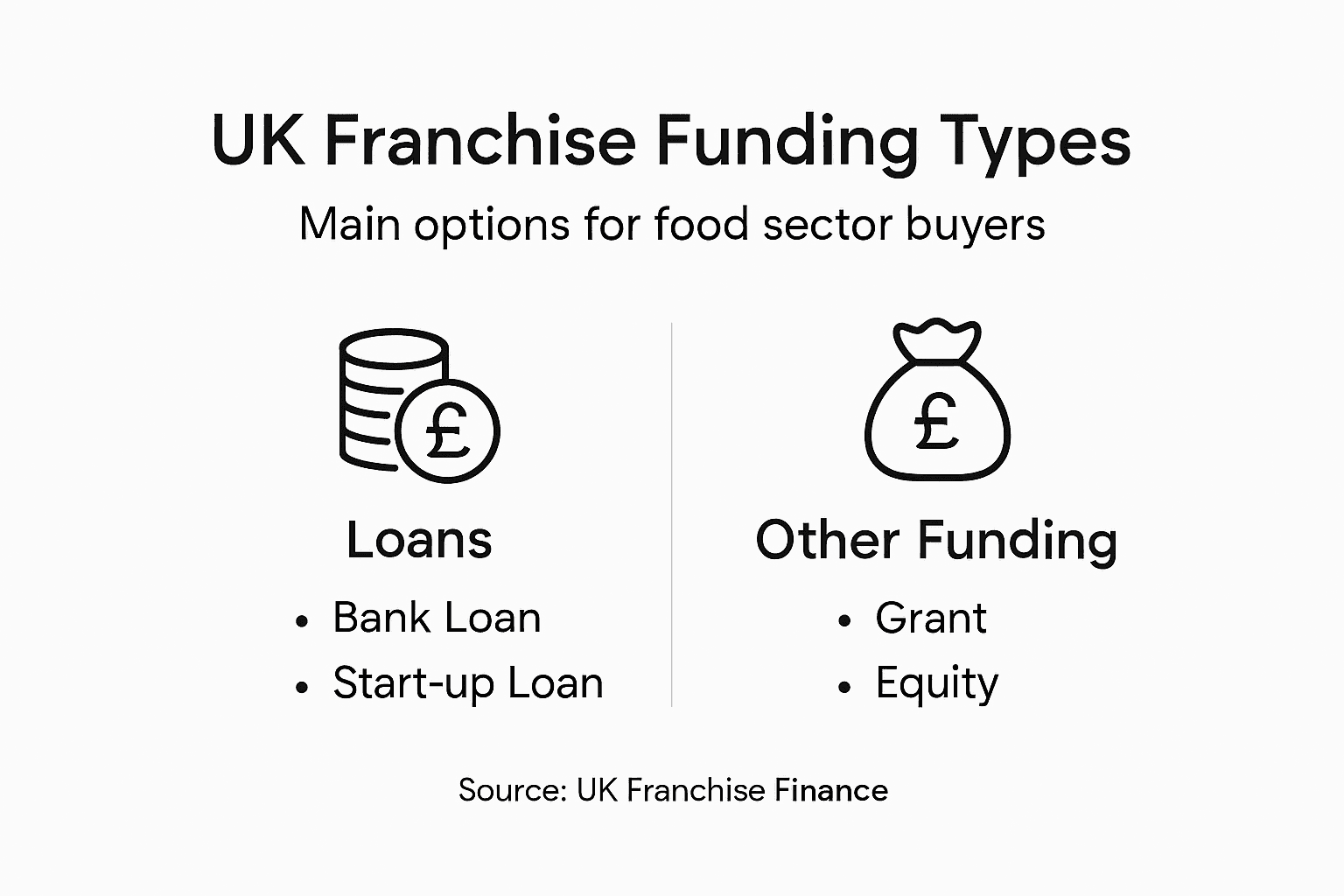
Here is a comparison of common UK food franchise funding options and their unique features:
| Funding Type | Typical Amount Range | Ownership Impact | Speed of Approval |
|---|---|---|---|
| Bank Loan | £20,000–£250,000 | No ownership share | Moderate (weeks) |
| Specialist Franchise Finance | £30,000–£150,000 | No ownership share | Fast (days–weeks) |
| Government Grant | £5,000–£100,000 | No ownership share | Slow (months) |
| Equity Investment | £50,000–£500,000+ | Share ownership required | Varies (weeks–months) |
Eligibility Criteria for Franchise Finance
Qualifying for franchise finance involves navigating a complex landscape of financial and regulatory requirements specific to the UK market. Prospective franchisees must demonstrate comprehensive financial preparedness and meet stringent lending compliance standards that protect both lenders and business investors.
The primary eligibility criteria encompass several critical components. Financial institutions and franchise associations typically evaluate applicants based on personal credit history, business experience, and financial stability. Entrepreneurs must present a robust business plan that clearly articulates their understanding of the franchise model, projected financial performance, and strategic growth potential. Credit scores play a pivotal role, with most lenders requiring a minimum credit rating that demonstrates financial reliability and risk management capability.
Beyond financial metrics, franchisors conduct thorough assessments of potential franchisees. These evaluations often include personal interviews, background checks, and detailed discussions about the candidate’s business acumen, industry knowledge, and commitment to the franchise model. Potential franchisees should be prepared to provide comprehensive documentation including personal financial statements, tax returns, business experience evidence, and a detailed implementation strategy for their proposed franchise venture.
Pro tip: Prepare a comprehensive portfolio of financial and professional documentation at least six months before applying for franchise finance, ensuring all records are current and accurately reflect your business potential.
Common Costs When Buying a Franchise
Buying a franchise in the UK food sector involves multiple financial considerations that prospective entrepreneurs must carefully evaluate. These comprehensive investment requirements encompass upfront and ongoing expenses that significantly impact the overall financial commitment of franchise ownership.
The primary cost categories typically include the initial franchise fee, which grants the right to operate under an established brand name. This fee can range substantially depending on the franchise’s market reputation and potential. Additional upfront expenses include equipment purchases, real estate or premises renovation, initial inventory stock, and necessary licensing and compliance documentation. Entrepreneurs should anticipate investing between £50,000 to £250,000 for a standard food sector franchise, with variations based on specific business model and location requirements.

Beyond initial investment, franchisees must budget for recurring expenses that ensure continued operational success. These ongoing costs include monthly royalty fees (usually calculated as a percentage of total revenue), marketing contributions, staff wages, ingredient and supply purchases, utilities, insurance, and potential additional training or support programme fees. Successful franchise owners typically allocate approximately 10-15% of their monthly revenue towards these recurring operational expenses, ensuring financial sustainability and compliance with franchisor requirements.
The table below summarises key ongoing expenses for UK food sector franchisees:
| Ongoing Expense | Typical Monthly Range | Notes |
|---|---|---|
| Royalty Fees | 5–10% of gross sales | Paid to franchisor monthly |
| Marketing Contributions | £500–£2,000 | For local and national campaigns |
| Staff Wages | £3,000–£15,000 | Varies by number employed |
| Ingredients & Supplies | £2,000–£10,000 | Based on scale of operation |
Pro tip: Create a detailed financial projection spreadsheet that accounts for both one-time and recurring expenses, allowing a 20% buffer for unexpected costs and market fluctuations.
Risks, Pitfalls and Application Tips
Navigating franchise investment requires a strategic approach that anticipates potential challenges and mitigates financial risks. Prospective franchisees must conduct thorough due diligence, understanding the complex landscape of regulatory compliance and financial requirements.
Primary risks in franchise acquisition include misaligned expectations, inadequate financial planning, and insufficient understanding of franchisor obligations. Entrepreneurs should critically evaluate franchise agreements, examining clauses related to territorial rights, operational restrictions, and financial commitments. Common pitfalls involve underestimating initial capital requirements, overlooking ongoing royalty fees, and failing to conduct comprehensive market research about the specific franchise’s performance and growth potential.
Successful franchise applications demand meticulous preparation and strategic financial documentation. Lenders and franchisors typically require detailed business plans demonstrating comprehensive understanding of the operational model, projected revenue streams, and personal financial stability. Applicants must prepare robust financial statements, provide evidence of relevant business experience, and showcase a clear strategy for managing both expected and unexpected operational challenges. Personal credit history, professional background, and demonstrated commitment to the franchise model significantly influence application success.
Pro tip: Engage a franchise-specific financial advisor who can provide independent assessment of the franchise opportunity and help you develop a comprehensive application strategy that addresses potential lender and franchisor concerns.
Discover Franchise Opportunities Perfectly Matched to Your Funding Needs
Securing the right funding for your UK food sector franchise is a big challenge that requires clarity on costs, eligibility, and financial strategy. Whether you need help navigating initial franchise fees, ongoing royalties, or government-backed financing options, having access to the right franchise listings can make all the difference. At FranchiseLocal, we understand that finding the right business opportunity aligned with your budget and goals is critical to overcoming these hurdles.
Start exploring our comprehensive franchise directory tailored for UK entrepreneurs seeking food sector franchises. Filter options by investment level, operational style, and location to identify opportunities that match your funding capacity and lifestyle. Do not let funding uncertainties hold you back from entering a proven franchise model backed by clear financial projections and support. Visit FranchiseLocal now to take the next confident step towards owning a thriving franchise.
Frequently Asked Questions
What are the common funding options for buying a franchise in the food sector?
Common funding options include bank loans, specialist franchise finance, government grants, and equity investments. These pathways cater to different financial needs and ownership impacts.
What costs should I consider when purchasing a franchise?
When purchasing a franchise, consider costs such as the initial franchise fee, equipment purchases, real estate renovation, initial inventory, and ongoing expenses like royalty fees and staff wages.
How do I demonstrate eligibility for franchise finance?
To demonstrate eligibility for franchise finance, present a strong business plan, show sufficient personal credit history, provide financial statements, and have evidence of relevant business experience.
What risks should I be aware of when funding a franchise?
Key risks include misaligned expectations, inadequate financial planning, and insufficient understanding of the franchisor’s obligations. Conducting thorough due diligence and understanding the franchise agreement is crucial.