

Many aspiring entrepreneurs assume franchises primarily serve individual consumers through high street shops or fast food outlets. Yet a thriving segment of the UK franchise market operates entirely differently, targeting businesses rather than the general public. B2B franchises offer distinct advantages including recurring revenue streams, higher contract values, and remarkable stability compared to consumer-focused models. This comprehensive guide explains what B2B franchises are, how they function operationally, their key benefits and challenges, and practical steps to evaluate whether this investment path aligns with your entrepreneurial goals in 2026.
Key takeaways
| Point | Details |
|---|---|
| B2B franchise definition | Franchising model where franchisees sell products or services directly to other businesses rather than consumers |
| Primary advantages | Recurring revenue from contracts, higher transaction values, and failure rates under 1% versus 60% for independent businesses |
| Common sectors | Commercial cleaning, recruitment agencies, IT services, business coaching, and printing services dominate the UK market |
| Main challenges | Longer sales cycles requiring patience, smaller client bases, and need for strong relationship-building skills |
Understanding the B2B franchise model
A B2B franchise is a business opportunity where franchisees provide products or services directly to other businesses, such as commercial cleaning, staffing, business coaching, and IT services. Unlike consumer franchises operating from high street locations, B2B franchisees typically work from home offices or small commercial spaces, focusing resources on client acquisition rather than expensive retail premises. This fundamental difference shapes every aspect of how these businesses operate and generate profit.
The UK market hosts diverse B2B franchise sectors serving essential business needs. Commercial cleaning franchises maintain office spaces, warehouses, and retail premises. Recruitment agencies connect employers with skilled candidates across industries. IT support franchises provide technical services, cybersecurity, and cloud solutions to small and medium enterprises. Business coaching franchises help companies improve performance, whilst printing and marketing services support corporate branding needs. Each sector offers B2B franchise opportunities UK entrepreneurs can explore based on their background and interests.

B2B franchisees build sustained relationships with business clients rather than pursuing one-off consumer transactions. You might secure a three-year cleaning contract with a property management company or provide ongoing IT support to multiple local firms. These long-term arrangements create predictable revenue streams and reduce the constant marketing pressure consumer franchises face. Your success depends on delivering consistent quality and becoming a trusted partner your clients rely upon for critical business functions.
Operational approaches differ markedly from consumer franchises. You spend significant time networking, attending business events, and building referral relationships rather than managing foot traffic or consumer marketing campaigns. Sales cycles extend over weeks or months as you navigate procurement processes, demonstrate value through proposals, and negotiate contracts. This professional selling environment suits individuals with corporate experience who understand business decision-making dynamics and feel comfortable in formal client relationships.
Common B2B franchise sectors include:
- Commercial cleaning and facilities management serving offices, schools, and healthcare facilities
- Recruitment and staffing agencies specialising in temporary, permanent, or executive placements
- IT services covering managed services, cybersecurity, cloud migration, and technical support
- Business coaching and consultancy helping companies improve operations, sales, or leadership
- Printing, signage, and promotional products supporting corporate branding and marketing needs
- Accounting and bookkeeping services for small businesses lacking in-house finance teams
How B2B franchises operate: mechanics and financial benchmarks
B2B franchisees build long-term business relationships resulting in recurring revenue from contracts, with longer sales cycles but higher transaction values. You might spend two months securing a £50,000 annual contract rather than making hundreds of small consumer sales. This operational reality requires different cash flow management and marketing strategies compared to consumer-focused franchises. Understanding these mechanics helps you prepare financially and operationally for success.
Several franchise models suit different involvement levels and growth ambitions. Owner-operator franchises require your direct involvement in service delivery and client management, offering lower initial investment but demanding your full-time commitment. Semi-absentee models allow you to hire staff for day-to-day operations whilst you focus on business development and strategic growth. Master franchising grants you rights to sub-franchise within a territory, building a network of franchisees under your guidance. Area development agreements commit you to opening multiple units across a defined region over specified timeframes.
UK B2B franchises contribute £19.1 billion to the economy, have under 1% failure rate versus 60% for independents, and average turnover of £400k per unit. These remarkable statistics demonstrate the stability and profitability potential of established franchise systems. The low failure rate stems from proven business models, comprehensive training, ongoing franchisor support, and established brand recognition that independent startups lack. However, individual results vary based on location, effort, market conditions, and how effectively you implement the franchise system.
Financial performance typically follows predictable patterns across B2B franchise sectors. Most franchisees break even within 6-18 months as they build their client base and establish recurring revenue streams. Years two and three often see 15-20% return on investment as operational efficiency improves and referrals reduce acquisition costs. By year five, successful franchisees frequently achieve 25-30% ROI whilst working fewer hours as systems mature and staff handle routine operations.
| Financial metric | Typical range | Notes |
|---|---|---|
| Initial investment | £10,000-£100,000 | Varies by sector and territory size |
| Break-even timeline | 6-18 months | Depends on sales cycle length and contract values |
| Year 2-3 ROI | 15-20% | After establishing client base and referrals |
| Average unit turnover | £400,000 | UK B2B franchise average across sectors |
| Failure rate | Under 1% | Compared to 60% for independent businesses |
Pro Tip: Prioritise franchisors offering comprehensive training programmes and robust ongoing support systems. Long sales cycles in B2B franchising mean you might wait months between contract signings, making cash flow management critical during your first year. Franchisors providing marketing materials, lead generation support, and proven sales methodologies help you navigate these challenges whilst building sustainable revenue streams.
B2b versus B2c franchises: key differences and which suits you
B2B franchises enjoy recurring revenue, higher transaction values, and more stability but longer sales cycles; B2C has broader markets but fluctuating demand and higher marketing costs. Understanding these fundamental differences helps you evaluate which model aligns with your skills, financial situation, and lifestyle preferences. Neither approach is inherently superior, but one likely suits your circumstances better than the other.
B2B franchises excel at generating predictable recurring revenue through contract-based relationships. You might secure a three-year facilities management agreement or ongoing IT support retainer, creating stable monthly income that survives economic fluctuations better than consumer spending. Client relationships deepen over time as you become embedded in their operations, making switching costs high and retention rates strong. Lower overhead costs result from operating without expensive retail premises, reducing fixed expenses and improving profit margins. However, limited client bases mean losing one major account significantly impacts revenue, requiring excellent service delivery and relationship management.
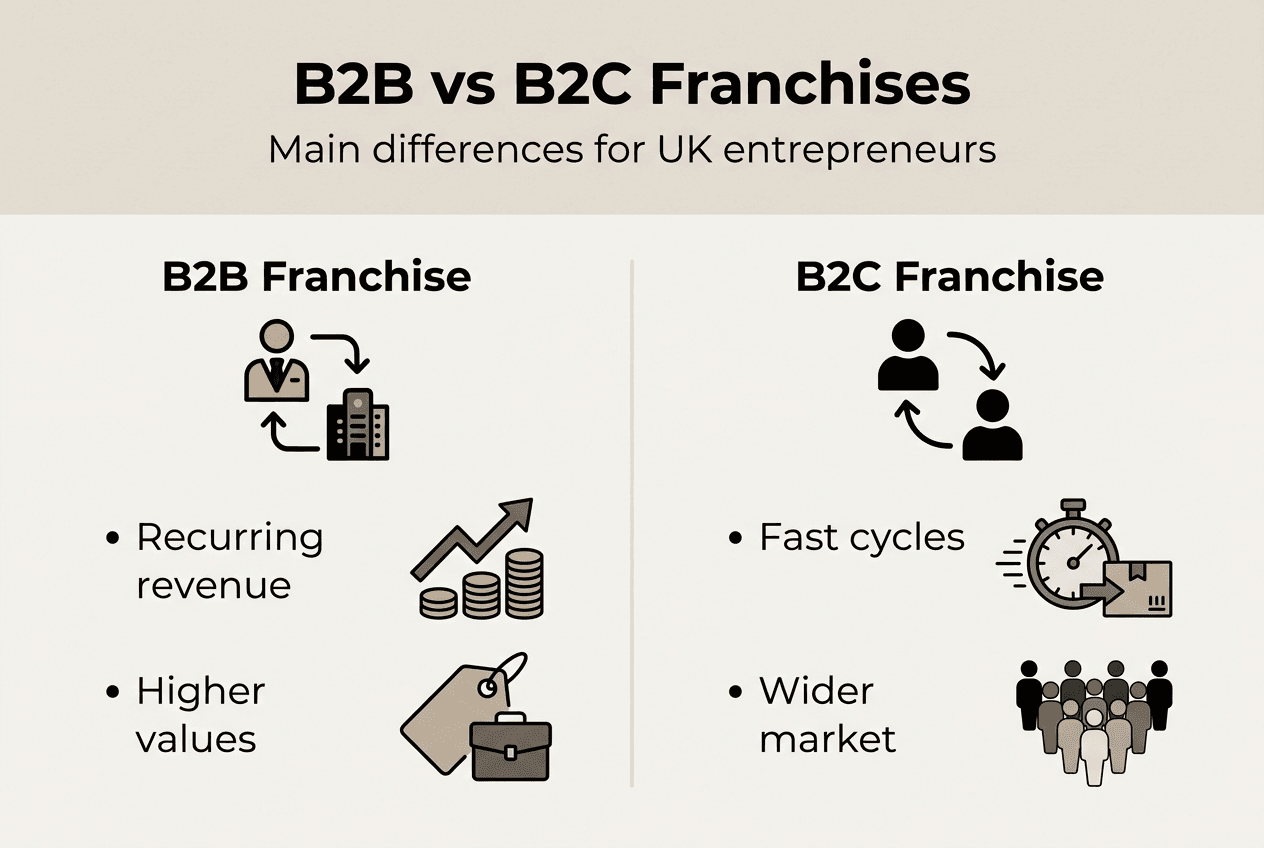
B2C franchises benefit from vast consumer markets and shorter sales cycles. You can generate revenue immediately after opening, with customers making purchase decisions in minutes rather than months. Marketing reaches broad audiences through social media, local advertising, and foot traffic rather than targeted business networking. Seasonal peaks and promotional campaigns create revenue spikes that B2B models rarely experience. Yet consumer preferences shift rapidly, marketing costs consume larger budget portions, and competition intensifies as multiple brands target the same customer base. Demand fluctuates with economic conditions, holidays, and trends beyond your control.
| Factor | B2B franchise | B2C franchise |
|---|---|---|
| Sales cycle length | Weeks to months | Minutes to days |
| Transaction size | £5,000-£50,000+ contracts | £5-£500 individual purchases |
| Revenue predictability | High through recurring contracts | Variable with seasonal fluctuations |
| Market breadth | Limited business clients in territory | Broad consumer population |
| Typical overheads | Low, often home-based | High with retail premises and stock |
| Relationship importance | Critical for retention and referrals | Less emphasis on individual customers |
Your background and preferences should guide this decision. B2B franchises suit professionals with corporate experience who enjoy networking, consultative selling, and building long-term partnerships. You need patience for extended sales cycles and comfort navigating formal procurement processes. Former managers, salespeople, and consultants often thrive in B2B franchise opportunities UK environments that mirror their previous roles. Financial stability to support yourself during the first six to twelve months proves essential whilst you build your client base.
B2C franchises attract individuals who prefer direct consumer interaction, fast-paced environments, and visible high street presence. You might enjoy the immediate feedback of daily sales, the creativity of consumer marketing, and the energy of retail operations. Hospitality workers, retail managers, and customer service professionals often excel in consumer franchise environments. However, you must accept higher initial investment for premises and stock, plus the stress of variable daily revenue and intense local competition.
Consider these practical questions when evaluating fit:
- Do you have sufficient savings to support yourself for 6-12 months whilst building a B2B client base?
- Does your professional network include potential business clients or referral sources?
- Do you prefer building deep relationships with fewer clients or serving many individual customers?
- Can you handle the uncertainty of long sales cycles or do you need immediate revenue feedback?
- Does your skill set align better with consultative business selling or consumer service delivery?
Understanding why franchises succeed in either model helps you make informed decisions based on proven success factors rather than assumptions. Both paths offer viable routes to business ownership, but your personal circumstances, skills, and preferences determine which offers the best chance of long-term satisfaction and profitability.
Common challenges and expert tips for B2B franchise success
Common mistakes include underestimating the learning curve, ignoring local market research, and failing to delegate leading to operational overload. Even with proven franchise systems, new franchisees face predictable pitfalls that derail progress and profitability. Recognising these challenges early and implementing expert strategies positions you for sustainable success rather than frustrating setbacks.
Long sales cycles test patience and financial reserves more than most new franchisees anticipate. You might invest weeks preparing proposals, attending meetings, and demonstrating value before clients commit to contracts. This reality demands robust cash flow planning and realistic expectations about revenue timelines. Many franchisees underestimate how long they can operate without significant income, leading to premature panic or poor decisions. Thorough financial preparation, including 12 months of living expenses and working capital, provides the runway needed to build sustainable client relationships.
Limited client bases in B2B markets amplify the impact of losing accounts. Unlike consumer franchises serving thousands of individual customers, you might rely on 10-20 major clients generating most revenue. Losing one significant contract can devastate monthly income if you lack diversification strategies. This vulnerability requires exceptional service delivery, proactive relationship management, and continuous new business development even when current clients seem secure. Never become complacent about retention or stop prospecting for new opportunities.
Operational overwhelm strikes franchisees who try managing every aspect personally. You cannot simultaneously deliver services, pursue new business, handle administration, and maintain quality standards without burning out or compromising results. Success depends on strong relationship-building, choosing franchisors with proven support and local market adaptation to manage risks like cash flow gaps from long sales cycles. Successful franchisees recognise when to hire staff, delegate operational tasks, and focus their energy on high-value activities like client acquisition and strategic planning.
Key challenges B2B franchisees face include:
- Extended sales cycles creating cash flow pressure during the first 6-12 months of operation
- Smaller client pools meaning each relationship carries disproportionate revenue importance
- Complex compliance requirements in regulated sectors like recruitment, finance, or healthcare
- Need for sophisticated business acumen beyond operational skills to navigate corporate procurement
- Difficulty scaling beyond owner-operator stage without effective systems and delegation
- Market saturation in popular franchise sectors reducing differentiation and pricing power
Pro Tip: Prioritise franchisors offering extensive initial training programmes covering not just operational procedures but also sales methodologies, client relationship management, and financial planning specific to B2B environments. Ongoing support through regular coaching calls, peer networks, and marketing assistance proves equally critical. The best franchisors provide proven lead generation systems, proposal templates, and pricing strategies that accelerate your path to profitability whilst reducing the trial and error independent businesses endure.
Thorough local market research before investing prevents costly mismatches between franchise offerings and actual business demand in your territory. Analyse competitor presence, potential client demographics, economic conditions, and sector-specific trends affecting your target market. Understanding franchise legal requirements UK businesses must follow protects you from compliance issues that damage reputation and profitability. Regulated sectors like recruitment or financial services demand particular attention to licensing, insurance, and operational standards.
Strong relationship-building separates thriving B2B franchisees from struggling ones. Your ability to become a trusted advisor rather than just a vendor determines client retention, referral generation, and long-term profitability. Invest time understanding client challenges, delivering consistent value, and maintaining regular communication even when not actively selling.
Delegate operational tasks as soon as financially viable to focus on business development and strategic growth. Hire service delivery staff, administrative support, or sales assistants to handle routine functions whilst you concentrate on securing new contracts and deepening client relationships. This transition from technician to business owner proves difficult for many franchisees but remains essential for scaling beyond personal capacity limits. Franchisors offering recruitment support, training programmes, and operational systems facilitate this critical evolution.
Explore profitable B2B franchise opportunities with FranchiseLocal
Now that you understand B2B franchise fundamentals, advantages, and success factors, taking practical next steps becomes crucial. FranchiseLocal connects UK entrepreneurs with vetted franchise opportunities across sectors, investment levels, and operational models. Our ultimate guide to franchising provides comprehensive resources covering legal considerations, financing options, and evaluation frameworks to support informed decisions.
Explore opportunities by browsing franchise industries UK to identify B2B sectors aligning with your skills, interests, and budget. Whether you seek commercial services, business support, or professional consulting franchises, our detailed listings provide investment requirements, training programmes, and franchisor support details. Compare multiple options, request information directly, and connect with franchisors offering the systems and support your success requires.
The UK franchise directory features hundreds of current opportunities from established brands and emerging concepts. Filter by investment level, industry sector, or operational model to find franchises matching your specific criteria. Each listing includes comprehensive details about the business model, financial requirements, and franchisor credentials. Take your next step confidently with trusted resources and expert guidance supporting your entrepreneurial journey.
What is a B2B franchise? Frequently asked questions
What industries commonly use B2B franchise models?
Commercial cleaning, recruitment agencies, IT services, business coaching, printing services, and accounting dominate UK B2B franchising. These sectors provide essential services businesses consistently need, creating stable demand and recurring revenue opportunities. Other growing areas include marketing services, facilities management, and specialised consulting.
How long does it typically take to break even with a B2B franchise?
Most B2B franchisees achieve break-even within 6-18 months depending on sector, territory, and sales cycle length. Service-based franchises with lower overheads often break even faster than those requiring significant equipment investment. Your sales effectiveness, local market conditions, and how quickly you build a client base significantly impact this timeline.
What skills help ensure success in a B2B franchise?
Strong relationship-building abilities, consultative selling experience, and business acumen prove most valuable. You need patience for long sales cycles, comfort with formal business environments, and ability to understand client challenges deeply. Financial management skills, delegation capabilities, and persistence through rejection also contribute significantly to long-term success.
How does the UK legal framework affect B2B franchising?
The UK lacks specific franchise legislation, relying instead on contract law, competition law, and sector-specific regulations. You must understand employment law if hiring staff, data protection requirements when handling client information, and any industry-specific compliance like recruitment licensing. Reviewing B2B franchise opportunities UK legal requirements with a solicitor before investing protects your interests.
What support can I expect from a franchisor in a B2B franchise?
Quality franchisors provide comprehensive initial training covering operations, sales, and business management. Ongoing support includes regular coaching calls, marketing materials, lead generation systems, and peer networks. The best offer proven sales methodologies, proposal templates, pricing strategies, and operational systems that accelerate your path to profitability whilst reducing trial and error.