

Bold choices start with smart risks. For british entrepreneurs aiming to enter business ownership on a budget, low investment franchise opportunities offer a practical solution. With most options requiring just £5,000 to £20,000 upfront, these models provide access to proven brand frameworks without hefty costs. This article highlights how you can use innovative, low-cost franchising strategies to launch your venture while keeping your personal finances secure.
Low Investment Franchises Explained Clearly
Low investment franchises represent an accessible pathway for entrepreneurs seeking business ownership with minimal financial risk. These franchise opportunities typically require a significantly lower initial capital investment compared to traditional business models, making them attractive for individuals with limited startup funds. The UK franchise market offers numerous options for aspiring business owners looking to enter entrepreneurship without substantial upfront costs.
Franchising at lower investment levels allows individuals to leverage established business models and brand recognition while managing financial constraints. Government startup loan schemes provide critical support, offering entrepreneurs loans ranging from £500 to £25,000 specifically designed to help launch franchise ventures. These financial support mechanisms make low investment franchises particularly appealing for those who might otherwise struggle to secure traditional business funding.
The typical low investment franchise ranges between £5,000 and £20,000, covering essential startup expenses like initial equipment, training, and brand licensing fees. These opportunities span diverse sectors including cleaning services, mobile businesses, home-based consulting, and retail support services. By choosing a low investment franchise, entrepreneurs can minimise personal financial risk while benefiting from structured business frameworks, proven operational strategies, and ongoing franchisor support.
Expert tip: Before committing to a low investment franchise, thoroughly research the specific franchise model, verify its financial performance history, and understand the full range of ongoing fees and support mechanisms.
Types of Low Investment Franchise Opportunities
Low investment franchise opportunities in the United Kingdom represent a diverse landscape of business models designed to accommodate entrepreneurs with limited startup capital. These opportunities span multiple sectors, offering flexible entry points for aspiring business owners. Small business support programmes highlight the range of franchise models available, categorising them by investment level, operational complexity, and growth potential.
The primary categories of low investment franchises include mobile service businesses, home-based franchises, retail support services, and specialised consulting ventures. Mobile franchises such as cleaning services, vehicle maintenance, pet care, and delivery businesses typically require lower initial investments, often ranging between £5,000 and £15,000. Home-based franchises in digital marketing, business consulting, and tutoring services offer even more affordable entry points, with startup costs potentially below £10,000.
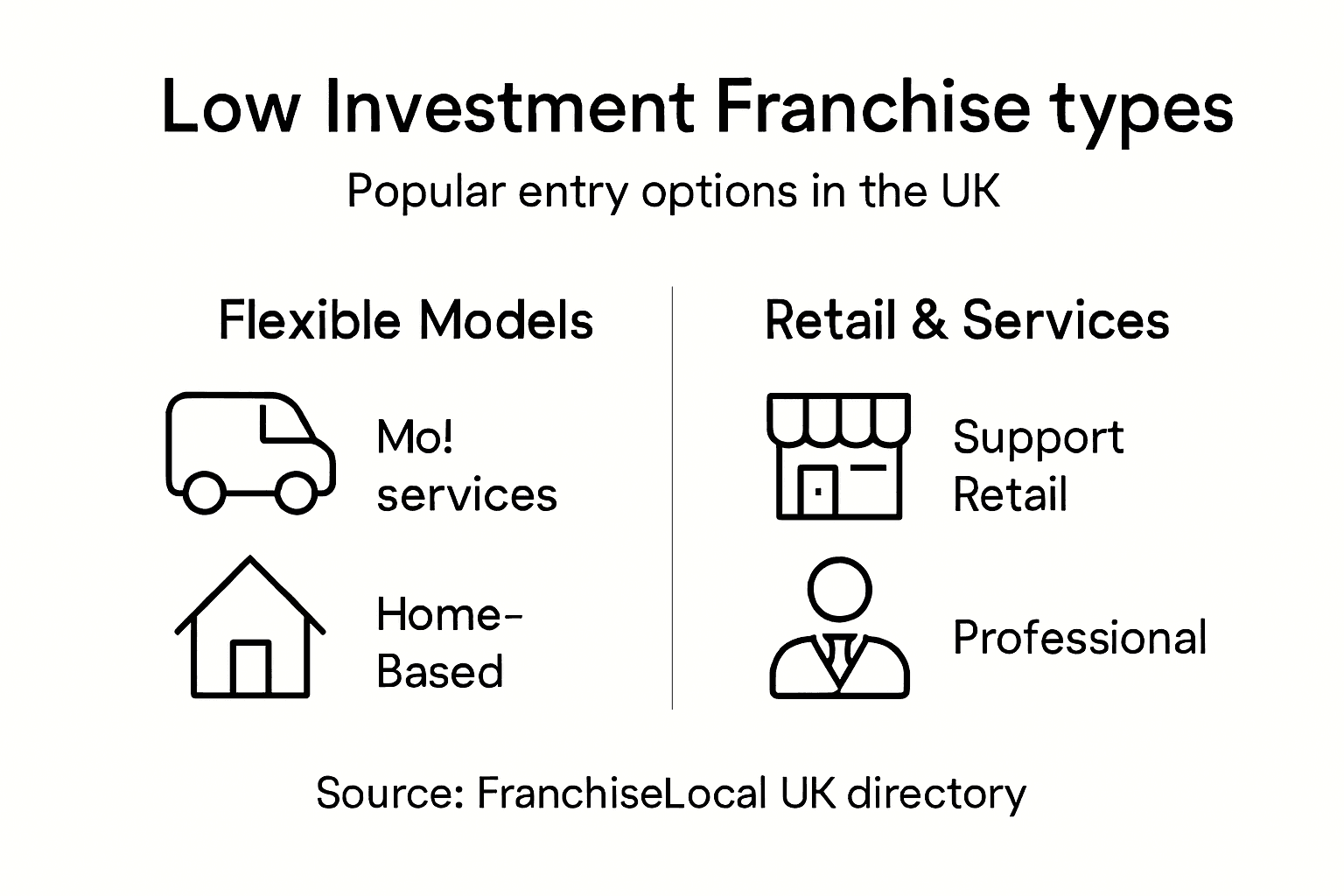
Retail support and specialised service franchises provide additional opportunities for entrepreneurs. These might include mobile hairdressing, personal training, event planning, or administrative support services. Each franchise type offers unique advantages, with some focusing on minimal overhead costs, while others emphasise scalability and potential for rapid growth. The UK startup loan system further supports these ventures by providing financial resources specifically tailored to low-cost franchise models.
Here’s an at-a-glance comparison of popular low investment franchise types:
| Franchise Type | Typical Investment | Flexibility | Example Sectors |
|---|---|---|---|
| Mobile Services | £5,000–£15,000 | High, location-based | Cleaning, delivery |
| Home-Based | £3,000–£10,000 | Very high, remote | Digital marketing, tutoring |
| Retail Support | £10,000–£20,000 | Moderate, local shops | Retail advisory, logistics |
| Specialist Consulting | £8,000–£18,000 | Varies by expertise | Training, admin support |
Pro tip: When exploring low investment franchise opportunities, carefully analyse the franchise disclosure document, verify the franchisor’s track record, and assess the total investment requirements beyond the initial franchise fee.
Key Benefits for UK Aspiring Entrepreneurs
Low investment franchises offer aspiring UK entrepreneurs a strategic pathway to business ownership with significantly reduced risks compared to traditional startup models. Entrepreneurship development programmes emphasise the unique advantages these opportunities provide, including immediate access to established business frameworks and proven operational strategies. By selecting a franchise, entrepreneurs can bypass many of the complex challenges associated with launching an independent business from scratch.

The primary benefits of low investment franchises include comprehensive support structures, established brand recognition, and minimised financial exposure. Franchisees receive extensive training programmes, operational guidance, and ongoing support from experienced franchisors. This structured approach allows new entrepreneurs to leverage established business models, marketing strategies, and supply chain networks that would typically require years of independent development. The built-in support system dramatically increases the likelihood of business success, particularly for first-time business owners navigating the competitive UK marketplace.
Financial advantages extend beyond the initial low investment. Small business support initiatives highlight how franchises offer predictable revenue streams, standardised operational procedures, and reduced marketing expenditures. Entrepreneurs can benefit from collective purchasing power, shared marketing resources, and established brand credibility. These factors combine to create a more stable and potentially lucrative business environment compared to independent ventures, making franchising an attractive option for those seeking a balanced approach to entrepreneurship.
Pro tip: Conduct thorough due diligence by speaking with existing franchisees, reviewing financial performance documents, and understanding the complete fee structure before committing to any franchise opportunity.
Financial Risks And Long-Term Considerations
Navigating the financial landscape of franchise ownership requires a comprehensive understanding of potential risks and strategic long-term planning. Business risk taxonomy provides crucial insights into the complex financial challenges franchisees may encounter. While low investment franchises offer reduced initial risk, entrepreneurs must remain vigilant about ongoing financial commitments, potential market fluctuations, and the need for consistent capital management.
Financial risks in franchise ventures extend beyond the initial investment and include recurring expenses such as franchise royalty fees, marketing contributions, and operational overheads. Entrepreneurs must carefully analyse the total cost of ownership, which encompasses initial franchise fees, ongoing monthly payments, equipment investments, and potential expansion costs. Some franchises may require additional capital reserves to navigate unexpected market challenges or seasonal revenue variations, making financial flexibility a critical consideration for long-term sustainability.
Financial market analysis reveals that successful franchise entrepreneurs must develop robust financial strategies that account for potential economic shifts, competitive pressures, and industry-specific volatilities. This involves creating comprehensive financial projections, maintaining adequate cash reserves, and developing contingency plans that can help mitigate potential financial risks. Potential franchisees should conduct thorough due diligence, including examining the franchisor’s financial health, understanding contractual obligations, and assessing the potential return on investment across different economic scenarios.
This table summarises critical financial factors to consider before investing in a franchise:
| Financial Element | Description | Long-Term Impact |
|---|---|---|
| Initial Fees | Upfront payment to franchisor | Determines starting cash requirement |
| Ongoing Royalties | Monthly/annual franchise payments | Influences profit margins |
| Marketing Contributions | Shared advertising costs | Affects business visibility |
| Reserve Capital | Backup funds for contingencies | Supports sustainability and growth |
Pro tip: Develop a comprehensive financial buffer of at least six months of operating expenses and maintain regular financial reviews to proactively identify and address potential financial challenges before they become critical.
Franchisee Requirements And Ongoing Support
Successful franchise ownership demands more than financial investment; it requires meeting specific personal and professional criteria that franchisors carefully evaluate. Entrepreneurship support programmes highlight the comprehensive requirements potential franchisees must demonstrate, including strong business acumen, interpersonal skills, commitment to the brand, and the ability to follow established operational protocols.
Most franchisors seek franchisees with a combination of key attributes: financial stability, relevant professional experience, strong communication skills, and an entrepreneurial mindset. Typical requirements include a minimum personal capital investment, a clean credit history, and the ability to dedicate sufficient time to business operations. Some franchises may require specific qualifications or industry experience, while others prioritise personal characteristics such as leadership potential, adaptability, and a customer-focused approach.
Ongoing support represents a critical differentiator in franchise models, providing franchisees with comprehensive resources beyond the initial training period. This support typically encompasses continuous training programmes, marketing assistance, operational guidance, and access to proprietary technologies and systems. Franchisees benefit from established supply chain networks, regular performance reviews, and strategic business development support that helps them navigate challenges and optimize their business performance. The structured support system enables entrepreneurs to leverage collective expertise while maintaining individual business ownership.
Pro tip: Prepare a detailed personal skills assessment and business plan before approaching potential franchisors, demonstrating your readiness and commitment to their specific franchise model.
Discover Low Investment Franchise Opportunities Tailored to You
Embarking on a low investment franchise journey in the United Kingdom can feel overwhelming when trying to balance financial risks and business potential. This article highlights the importance of selecting franchises with manageable initial costs, ongoing support, and proven operational models to reduce uncertainty and boost your chances of success. If you are seeking flexibility, brand recognition, and structured guidance without committing substantial capital upfront, finding the right franchise is crucial.
At FranchiseLocal, we simplify this search by offering a comprehensive directory of UK franchise opportunities filtered by investment level, industry, and operational model. Whether you are interested in mobile services, home-based ventures, or retail support franchises, our platform connects you directly with options that suit your budget and lifestyle preferences. Start exploring today to access detailed listings, compare franchise models, and make well-informed decisions that align with your entrepreneurial goals.
Ready to take the next step in your franchise journey with confidence? Use FranchiseLocal now to find low investment franchises that minimise your financial exposure while maximising support and growth potential. Don’t wait for the perfect moment – begin your path to business ownership today and turn your ambition into reality.
Frequently Asked Questions
What are low investment franchises?
Low investment franchises are business opportunities that require significantly lower startup capital than traditional franchise models, typically ranging from £5,000 to £20,000. They allow entrepreneurs to start a business with less financial risk while benefiting from an established brand and operational framework.
What types of low investment franchises are available?
Low investment franchises include mobile service businesses (like cleaning and pet care), home-based franchises (such as digital marketing and tutoring), retail support services, and specialised consulting ventures. Each type offers varying levels of initial investment and operational flexibility.
What financial support is available for low investment franchises?
Entrepreneurs can access government startup loan schemes that provide loans ranging from £500 to £25,000, specifically designed to support the launch of franchise ventures. These financial resources help reduce the initial financial burden associated with starting a franchise.
What are the main benefits of choosing a low investment franchise?
Key benefits include reduced financial risk, access to established business models and brand recognition, comprehensive training and support from franchisors, predictable revenue streams, and reduced marketing costs, making it an attractive option for first-time business owners.