

Starting your business journey in the United Kingdom often means facing the challenge of understanding upfront costs before making any commitment. For those looking to invest with limited capital, grasping the details of the franchise fee is crucial. This initial payment grants access to established brands and vital support, setting the foundation for a successful partnership. You will learn what these fees cover, how they differ from ongoing payments, and what factors influence the entry cost for aspiring franchisees.
What Is a Franchise Fee in the UK?
A franchise fee represents the initial financial investment required to enter a specific business franchise system in the United Kingdom. This upfront payment grants entrepreneurs the legal right to operate under an established brand’s business model and trademark. Franchise agreements legally define the precise terms and financial obligations between franchisors and franchisees.
According to the Federation of Small Businesses, a franchise fee typically covers critical startup components such as initial training, operational support, and access to the franchisor’s proprietary intellectual property. The fee serves as the entry point into a proven business framework, distinguishing itself from ongoing royalty payments that franchisees will continue to make throughout their business relationship.

The specific amount of a franchise fee can vary dramatically across different industries and brands, ranging from £5,000 for home-based franchise opportunities to over £250,000 for established retail or restaurant concepts. Factors influencing the fee include brand reputation, training complexity, territorial rights, and the level of operational support provided by the franchisor.
Pro tip: Always negotiate and thoroughly understand the breakdown of your franchise fee, ensuring you comprehend exactly what initial services and support are included in your investment.
Types of Franchise Fees and What They Cover
Franchise fees in the United Kingdom are multifaceted financial structures designed to support both the franchisee’s entry and ongoing business operations. The Federation of Small Businesses identifies several critical components within these fee structures, highlighting diverse financial obligations that franchisees must understand before entering a franchise agreement.
Typically, franchise fees encompass multiple categories. The initial franchise fee represents the upfront investment required to join a specific franchise system, covering essential elements like brand licensing, initial training programmes, and operational setup support. Ongoing royalty fees are calculated as a percentage of monthly or annual revenue, typically ranging from 4% to 12%, which franchisees pay for continuous access to the brand’s operational systems, marketing resources, and support infrastructure.
Additional fee structures often include marketing contributions, which pool funds from multiple franchisees to support national or regional advertising campaigns. These collective marketing fees usually represent 1-3% of a franchisee’s gross revenue and enable smaller businesses to benefit from professional marketing strategies they could not individually afford. Some franchise models also incorporate renewal fees, transfer fees for selling the franchise, and specialised training or support fees that ensure franchisees maintain high operational standards.
Pro tip: Always request a comprehensive fee breakdown from potential franchisors, ensuring you understand every financial commitment before signing any agreements.
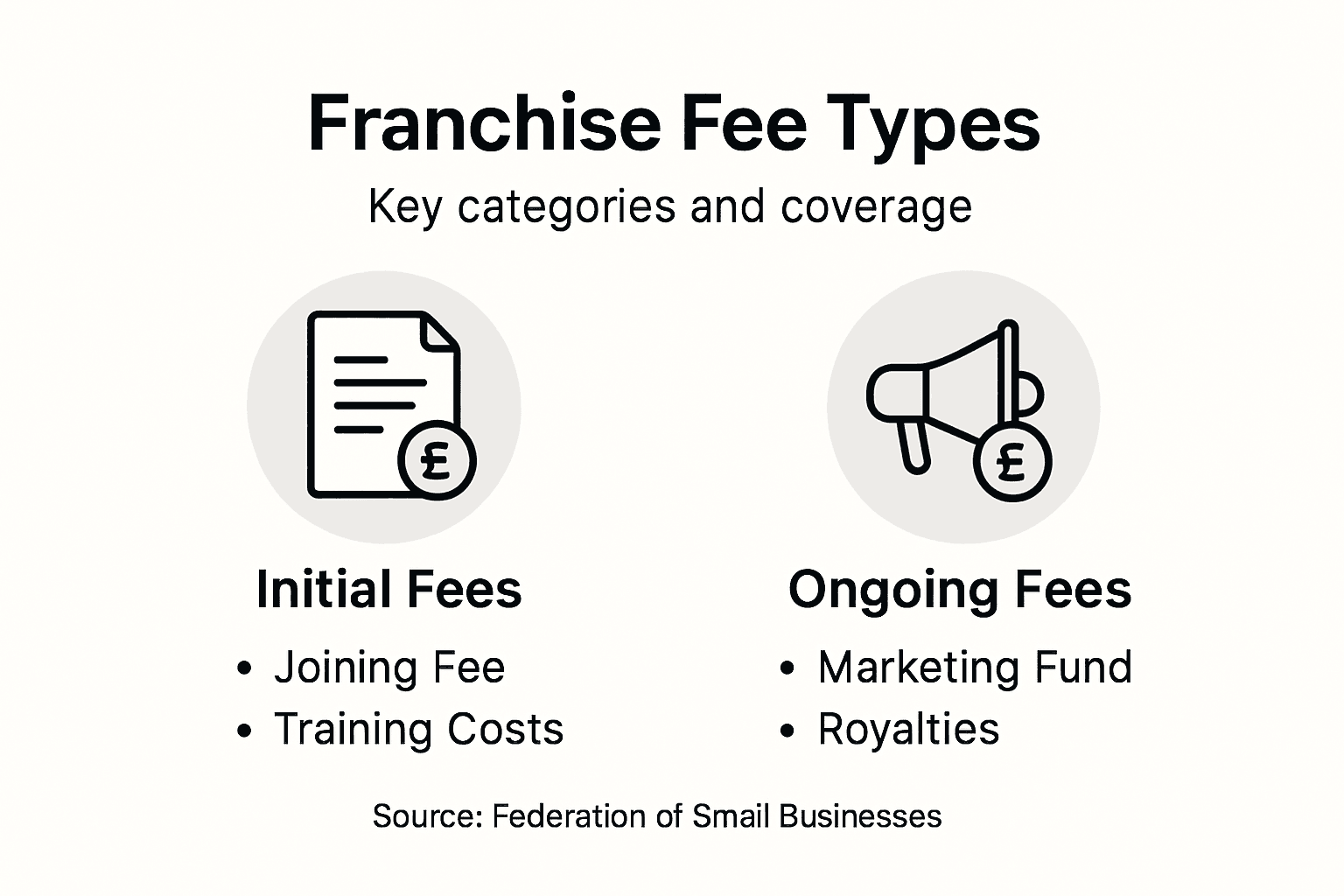
Here’s a concise comparison of major franchise fee types and their practical business effects:
| Fee Type | Typical Range | Business Impact |
|---|---|---|
| Initial Franchise Fee | £5,000–£250,000 | Grants entry and brand usage rights |
| Ongoing Royalty Fee | 4%–12% of gross revenue | Supports continuous franchisor support |
| Marketing Contributions | 1%–3% of gross revenue | Funds joint advertising efforts |
| Renewal/Transfer Fees | Variable (often £2,000+) | Enables contract updates or resale |
Legal Obligations and Typical Franchise Contracts
Franchise contracts in the United Kingdom represent comprehensive legal frameworks that establish critical operational boundaries and mutual responsibilities between franchisors and franchisees. These agreements are meticulously crafted to protect both parties’ commercial interests while providing clear guidelines for business conduct and relationship management.
Typically, UK franchise contracts encompass several key legal components that define the scope of the business relationship. These include detailed provisions regarding territorial rights, which specify the geographical areas where the franchisee can operate, exclusive operational parameters, intellectual property usage guidelines, and precise financial obligations. The contract will comprehensively outline franchise fees, ongoing royalty structures, marketing contribution requirements, and specific performance expectations that the franchisee must consistently meet.
While UK franchise law is not explicitly codified into a single legislative framework, these contracts must adhere to broader commercial regulations, competition laws, and intellectual property statutes. This means that franchise agreements must demonstrate fairness, transparency, and compliance with existing legal standards. Critical sections typically include termination clauses, renewal conditions, dispute resolution mechanisms, and comprehensive definitions of both parties’ rights and responsibilities. The Federation of Small Businesses emphasises the importance of carefully reviewing these documents, recommending that potential franchisees seek independent legal advice to fully understand their contractual commitments.
Pro tip: Engage a solicitor specialising in commercial franchise law to conduct a thorough review of your franchise contract before signing, ensuring you comprehend every legal nuance and potential obligation.
Calculating Costs and What to Look For
Navigating the financial landscape of franchise investment requires meticulous planning and comprehensive cost analysis. Comprehensive financial assessments are crucial for potential franchisees to understand the full spectrum of monetary commitments associated with their prospective business venture.
Franchise costs extend far beyond the initial franchise fee, encompassing a complex web of financial obligations. Aspiring franchisees should anticipate and calculate multiple expense categories, including upfront investment costs, ongoing royalty payments (typically 4-12% of gross revenue), marketing contributions (usually 1-3%), initial training expenses, equipment purchases, potential real estate or lease costs, and working capital requirements. Each of these elements contributes to the total financial picture and can significantly impact the franchise’s profitability and long-term sustainability.
The Federation of Small Businesses recommends a detailed, line-by-line financial breakdown that considers both predictable and potential hidden costs. This includes examining the franchisor’s financial disclosure documents, understanding territory allocation expenses, potential renewal fees, and assessing the typical return on investment for similar franchises within the same sector. Potential franchisees should also factor in personal living expenses during the initial startup phase, as many new franchise businesses may take 12-18 months to become financially stable and generate consistent revenue.
Below is a summary of essential factors to examine in a UK franchise financial assessment:
| Cost Category | Importance | What to Investigate |
|---|---|---|
| Real Estate/Leasing | Significant for retail sites | Location costs and lease terms |
| Equipment Purchase | Varies by sector | Required machinery or fixtures |
| Working Capital | Crucial for survival | Cash buffer for initial months |
| Personal Expenses | Often overlooked | Living costs until breakeven |
Pro tip: Create a comprehensive spreadsheet detailing every potential expense, including a 20% contingency buffer, to ensure you have a realistic financial projection for your franchise investment.
Common Franchise Fee Pitfalls to Avoid
Navigating the complex landscape of franchise investments requires a keen understanding of potential financial traps. Franchise legal considerations play a crucial role in protecting prospective franchisees from costly mistakes that could undermine their business prospects.
One of the most significant pitfalls involves misunderstanding fee structures and hidden financial obligations. Many franchisees fall into the trap of focusing solely on the initial franchise fee, overlooking ongoing costs such as royalty payments, marketing contributions, and mandatory equipment upgrades. These cumulative expenses can range from 4-15% of gross revenue, potentially consuming a substantial portion of the business’s profitability. Additionally, some franchise agreements include escalating fee structures that can increase financial burdens over time, making it essential to scrutinise every financial clause with meticulous attention.
Franchise agreements often contain complex legal language designed to protect the franchisor’s interests. Potential red flags include vague fee calculation methods, unreasonable performance requirements, and inflexible renewal terms that can trap franchisees in unfavourable long-term commitments. The Federation of Small Businesses emphasises the importance of understanding every financial nuance, recommending that franchisees seek independent legal and financial advice before signing any contractual document. This proactive approach can help identify potential financial risks, such as unexpected fee increases, restrictive territory limitations, or punitive clauses that could compromise the franchise’s financial viability.
Pro tip: Engage a franchise-specific solicitor to conduct a comprehensive review of the fee structure, ensuring you understand every financial commitment and potential future obligation.
Navigate Franchise Fees Confidently with Expert Guidance
Understanding every element of franchise fees, from initial payments to ongoing royalties, is essential to secure a successful business future. This article highlights the common challenges of hidden costs and complex legal obligations that often leave potential franchisees unsure about their investments and long-term commitments. If you are looking to find franchise opportunities in the United Kingdom tailored to your budget and lifestyle, it is crucial to access a trusted resource that simplifies your search and offers transparent information.
At Franchise Local, you will discover a comprehensive directory of franchise brands sorted by investment level and industry, easing the burden of financial research and helping you avoid costly pitfalls. Explore tailored franchises that match your preferences and gain access to essential details that clarify fees and obligations. Don’t let uncertain franchise costs delay your dream of business ownership. Start browsing now and make an informed choice with confidence by visiting Franchise Local and unlock the support you need to turn your franchise aspirations into reality.
Frequently Asked Questions
What is a franchise fee?
A franchise fee is the initial payment made to enter a franchise system, granting the right to operate under an established brand’s business model and trademark.
What does the franchise fee cover?
The franchise fee typically covers crucial startup components such as initial training, operational support, and access to the franchisor’s proprietary intellectual property.
How are ongoing royalty fees calculated in a franchise?
Ongoing royalty fees are usually calculated as a percentage of monthly or annual revenue, typically ranging from 4% to 12%, providing access to the franchisor’s operational systems and support.
What common pitfalls should I avoid regarding franchise fees?
Common pitfalls include misunderstanding fee structures, overlooking ongoing costs like royalties and marketing contributions, and not thoroughly reviewing the franchise agreement for hidden financial obligations.