

Starting a business in the UK can seem daunting when your budget is tight and risk feels high. Many aspiring entrepreneurs want financial security without betting everything on an untested idea. Low investment franchises offer a clear way forward, letting you trade uncertainty for access to an established brand, proven systems, and ongoing support. By focusing on clear agreements and standards between franchisors and franchisees, you can build a business that balances affordability with reliable professional backing.
Low investment franchises explained clearly
A low investment franchise is fundamentally a business model where you operate under an established brand’s name, systems, and support structures whilst paying a relatively modest upfront fee. Instead of starting from scratch with your own brand, you’re essentially buying into a proven formula that someone else has already developed and refined.
Think of it like this: a restaurant chain has spent years perfecting their recipes, training methods, and customer experience. Rather than keeping all that knowledge locked away, they licence it to entrepreneurs like you. You pay them a fee, agree to follow their guidelines, and in return, you get access to their brand recognition, operational playbook, and ongoing assistance. This arrangement requires clear agreements and standards between both parties to protect everyone involved and ensure quality across different locations.

The financial appeal is obvious. Traditional business startups often require £50,000 to £100,000 or more just to get through the first year. Low investment franchises, by contrast, typically demand initial fees ranging from £2,000 to £20,000 depending on the sector and franchisor. This includes your initial franchise fee, training, support materials, and sometimes stock or equipment.
What makes franchises particularly attractive is that you’re not learning from trial and error. The franchisor has already made the mistakes so you don’t have to. They provide operational support, marketing materials, staff training, and ongoing guidance. You benefit from the relationships and expertise they’ve built over years or decades.
Of course, you’re not completely independent. You must follow their operational standards, use approved suppliers, maintain their brand image, and typically pay ongoing royalties from your profits. This structure means you get professional support and a recognized brand, but you’re operating within their framework rather than creating your own.
Pro tip: Always request the franchisor’s disclosure document before making any commitment; it contains crucial details about costs, obligations, dispute history, and financial performance that will help you make an informed decision.
Types and sectors of low-cost franchises
Low-cost franchises span numerous industries, each offering different operational models and profit potential. Understanding which sectors suit your skills, interests, and available capital is crucial before committing to any franchise agreement.
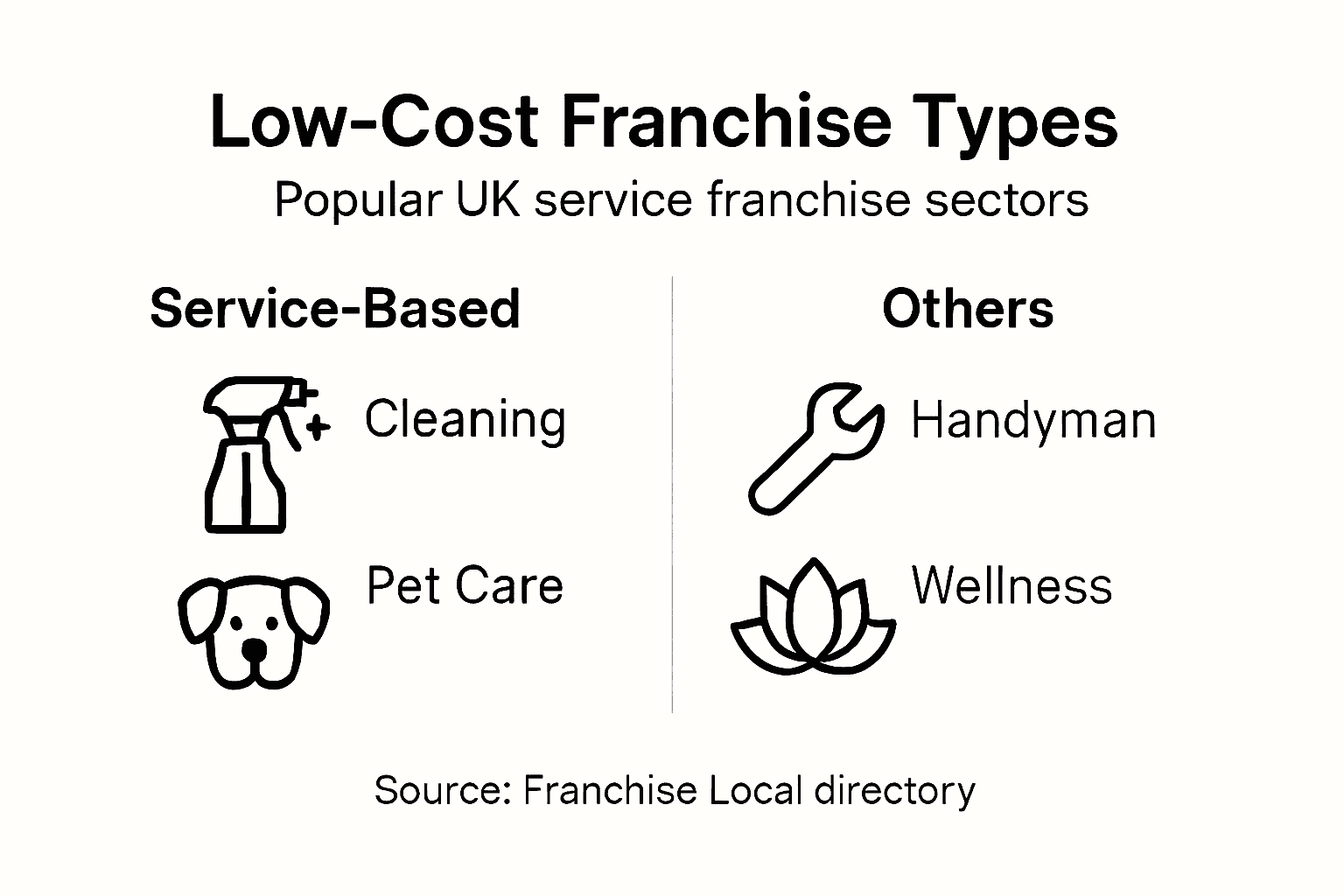
Service-based franchises dominate the low-investment market. Cleaning companies, pet-sitting services, and handyman operations require minimal startup costs because they rely on your labour and a small team rather than physical premises. You typically work from home, use your own vehicle, and build a client base through word-of-mouth and local marketing. These franchises often charge between £3,000 and £15,000 upfront.
Retail and food service franchises occupy the mid-range of low-cost opportunities. Coffee carts, pop-up shops, and mobile food units fall into this category. They demand more initial investment than service franchises but less than traditional brick-and-mortar establishments. You might invest £10,000 to £30,000, depending on equipment and stock requirements. The advantage here is visible branding and direct customer interaction.
Online-based franchises have emerged as genuinely low-cost options. E-commerce support services, digital marketing consultancy, and online tutoring require primarily skills and technology rather than physical inventory. Investment typically stays under £5,000, making them accessible to nearly anyone with specialist knowledge.
The complexity of franchising varies by sector. Some sectors, such as franchise provision in specialised fields, require careful regulatory oversight and governance to protect both franchisor and franchisee interests. This is why understanding the specific sector’s regulations matters.
Beauty and wellness franchises also thrive at lower investment levels. Mobile therapy services, beauty consultancy, and fitness coaching allow you to work flexibly with minimal overhead. You can operate from clients’ homes or hire shared salon space, keeping capital requirements manageable.
When exploring specific opportunities, browse low-cost franchise listings across different sectors to see what resonates with your background and lifestyle.
Pro tip: Compare franchises within the same sector rather than just by price; two cleaning franchises at similar costs can differ dramatically in training quality, support systems, and earning potential.
Here’s how low-cost franchise sectors compare at a glance:
| Sector | Typical Investment Range | Main Skills Required | Flexibility Level |
|---|---|---|---|
| Service-based | £3,000–£15,000 | Reliability, people skills | High (often home-based) |
| Retail & Food Service | £10,000–£30,000 | Sales, stock management | Medium (site-based) |
| Online & Digital | Up to £5,000 | Digital literacy, niche skills | Very high (remote) |
| Beauty & Wellness | £3,000–£12,000 | Customer care, qualification | High (mobile possible) |
Essential requirements and qualifications
Unlike traditional employment, franchise ownership doesn’t require formal qualifications or degrees. What matters instead is a combination of practical skills, personal attributes, and financial readiness that set you up for success.
First, you need sufficient capital to cover the initial franchise fee plus working capital. Most lenders want to see at least 30 percent of your investment coming from your own savings. Banks and finance companies view franchises more favourably than independent startups because you’re buying a proven system, but they still want evidence that you’re financially committed.
You’ll need business acumen, though this doesn’t mean you must have run a business before. Understanding basic accounting, cash flow management, and customer service principles matters significantly. Many franchisors provide training to bridge knowledge gaps, but arriving with some foundational understanding accelerates your progress.
Different sectors have specific demands. Service-based franchises require strong interpersonal skills and reliability. Retail operations need sales ability and stock management experience. Online franchises demand digital literacy and often technical knowledge in your specialist field. In regulated sectors, such as those requiring quality assurance standards and accreditation, you may need professional credentials or certifications particular to your industry.
Personally, you should be organised, disciplined, and coachable. Franchising isn’t about doing things your way. You’re following established systems, sometimes in ways that feel counterintuitive. Success goes to those who can implement processes consistently, even when they disagree with minor details.
Time commitment varies by franchise type. Some require full-time presence, particularly retail or food service operations. Others allow part-time involvement alongside employment. Home-based service franchises often start part-time whilst you build momentum. Being honest about how many hours you can genuinely dedicate prevents costly mistakes.
Finally, verify what training and support the franchisor provides. Quality franchisors offer comprehensive onboarding, ongoing mentoring, and operational guidance. This support often compensates for lacking specific industry experience.
Pro tip: Request references from existing franchisees in the same network and ask specifically about their initial struggles and how the franchisor’s support helped them overcome challenges.
Legal frameworks and contract essentials
Franchise agreements are legally binding contracts that protect both you and the franchisor. Understanding what these documents contain and what rights you have is absolutely critical before signing anything.
Your franchise agreement defines the relationship between you and the brand owner. It specifies exactly what you can and cannot do, how long the agreement lasts, what happens if either party breaks the terms, and what financial obligations you have. This isn’t a simple document. Most franchise agreements run 20 to 40 pages, covering everything from brand usage to dispute resolution.
Key contract elements you must understand:
- Initial fees and ongoing royalties (usually 5 to 10 percent of turnover)
- Territory restrictions (whether you’re limited to a specific area)
- Training and support the franchisor provides
- Marketing and advertising requirements
- Term length and renewal conditions
- Termination clauses and what happens to your business if it ends
- Data sharing and confidentiality obligations
Effective franchise contracts should include clear definitions of roles and responsibilities between parties, ensuring both sides understand their obligations. The contract protects you by spelling out exactly what support the franchisor must provide. It protects them by outlining your compliance obligations.
The UK doesn’t have a single franchise law like some countries do. Instead, UK franchise arrangements are governed by general contract law, consumer protection legislation, and competition law. This means contracts must be transparent and fair. Unfair terms can be challenged if they significantly disadvantage you as the weaker party.
Before signing, have a solicitor review the agreement. This costs between £300 and £800 but prevents expensive mistakes later. Request the franchisor’s disclosure document, which must detail their track record, financial performance of existing franchisees, and any disputes. Transparency in franchise arrangements protects your interests and allows informed decision making.
Negotiation is possible on some terms, particularly territory, royalty rates, and support commitments. Don’t accept the first draft as final.
This summary contrasts major franchise contract negotiation areas:
| Clause Type | Typical Standard Term | Negotiation Potential |
|---|---|---|
| Territory Size | Set by franchisor | Sometimes, boundaries flexible |
| Royalty Percentage | 5% to 10% of turnover | Rates may be reduced |
| Support Level | Basic onboarding, some mentoring | Higher commitment negotiable |
| Contract Duration | 5 to 10 years usual | Renewal terms open to change |
Pro tip: Always request written clarification on any vague terms in the contract before signing, and ensure the franchisor’s promised support is explicitly detailed in writing rather than discussed verbally.
Costs, ongoing fees and financial risks
Franchise costs extend far beyond the initial franchise fee. Understanding the full financial picture prevents nasty surprises that could derail your business within the first year.
The initial franchise fee typically ranges from £2,000 to £20,000 for low-cost franchises. This grants you the right to operate under their brand and receive initial training. However, this is just the beginning. You’ll also need working capital to cover stock, equipment, premises (if required), insurance, and living expenses whilst the business builds momentum.
Calculate your total startup costs honestly. A cleaning franchise charging £5,000 in fees might require another £3,000 for equipment and insurance. An online consultancy franchise at £3,000 might only need £1,000 extra for technology and marketing. Add 3 to 6 months of personal living expenses because profit takes time to materialise.
Ongoing costs you’ll pay every month:
- Royalties: Usually 5 to 10 percent of your turnover
- Marketing fees: Often 2 to 3 percent for national campaigns
- Rent (if applicable)
- Staff wages
- Insurance and compliance
- Supplies and stock
Royalties are the biggest ongoing expense. If you’re earning £2,000 monthly and paying 8 percent royalties, that’s £160 leaving your business every month before any other costs. Over a year, that’s £1,920 going to the franchisor regardless of profit.
Financial risks merit serious consideration. Poor performance by the franchisor damages your business directly. If they fail to deliver promised support or their brand reputation suffers, you’re trapped in a contract paying royalties on declining income. Market conditions matter too. A recession hits retail franchises harder than service-based ones. Understanding financial risk mitigation strategies like maintaining adequate reserves and diversifying income helps protect your investment.
Termination costs can surprise you. If you exit early, you might lose your franchise fee without compensation. Some franchisors require you to buy remaining inventory at full price.
Request detailed financial projections from existing franchisees. Ask specifically what they actually earn after all costs, not what the franchisor promises.
Pro tip: Always maintain a separate emergency fund covering at least six months of fixed costs before starting, as franchises typically take twelve to eighteen months to reach profitability.
Common pitfalls and how to avoid them
Franchise failures rarely happen overnight. Most struggling franchisees ignored warning signs early on or made avoidable mistakes during due diligence. Learning from these pitfalls saves you significant money and heartache.
The biggest mistake is skipping proper investigation. You meet a franchisor, like their pitch, and sign within weeks. This is dangerous. Spend at least two months researching. Contact existing franchisees directly, not just those the franchisor recommends. Ask difficult questions about profitability, support quality, and whether they’d invest again. Many will be honest about struggles you won’t hear in marketing materials.
Ignoring financial reality is another common trap. You assume the franchisor’s income projections are accurate when they’re often optimistic. Franchisees in prime locations with prior business experience naturally perform better than average. Never base your decision on best case scenarios. Work backwards from what you need to earn personally, then verify if franchisees actually achieve that figure.
Poor franchisor selection causes unnecessary pain. Some franchisors prioritise signing new franchisees over supporting existing ones. They take your fees and disappear. Verifying robust governance and transparent reporting standards within the franchise system protects you from this. Check how long they’ve operated, whether they have sufficient funding, and if they employ dedicated support staff.
Underestimating time commitment derails many franchisees. You think you’ll work part-time whilst maintaining your job. Reality differs. Most franchises demand full-time commitment for at least the first year. Be honest about available hours before committing. Part-time franchises exist, but they’re in specific sectors like virtual assistance or online tutoring.
Not negotiating contract terms leaves money on the table. Franchisors expect negotiation. Territory size, royalty rates, and support commitments are often flexible. Accepting standard terms without discussion means accepting worse-than-necessary conditions.
Conflicts of interest emerge when franchisor incentives misalign with yours. They profit from franchise fees and royalties regardless of your success. Some actively compete with franchisees by operating company-owned locations in your territory. Clarify these potential conflicts before signing.
Pro tip: Request a list of franchisees who’ve exited within the last three years and speak with them directly; they’ll provide unfiltered insights about what actually went wrong and what you should watch for.
Discover Your Ideal Low Investment Franchise Opportunity Today
If you’re ready to take the smart steps highlighted in “Low Investment Franchises UK: Smart Steps to Startup” but feel overwhelmed by the choices and complexities of franchising, you are not alone. Many aspiring franchisees struggle to find business models that balance affordable investment with strong operational support and realistic profit potential. This challenge is exactly why understanding key terms like initial franchise fee, royalties, and territory restrictions is critical before any commitment.
At Franchise Local, we simplify this journey by offering a comprehensive UK franchise directory tailored to your budget, lifestyle, and sector preferences. Whether you want to explore service-based, retail and food service, or online franchises, our platform brings hundreds of listings together for you to compare detailed information on costs, support, and investment levels. Don’t let uncertainty slow you down. Use our advanced filters to uncover franchises aligned with your skills and financial readiness right now.
Take action today: Visit Franchise Local to explore low-cost franchise opportunities designed to match your goals. Secure your future by choosing a franchise that supports your growth with proven systems and community backing. Your franchise journey starts with the right information at your fingertips—start browsing now.
Frequently Asked Questions
What are low investment franchises?
A low investment franchise is a business model where you operate under an established brand for a modest upfront fee, gaining access to their proven systems, support, and brand recognition.
How much does it typically cost to start a low investment franchise?
Initial franchise fees for low investment franchises generally range from £2,000 to £20,000, depending on the sector and franchisor, with additional costs for equipment, stock, and living expenses to consider.
What skills do I need to succeed in a low investment franchise?
While formal qualifications aren’t necessary, having business acumen, interpersonal skills, and specific competencies related to your franchise sector, such as sales abilities or digital literacy, is important. Being organised and coachable also contributes to your success.
What ongoing fees should I expect when operating a franchise?
Franchisees typically pay ongoing royalties of around 5 to 10 percent of their turnover, along with marketing fees, staff wages, and other operational costs that vary based on the franchise type.