

Stepping into entrepreneurship in the United Kingdom often means searching for business models that offer both growth potential and a supportive framework. Many new entrepreneurs want the freedom to build and scale a business without delivering every service themselves. The management franchise model stands out by focusing on team leadership and strategic operational oversight, giving you the chance to shape a scalable business supported by established brands and systems.
What Is A Management Franchise Model?
A management franchise represents a sophisticated business model where entrepreneurs take responsibility for running a local operation under an established national or international brand. Unlike traditional service-delivery franchises, this model focuses primarily on managing teams, processes, and strategic growth rather than directly providing the core service.
In a management franchise, the core responsibilities typically include:
- Recruiting and training professional teams
- Supervising operational processes
- Maintaining brand standards and compliance
- Optimising business performance
- Managing key performance indicators (KPIs)
- Driving sales and expansion strategies
The fundamental distinction lies in the operational approach. While traditional franchise models often require direct service delivery, management franchises concentrate on leadership, strategic planning, and team orchestration.
Typical sectors embracing management franchise models include:
- Domiciliary care services
- Cleaning and maintenance companies
- Logistics and transportation networks
- Educational training programmes
- Fitness and wellness centres
- Business consultancy networks
Franchisors provide comprehensive support through established systems, brand recognition, marketing infrastructure, and initial training. This enables franchisees to leverage a proven business framework while maintaining significant operational autonomy.
Management franchises represent a strategic pathway for entrepreneurs seeking to build scalable businesses without starting from scratch.
Legal considerations are paramount in management franchises. Franchisees must navigate complex employment regulations, ensure rigorous compliance, and maintain high professional standards across their local operations.
Pro tip: Before investing in a management franchise, conduct thorough due diligence on the franchisor’s support systems, track record, and legal compliance framework to ensure a robust foundation for your business venture.
Main Types And Sectors In The UK
Management franchises in the United Kingdom span diverse sectors, offering entrepreneurs multiple pathways to business ownership and growth. These franchise models provide strategic opportunities across various industries, each with unique operational characteristics and potential for success.
The primary management franchise sectors in the UK include:
- Care and Healthcare Services
- Business and Professional Consulting
- Training and Educational Programmes
- Facilities Management
- Logistics and Transportation
- Hospitality and Support Services
- Fitness and Wellness Centres
- Property Maintenance and Cleaning Services
Within these sectors, management franchises typically divide into several distinct types:
- Regional Operator Franchises
- Multi-Unit Management Franchises
- Master Franchise Territories
- Area Development Franchises
Each franchise type offers different levels of operational control and investment requirements. What is a franchise model fundamentally determines the strategic approach entrepreneurs can take in building their business.
Below is a comparison of management franchise types by operational control and expansion potential:
| Franchise Type | Level of Operational Control | Expansion Potential |
|---|---|---|
| Regional Operator Franchise | Manages set geographical area | Moderate |
| Multi-Unit Management | Oversees several outlets | High |
| Master Franchise Territory | Controls sub-franchise network | Very High |
| Area Development Franchise | Builds multiple units over time | High |
Management franchises represent a flexible business model that allows entrepreneurs to leverage established brand systems while maintaining significant operational autonomy.
The most lucrative management franchise opportunities in the UK typically emerge in sectors with consistent demand, such as healthcare, professional services, and maintenance. These industries offer stable growth potential and relatively predictable operational frameworks.

Successful management franchisees must possess strong leadership skills, strategic thinking capabilities, and the ability to manage complex operational processes across diverse teams and service delivery mechanisms.
Pro tip: Conduct comprehensive market research and speak with existing franchisees to understand the specific operational dynamics and growth potential within your chosen management franchise sector.
Key Responsibilities And Skill Requirements
Successful management franchise entrepreneurs require a comprehensive skill set that combines strategic leadership, operational expertise, and interpersonal capabilities. Best franchise opportunities demand more than traditional business management skills.
Core responsibilities for management franchise owners typically encompass:
- Strategic business planning and growth development
- Team recruitment and professional development
- Financial management and budgeting
- Performance monitoring and quality control
- Compliance with brand standards and regulatory requirements
- Sales and marketing strategy implementation
- Operational process optimization
- Customer relationship management
The essential skill requirements for management franchise success include:
- Strong leadership and team management abilities
- Strategic thinking and problem-solving skills
- Financial literacy and business acumen
- Excellent communication and interpersonal skills
- Adaptability and resilience
- Performance-driven mindset
- Technological proficiency
- Emotional intelligence
Management franchisees must balance strategic oversight with hands-on operational engagement to drive sustainable business growth.
Professional qualifications can significantly enhance a franchisee’s capabilities, though they are not always mandatory. Many successful management franchise owners come from diverse professional backgrounds, bringing transferable skills from previous leadership or operational roles.
Understanding the specific sector’s nuances is crucial. Different management franchise sectors demand unique skill sets, from healthcare’s compliance-heavy environment to the dynamic nature of professional consulting.
Pro tip: Conduct a comprehensive self-assessment of your skills and identify potential gaps before investing in a management franchise, considering targeted training or mentorship to strengthen your professional capabilities.
Initial Investment, Costs And Financial Risks
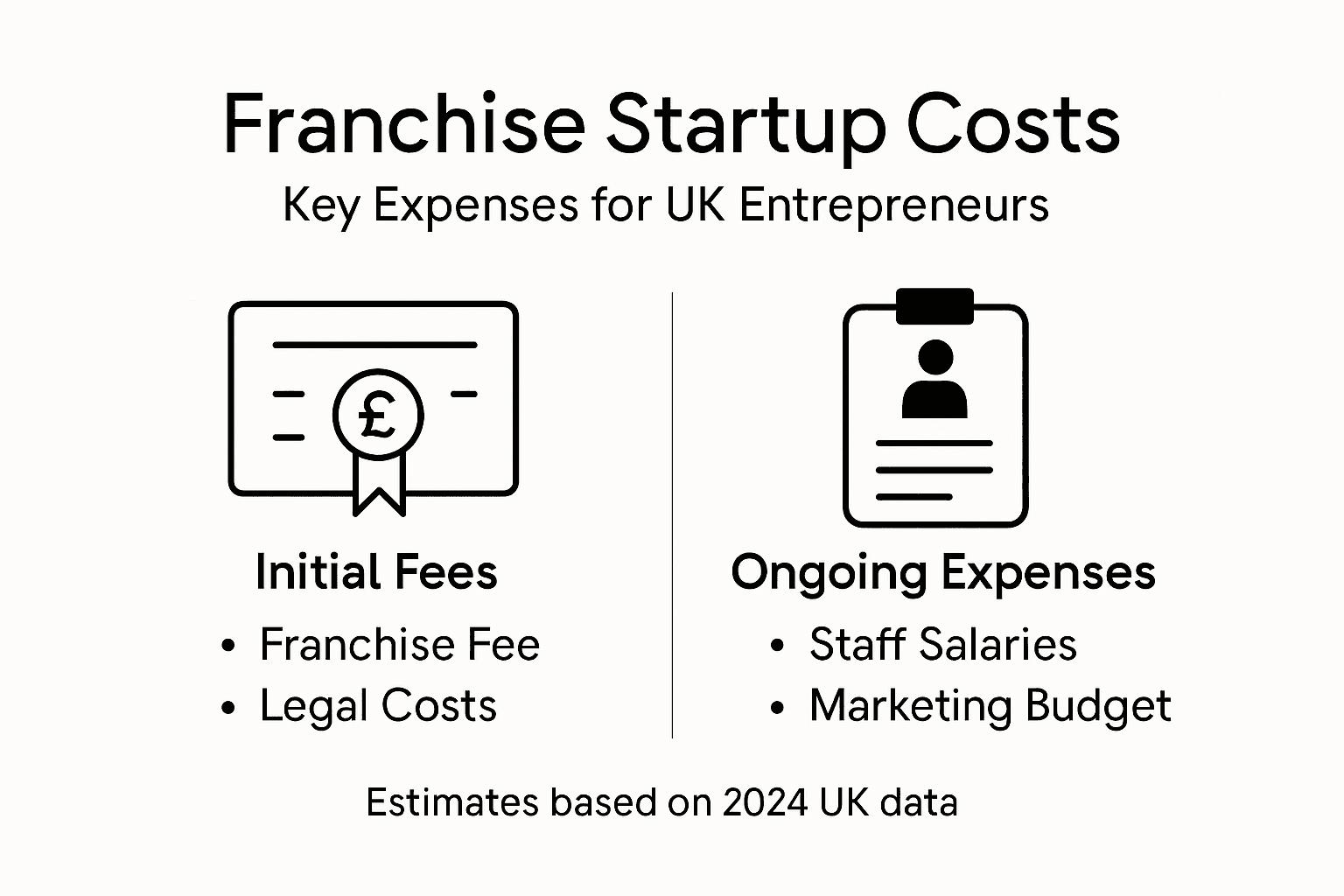
Management franchise investments in the UK require substantial financial preparation and strategic planning. Assessing franchise investment levels involves understanding the comprehensive financial landscape beyond initial franchise fees.
Typical initial investment components include:
- Initial franchise fee
- Equipment and technology purchases
- Premises leasing or fit-out costs
- Working capital reserves
- Marketing and branding expenditure
- Legal and professional consultation fees
- Insurance and compliance preparations
- Initial inventory investments
Financial risks and ongoing cost considerations encompass:
- Monthly royalty payments
- Mandatory marketing contribution fees
- Operational overhead expenses
- Potential market fluctuation impacts
- Salary and recruitment costs
- Technology and system upgrade investments
- Compliance and regulatory expenses
- Contingency fund requirements
Management franchise investments demand comprehensive financial planning and robust risk mitigation strategies.
Investment ranges vary significantly across different sectors, with initial investments typically spanning from £50,000 to over £250,000 depending on the franchise type, brand reputation, and operational complexity. Entrepreneurs must conduct thorough due diligence to understand the complete financial commitment.
Successful franchisees develop detailed financial models that account for potential variations in revenue, unexpected expenses, and market dynamics. Understanding the nuanced financial obligations is crucial for long-term sustainability and profitability.
Here is a summary of the key financial considerations when investing in a management franchise:
| Financial Factor | Description | Business Impact |
|---|---|---|
| Initial Investment Range | £50,000 to £250,000+ | Determines entry requirements |
| Ongoing Royalties & Fees | Regular payments to franchisor | Impacts profit margins |
| Working Capital Requirement | Funding for operations and contingencies | Ensures business stability |
| Sector-Specific Costs | Expenses unique to chosen industry | Influences total investment |
| Financial Modelling | Project risk and revenue scenarios | Guides long-term planning |
Pro tip: Create a comprehensive three-year financial projection that includes worst-case scenario budgeting, ensuring you have sufficient capital reserves to navigate potential economic uncertainties.
Choosing Between Management And Owner-Operator
UK entrepreneurs face a critical decision when selecting their franchise model, with each approach offering distinct advantages and challenges. Management franchise differences reveal nuanced operational strategies that can significantly impact business success.
Key differences between management and owner-operator franchise models include:
- Operational involvement level
- Time commitment requirements
- Scalability potential
- Investment capital needed
- Personal skill set demands
- Income generation strategies
- Risk management approaches
- Flexibility of business structure
Owner-Operator Franchise Characteristics:
- Direct service delivery
- Hands-on daily operations
- Personal income tied to direct work
- Lower initial investment
- Limited scalability potential
- Requires technical service skills
- Maximum personal control
- Smaller operational footprint
Management Franchise Characteristics:
- Strategic business oversight
- Staff and process management
- Potential multi-unit ownership
- Higher initial investment
- More significant scalability
- Requires leadership and management skills
- Delegated service delivery
- Broader operational potential
Management franchises transform entrepreneurs from service providers into strategic business leaders.
Successful franchise selection depends on aligning personal strengths, financial capabilities, and long-term entrepreneurial objectives. Owner-operators excel in scenarios requiring specialised skills and direct client interactions, while management franchisees thrive in roles emphasising strategic growth and team leadership.
Entrepreneurs must critically evaluate their professional background, financial resources, and personal temperament when choosing between these distinct franchise models. Understanding individual motivations and capabilities is crucial for making an informed investment decision.
Pro tip: Conduct comprehensive self-assessment and speak with existing franchisees in both models to gain realistic insights into daily operational demands and potential career satisfaction.
Explore Your Path to Success with Management Franchises in the UK
Navigating the complexities of a management franchise requires careful consideration of leadership skills, financial investment, and strategic business planning. If you are ready to embrace the challenge of driving growth while managing teams and operational processes, finding the right franchise opportunity tailored to your goals is essential. Our platform addresses common concerns highlighted in the article such as identifying scalable business models, evaluating sector-specific demands, and understanding financial commitments.
Discover a wide range of management franchise options by browsing through our extensive franchise directory. Use detailed filters to match your investment level, preferred industry, and lifestyle aspirations. Start your journey today and transform from a hopeful entrepreneur into a confident management franchise owner supported by recognised brands and proven systems. Visit Franchise Local now to explore opportunities that align with your ambitions and take control of your business future.
Frequently Asked Questions
What is a management franchise model?
A management franchise model is a business structure where entrepreneurs manage a local operation under an established brand rather than delivering the core service themselves. They focus on team management, operational processes, and strategic growth.
What are the key responsibilities of a management franchise owner?
Key responsibilities include strategic business planning, team recruitment, financial management, performance monitoring, compliance with brand standards, and implementing sales and marketing strategies.
What are the main types of management franchises available?
The main types of management franchises include Regional Operator Franchises, Multi-Unit Management Franchises, Master Franchise Territories, and Area Development Franchises, each offering varying levels of operational control and investment requirements.
What initial costs should I expect when investing in a management franchise?
Typical initial investment costs include the franchise fee, equipment and technology purchases, leasing costs for premises, working capital, and marketing expenses, which can range from £50,000 to over £250,000 depending on the franchise type and sector.