

Starting a business often means facing uncertainty, but franchise investment offers a structured path to ownership with built-in support. For aspiring franchisees in the United Kingdom, choosing a proven model can mean reduced risk and brand association from day one. This article guides you through the core concepts, financial realities, and practical benefits of franchising, focusing on how UK regulatory frameworks and established governance help protect your investment and support a smoother startup journey.
Franchise Investment Explained: Core Concepts
Franchise investment represents a strategic business opportunity where entrepreneurs acquire the rights to operate a proven business model under an established brand’s umbrella. Unlike traditional startups, franchising offers a structured pathway to business ownership with reduced initial risk and comprehensive support systems.
The core mechanics of franchise investment involve several critical components:
- Licensing Rights: Purchasing the legal permission to operate a specific business model
- Brand Association: Gaining immediate market recognition through an established brand
- Operational Framework: Accessing pre-developed business systems and procedures
- Training Support: Receiving comprehensive initial and ongoing business education
Understanding franchise arrangements requires recognizing the unique contractual relationships between franchisors and franchisees. UK regulatory frameworks for franchise partnerships establish clear guidelines about registration, accountability, and operational standards.
The investment landscape for franchises varies significantly, with opportunities ranging from low-cost home-based businesses to substantial high-street retail operations. Potential franchisees must carefully evaluate their financial capacity, personal skills, and long-term business objectives before selecting an appropriate franchise opportunity.
Successful franchise investments typically involve:
- Thorough market research
- Comprehensive financial planning
- Alignment with personal entrepreneurial goals
- Understanding specific franchise agreement terms
Financial Considerations play a pivotal role in franchise selection. Initial investment costs can range from £10,000 for small service-based franchises to over £500,000 for established retail brands. Prospective franchisees must account for:
- Franchise fee
- Initial equipment and inventory costs
- Working capital
- Marketing and setup expenses
- Ongoing royalty payments
Franchise investment is not just about purchasing a business, but acquiring a proven operational blueprint with built-in support mechanisms.
Pro tip: Always conduct extensive due diligence, including speaking with existing franchisees and reviewing the franchisor’s financial performance before committing to any investment.
Popular Franchise Models and Entry Levels
The United Kingdom offers a diverse landscape of franchise models catering to entrepreneurs with varying investment capacities and business aspirations. Franchise model types range from low-cost service-based opportunities to substantial retail and hospitality investments, providing multiple entry points for potential business owners.
Key franchise model categories include:
- Service-Based Franchises: Low initial investment, typically £10,000-£25,000
- Home-based operations
- Mobile service businesses
- Consulting and professional services
- Retail Franchises: Medium to high investment, £50,000-£500,000
- High street retail stores
- Speciality shops
- Convenience stores
- Food and Hospitality Franchises: Varied investment levels
- Quick service restaurants
- Cafés and coffee shops
- Catering businesses
Understanding entry levels is crucial for potential franchisees. Investment requirements typically encompass:
- Initial franchise fee
- Equipment and inventory costs
- Working capital
- Premises setup (if applicable)
- Marketing and initial operating expenses
Financial Considerations play a significant role in franchise model selection. Entrepreneurs must carefully assess their financial capacity and align it with appropriate franchise opportunities.
Successful franchise investment requires matching personal skills, financial resources, and business goals with the right franchise model.
Small to medium-sized franchises often provide the most accessible entry points for UK entrepreneurs. These models typically require lower initial investments and offer more flexible operational structures compared to larger corporate franchises.

Below is a summary comparing franchise models by investment and operational style:
| Franchise Model Type | Typical Investment Range | Operational Structure | Example Business Type |
|---|---|---|---|
| Home-based Service | £10,000–£25,000 | Flexible/remote | Cleaning, tutoring |
| High Street Retail | £50,000–£500,000 | Fixed premises | Clothing stores, chemists |
| Food & Hospitality | £30,000–£500,000+ | On-site service | Cafés, fast food chains |
| Mobile Services | £15,000–£40,000 | Mobile/field-based | Vehicle repair, pet care |
| Consulting & Professional | £10,000–£50,000 | Client-site/office | Recruitment, consulting |
Franchise models can be categorised by operational complexity:
- Single-Unit Franchises: Basic model for first-time franchisees
- Multi-Unit Franchises: Advanced model for experienced entrepreneurs
- Area Development Franchises: Regional expansion opportunities
Pro tip: Conduct comprehensive due diligence by speaking with existing franchisees and thoroughly reviewing the franchisor’s financial performance and support infrastructure before committing to any investment.
Benefits of Choosing a Franchise Over Startups
Choosing a franchise over a traditional startup represents a strategic approach to business ownership that significantly reduces entrepreneurial risk. Franchise governance frameworks demonstrate how established models provide comprehensive support structures that independent startups typically lack.
Key advantages of franchising compared to traditional startups include:
- Proven Business Model: Validated operational strategies
- Brand Recognition: Immediate market credibility
- Structured Training: Comprehensive skills development
- Operational Support: Ongoing guidance from experienced franchisor
- Lower Risk Profile: Statistically higher success rates
Financial considerations reveal substantial differences between franchise and startup investments:
- Predictable Initial Investment
- Clearer Revenue Projections
- Established Marketing Frameworks
- Reduced Market Entry Barriers
- Faster Path to Profitability
Operational Advantages distinguish franchises from independent startups. Entrepreneurs benefit from:
- Standardised business processes
- Pre-developed marketing materials
- Negotiated supplier contracts
- Comprehensive operational manuals
- National/regional brand recognition
Franchises transform entrepreneurial uncertainty into a structured, supportive business environment.
The startup landscape demands complete strategic development from scratch, whereas franchises offer a pre-engineered path to business success. This approach allows entrepreneurs to leverage established systems, reducing the typical learning curve and financial risks associated with independent ventures.
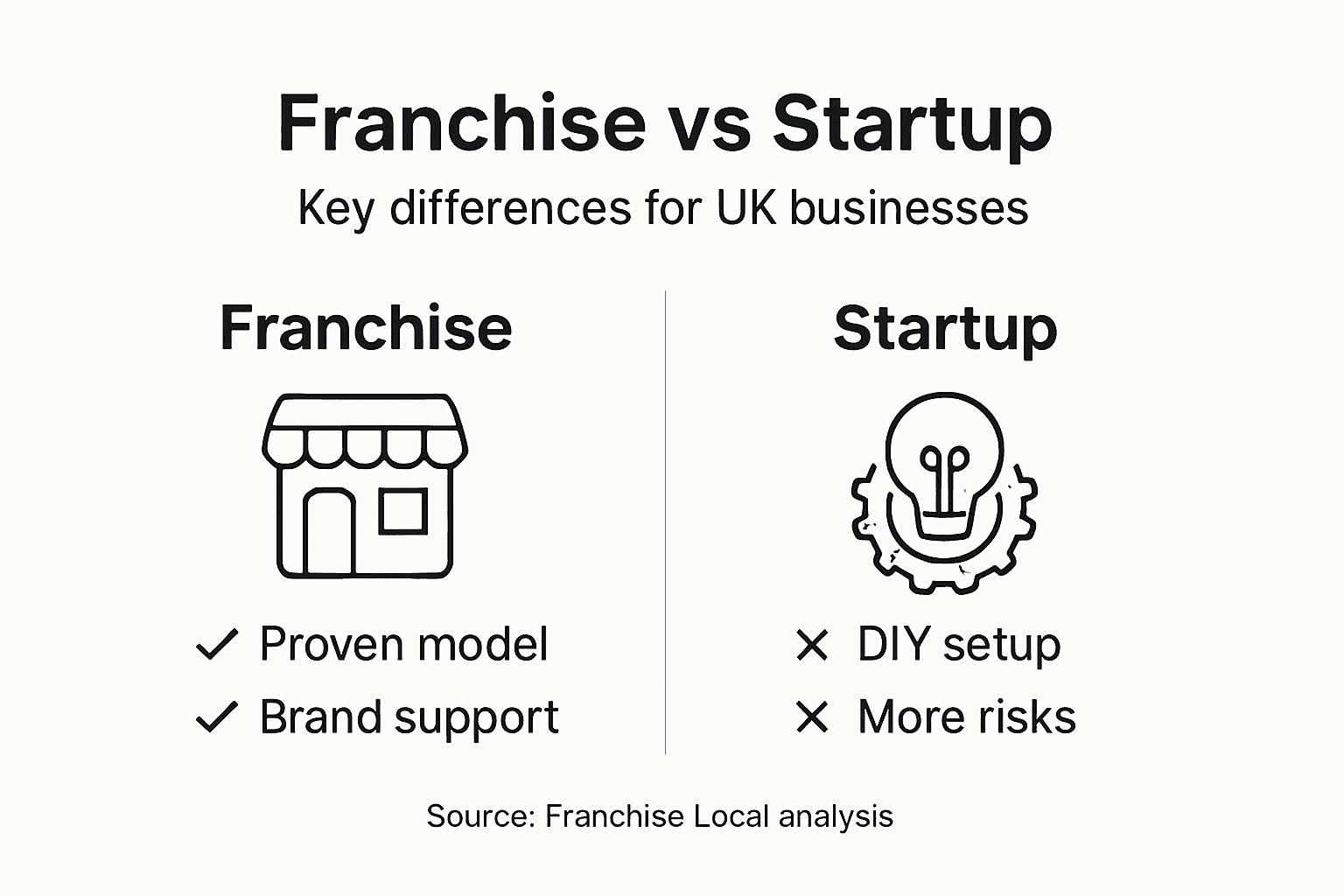
The table below highlights key differences between franchises and independent startups:
| Aspect | Franchise Approach | Independent Startup Approach |
|---|---|---|
| Business Blueprint | Provided by franchisor | Must design from scratch |
| Brand Recognition | Immediate due to established brand | Requires years to build |
| Support Structure | Extensive ongoing franchisor support | Must develop own networks |
| Risk Profile | Lower, based on proven systems | Higher, untested market entry |
| Scalability | Accessible through multi-unit options | Depends on own resources and growth |
Support Networks represent another critical franchise advantage:
- Peer franchisee communities
- Ongoing franchisor training
- Centralised corporate support
- Shared best practices
- Regular performance benchmarking
Pro tip: Conduct thorough due diligence by comparing multiple franchise opportunities, examining their historical performance, and speaking directly with existing franchisees before making your investment decision.
Key Franchisee Rights and Responsibilities
Franchise agreements establish a complex legal framework defining the precise boundaries of franchisee engagement and operational autonomy. Economic and legal aspects create a structured environment where rights and responsibilities are carefully balanced to protect both franchisor and franchisee interests.
Core Franchisee Rights include:
- Access to established business model
- Use of trademark and brand identity
- Comprehensive initial and ongoing training
- Territorial protection
- Support from central franchisor team
Franchisee responsibilities represent the reciprocal obligations ensuring system integrity:
- Maintaining brand standards
- Adhering to operational procedures
- Reporting financial performance
- Participating in mandatory training
- Protecting intellectual property
Contractual Obligations demand strict compliance with predefined performance metrics and operational guidelines. These expectations ensure consistency across franchise networks and protect the overarching brand reputation.
Franchise success depends on mutual respect and adherence to agreed contractual frameworks.
Financial Responsibilities encompass multiple critical dimensions:
- Payment of initial franchise fee
- Regular royalty contributions
- Marketing fund investments
- Accurate financial reporting
- Reinvestment in local business operations
Legal protections embedded within franchise agreements provide franchisees significant safeguards against arbitrary actions by franchisors, including:
- Clear performance evaluation criteria
- Transparent termination processes
- Dispute resolution mechanisms
- Right to sell or transfer franchise
- Protection of territorial exclusivity
Pro tip: Always engage an independent franchise legal specialist to thoroughly review your franchise agreement, ensuring you fully understand your rights and obligations before signing.
Risk Factors, Legalities, and Financial Realities
Franchise investments involve intricate legal and financial considerations that require comprehensive understanding and strategic planning. Economic and legal risks form the critical foundation for potential franchise entrepreneurs navigating complex business landscapes.
Primary Risk Categories in franchise investments include:
- Financial Investment Risks
- Operational Performance Risks
- Legal Compliance Risks
- Market Competition Risks
- Regulatory Environment Risks
Financial realities demand meticulous assessment across multiple dimensions:
- Initial Capital Requirements
- Ongoing Operational Costs
- Revenue Projection Uncertainties
- Potential Return on Investment
- Long-term Financial Sustainability
Legal Considerations encompass critical elements franchisees must thoroughly evaluate:
- Comprehensive franchise agreement terms
- Intellectual property protections
- Territorial exclusivity clauses
- Performance measurement standards
- Termination and exit strategy provisions
Successful franchise investment requires balancing calculated risk with strategic opportunity.
Financial Risk Mitigation strategies include:
- Thorough due diligence
- Professional legal consultation
- Detailed financial forecasting
- Maintaining adequate reserve funds
- Diversifying revenue streams
Regulatory frameworks in the UK mandate specific protections for franchisees, ensuring transparency and reducing potential exploitation. These legal safeguards help create a more secure investment environment by establishing clear operational boundaries and expectations.
Potential Financial Challenges franchisees might encounter:
- Initial investment recovery period
- Unexpected operational expenses
- Market fluctuation impacts
- Potential franchisor policy changes
- Economic downturn vulnerabilities
Pro tip: Develop a comprehensive risk management strategy by consulting multiple franchise professionals, reviewing historical performance data, and maintaining a flexible financial approach.
Discover Your Ideal Franchise Opportunity and Secure Success Today
Investing in a franchise can be a rewarding way to build a business backed by a proven system, established brand recognition, and ongoing support. However, choosing the right franchise demands careful consideration of financial commitment, operational style, and personal goals as highlighted by the article’s insights into franchise investment dynamics and risk management. Common challenges like evaluating investment levels, understanding franchisee rights, and mitigating financial risks often leave potential franchisees seeking trustworthy guidance.
At Franchise Local, we understand these challenges and provide a comprehensive UK franchise directory tailored to your needs. Whether you are looking for home-based, high street, or mobile franchises, our platform allows you to explore opportunities filtered by investment size, industry sector, and lifestyle compatibility. With detailed listings designed to support your due diligence and help align your entrepreneurial aspirations with the perfect franchise, there has never been a better time to act.
Ready to transform uncertainty into confidence and find a franchise opportunity that matches your ambitions? Start exploring the wide variety of options now at https://franchiselocal.co.uk and take the first step toward securing your successful business future. Visit Franchise Local to begin your journey with trusted resources and expert support at your fingertips.
Frequently Asked Questions
What are the benefits of investing in a franchise compared to starting a traditional business?
Investing in a franchise offers several advantages, such as a proven business model, immediate brand recognition, structured training, operational support, and a lower risk profile due to established systems and practices.
How much money do I need to invest in a franchise?
Initial investment costs for franchises range significantly, starting from approximately £10,000 for low-cost service-based models and exceeding £500,000 for established retail brands. It’s crucial to assess your financial capacity before selecting a franchise opportunity.
What support can I expect as a franchisee?
Franchisees typically receive comprehensive initial and ongoing training, access to standardised business systems, marketing support, and ongoing assistance from the franchisor to ensure consistency and success within the franchise network.
What are the key rights and responsibilities of a franchisee?
Franchisees have the right to use the franchisor’s established business model, trademark, and receive training and support. Their responsibilities include maintaining brand standards, adhering to operational procedures, reporting financial performance, and participating in mandatory training.