

Contrary to popular belief, franchises fail far less often than independent start-ups. In fact, UK franchise units achieve profitability rates exceeding 90%, with failure rates below 1%. Yet many prospective franchisees underestimate the complexity of responsibilities involved in running a franchise successfully. Understanding your legal, financial, operational, and brand compliance duties is essential to making informed decisions and thriving within this structured business model. This guide unpacks everything you need to know about franchisee responsibilities in the UK.
Key Takeaways
| Point | Details |
|---|---|
| Legal contractual duties | Your obligations arise from the franchise agreement which defines rights restrictions and duties. |
| Ongoing financial obligations | Royalties, marketing contributions and working capital are ongoing costs beyond the initial fee. |
| Due diligence matters | Thorough due diligence and understanding the franchise agreement improve success odds. |
| Marketing and territory management | Effective local marketing and active management of your territory are essential franchisee duties. |
Understanding the core legal and contractual responsibilities
Your obligations as a franchisee stem primarily from the franchise agreement, a legally binding contract detailing your rights, restrictions, and duties. This document governs everything from operational procedures to territorial boundaries and termination conditions. Unlike independent businesses, franchisees operate within a predefined framework designed to maintain brand consistency and protect both parties’ interests.
UK franchises generate £19.1bn in turnover annually, supported by structured agreements that clarify franchisee rights and obligations. These contracts typically outline intellectual property usage, operational standards, reporting requirements, and renewal terms. Understanding every clause is non-negotiable before committing.
Key legal responsibilities include:
- Registering your business entity correctly with Companies House and HMRC
- Maintaining appropriate insurance coverage as specified in your agreement
- Complying with industry-specific regulations relevant to your franchise sector
- Adhering to data protection laws when handling customer information
- Meeting health and safety standards for your premises and operations
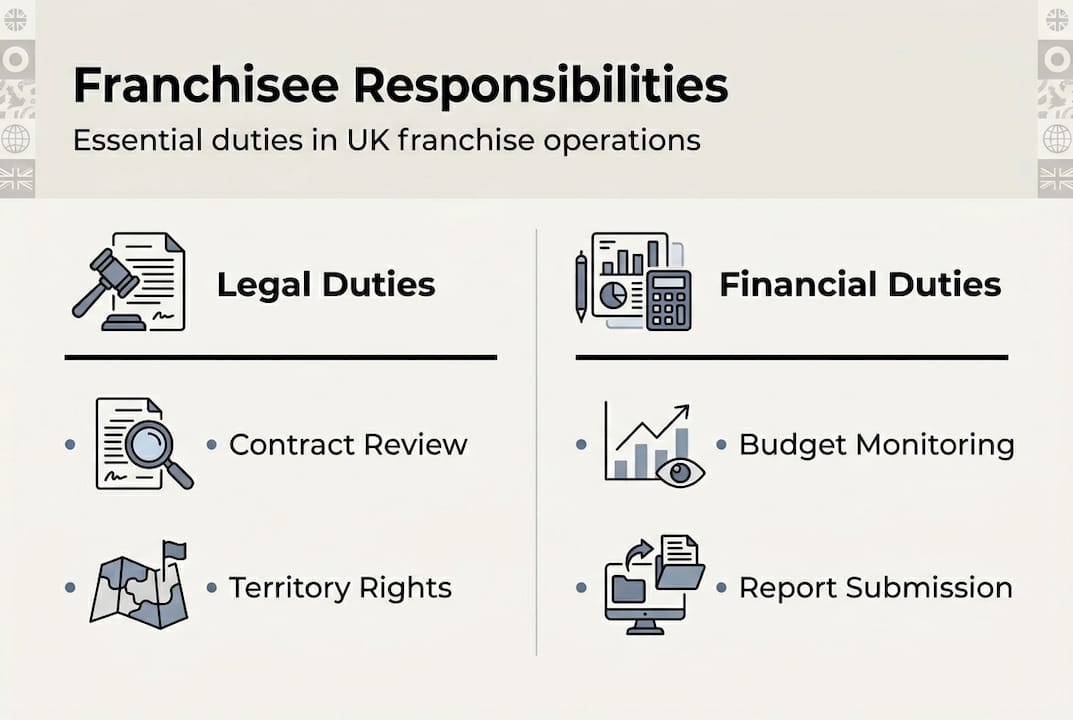
Your franchise agreement will specify territorial rights, protecting your exclusive market area from competing franchisees within the same brand. This exclusivity is valuable, but it comes with obligations to actively develop and service your territory. Understanding franchise legal requirements in the UK ensures you avoid costly mistakes and maintain a positive relationship with your franchisor.
Most agreements include non-compete clauses preventing you from operating similar businesses during and after your franchise term. These restrictions protect the franchisor’s intellectual property and market position. Review franchise agreement essentials to grasp the full scope of contractual obligations.
Pro Tip: Always engage a solicitor experienced in franchise law to review your agreement before signing. They’ll identify potential liabilities, clarify ambiguous terms, and ensure you understand exit conditions and renewal rights.
Financial responsibilities and managing franchise performance
Financial obligations extend far beyond the initial franchise fee. You’ll face ongoing costs including royalties, marketing contributions, operational expenses, and working capital requirements. Understanding these commitments is essential for maintaining profitability and avoiding cash flow crises.
Typical financial responsibilities include:
- Initial franchise fees ranging from £10,000 to £50,000 depending on the brand and sector
- Ongoing royalty payments, usually 5% to 10% of gross revenue
- Marketing fund contributions, typically 1% to 3% of turnover
- Equipment, inventory, and premises costs as specified by the franchisor
- Working capital to cover operational expenses during initial trading periods
UK franchise units average £400,000 in turnover with profitability rates between 89% and 93%, demonstrating the financial viability of the model when properly managed. However, these figures vary significantly by sector, location, and franchisee execution.
| Financial Metric | Typical Range | Notes |
|---|---|---|
| Initial investment | £15,000 to £250,000 | Varies by sector and brand positioning |
| Ongoing royalties | 5% to 10% of revenue | Paid monthly or quarterly to franchisor |
| Marketing contribution | 1% to 3% of revenue | Funds national and regional campaigns |
| Average unit turnover | £250,000 to £600,000 | Depends on territory size and market maturity |
| Profitability rate | 89% to 93% | UK franchise units report strong margins |
Careful budgeting and monthly financial monitoring are critical. Most franchise agreements require regular financial reporting to the franchisor, providing transparency and enabling early intervention if performance issues arise. This reporting obligation isn’t just bureaucratic, it’s a valuable tool for identifying trends and adjusting operations proactively.

Cash flow management presents the biggest challenge for new franchisees. Initial trading periods often involve lower revenues while you build customer awareness and refine operations. Maintaining adequate working capital prevents the stress of meeting obligations during slower months. Understanding why franchises succeed in the UK reveals how financial discipline separates thriving units from struggling ones.
Pro Tip: Review your management accounts monthly, comparing actual performance against projections. This habit helps you spot trends early, adjust marketing spend, and discuss concerns with your franchisor before problems escalate.
Operational and brand compliance responsibilities
Maintaining consistent brand standards across all franchise locations is fundamental to the model’s success. Your operational responsibilities ensure customers receive the same quality experience regardless of which franchise unit they visit. This consistency builds brand equity and customer loyalty, benefiting all franchisees within the network.
Key operational duties include:
- Following the operations manual precisely for all procedures and service delivery
- Recruiting, training, and managing staff according to franchisor standards
- Maintaining quality control through regular audits and mystery shopping programmes
- Implementing approved suppliers and inventory systems
- Updating systems and procedures as the franchisor evolves the brand
Your daily operational checklist typically includes:
- Opening procedures ensuring premises meet brand presentation standards
- Staff briefings covering daily targets, promotions, and service priorities
- Inventory checks confirming stock levels and placing orders as needed
- Customer service monitoring to maintain quality and resolve issues promptly
- Financial reconciliation recording sales, expenses, and banking deposits
- Closing procedures securing premises and preparing for the next trading day
Local marketing efforts require franchisee initiative within franchisor guidelines. While national campaigns are funded through your marketing contributions, you’re responsible for driving local awareness through community engagement, targeted promotions, and relationship building. Understanding franchise marketing in the UK helps you maximise your territory’s potential.
Common operational pitfalls to avoid:
- Deviating from approved procedures to save time or cut costs
- Neglecting staff training, leading to inconsistent service quality
- Ignoring customer feedback or failing to escalate complaints appropriately
- Delaying equipment maintenance, risking breakdowns during peak periods
- Missing franchisor communications about system updates or policy changes
Critics highlight concerns about unregulated franchise disclosures in the UK, noting the absence of mandatory pre-sale disclosure documents. However, diligent franchisees who thoroughly research brands, request detailed information, and maintain strong compliance records consistently achieve better outcomes. Your commitment to operational excellence directly impacts your success and the broader network’s reputation.
Navigating relationships and territory rights
Your relationship with the franchisor and fellow franchisees significantly influences your business success. These connections provide support, shared learning, and collaborative problem solving. However, they also require diplomacy, clear communication, and mutual respect to function effectively.
Territory rights protect your exclusive market area, preventing the franchisor from placing competing units too close to your location. This exclusivity safeguards your investment by ensuring you can develop your customer base without internal competition. Understanding your territorial boundaries and any conditions attached to them is essential during the due diligence phase.
| Aspect | Franchise Model | Independent Business |
|---|---|---|
| Territory protection | Exclusive rights within defined boundaries | No protection from competitors |
| Brand competition | Controlled by franchisor placement strategy | Face all market competitors equally |
| Market support | Franchisor provides marketing and operational guidance | Entirely self-reliant for all support |
| Relationship structure | Defined by franchise agreement with clear obligations | No formal relationships with competitors |
| Dispute resolution | Contractual processes and franchisor mediation | Legal action or negotiation only |
UK franchise success correlates with clear territory rights and strong franchisee-franchisor collaboration. Territories are typically defined by postcode districts, population density, or geographical boundaries. Some agreements include performance clauses requiring minimum sales targets to maintain exclusivity.
Essential relationship management skills include:
- Communicating concerns promptly and professionally with your franchisor
- Participating actively in franchisee forums and regional meetings
- Sharing best practices with fellow franchisees to elevate network performance
- Respecting territorial boundaries and referring customers appropriately
- Seeking mediation early when conflicts arise rather than letting issues escalate
Good relationships with neighbouring franchisees create opportunities for knowledge sharing and mutual support. Many successful franchisees credit peer networks for helping them navigate challenges, refine operations, and maintain motivation during difficult periods.
Due diligence before signing your agreement should include speaking with existing franchisees about their experiences with the franchisor’s support, communication style, and conflict resolution approach. Understanding franchise due diligence in the UK helps you assess whether a brand’s culture aligns with your expectations and working style.
Your franchisor relationship is fundamentally a partnership. They succeed when you succeed, creating aligned incentives for mutual support. However, this partnership requires you to honour your obligations, communicate transparently, and approach challenges collaboratively. Reviewing franchise territory rights ensures you understand how to protect and maximise your market opportunity.
Discover franchise opportunities and expert support
Now that you understand the full scope of franchisee responsibilities, you’re better positioned to evaluate opportunities and make informed decisions. FranchiseLocal provides comprehensive resources to support your journey from research to successful franchise ownership.
Explore our ultimate guide to franchising for detailed insights into the UK franchise landscape, investment requirements, and sector-specific considerations. This resource covers everything from initial research through to ongoing operational success, helping you navigate each stage confidently.
Access trusted franchise service providers including solicitors, accountants, and business advisors who specialise in franchising. Professional guidance during the due diligence and setup phases protects your investment and ensures compliance with all legal and financial obligations.
Browse the UK’s largest franchise directory to discover opportunities matching your budget, lifestyle preferences, and industry interests. Our comprehensive listings provide detailed information about investment levels, support packages, and franchisee testimonials, enabling you to shortlist brands for further investigation.
What are the key responsibilities of a franchisee?
What are the primary duties of a UK franchisee?
Franchisees must fulfil legal, financial, operational, and brand compliance obligations as specified in their franchise agreement. This includes paying fees and royalties, maintaining brand standards, managing staff, executing local marketing, and reporting financial performance regularly to the franchisor.
What initial steps ensure compliance after joining a franchise?
Register your business entity with Companies House and HMRC, secure required insurance coverage, complete franchisor training programmes, and establish accounting systems for financial reporting. Review your operations manual thoroughly and implement all procedures exactly as specified before commencing trading.
What challenges do new franchisees typically face?
Cash flow management during initial trading periods, recruiting and training quality staff, building local market awareness, and adapting to franchisor systems after independent work experience. Maintaining consistent brand standards while developing your unique market approach also requires careful balance.
Why is ongoing franchisor communication important?
Regular communication ensures you receive system updates, marketing support, and operational guidance promptly. It enables early intervention when performance issues arise and provides access to the franchisor’s expertise. Strong communication also builds trust and facilitates conflict resolution when needed.
What resources support UK franchisee compliance and growth?
Franchisor training programmes, operations manuals, franchisee forums, industry associations like the British Franchise Association, and professional advisors specialising in franchise law and accounting. Many franchisors also provide ongoing field support, regional meetings, and annual conferences for knowledge sharing and network building.