

Choosing a franchise represents one of the most significant financial and lifestyle decisions you’ll make. With over 900 franchise systems operating across the UK in 2026, the sheer volume of options can feel overwhelming. Many aspiring franchisees rush into partnerships that don’t align with their financial capacity or personal goals, leading to costly mistakes and regret. This guide provides a structured, practical framework to help you evaluate franchise opportunities systematically, avoid common pitfalls, and select a franchise that genuinely fits your investment budget, lifestyle preferences, and long-term business ambitions.
Key takeaways
| Point | Details |
|---|---|
| Self-assessment comes first | Clarify your financial capacity, time availability, and industry preferences before exploring franchise options |
| Thorough research prevents mistakes | Evaluate franchise disclosure documents, speak with existing franchisees, and review contract terms carefully |
| Due diligence reduces risk | Investigate franchisor track records, support systems, and financial performance data systematically |
| Professional advice matters | Consult solicitors and financial advisors to assess agreements and investment viability |
| Post-selection preparation is critical | Understand training programmes, support structures, and operational requirements after signing |
Understanding what you need before choosing a franchise
Before exploring franchise listings, you need absolute clarity on your personal constraints and preferences. Start by assessing your available capital honestly. Calculate not just the initial franchise fee, but working capital for at least six months of operations. Understanding personal financial and lifestyle requirements prevents you from pursuing opportunities beyond your means.
Consider your time commitment realistically. Will you operate the franchise full-time or manage it part-time? Some franchises demand 60-hour weeks during launch phases, whilst others offer flexible, home-based models. Your lifestyle goals matter as much as profit potential. Define whether you want customer-facing work, behind-the-scenes operations, or a management role overseeing staff.

List your must-have features before you start searching. Do you need comprehensive training? Exclusive territory rights? Marketing support? Flexibility for family commitments? Writing these down creates a filter for evaluating opportunities. When you explore options through a franchise investment guide, you’ll quickly identify mismatches.
Pro Tip: Consult a qualified financial advisor before committing to any franchise investment. They’ll help you assess whether the financial commitment aligns with your overall wealth strategy and risk tolerance, potentially saving you from overextending yourself.
Your industry preferences shape your daily experience dramatically. Passion for the sector isn’t essential, but genuine interest helps sustain motivation during challenging periods. Consider sectors experiencing growth in 2026, such as health and wellness, eco-friendly services, or digital solutions. Creating a detailed franchise business plan forces you to articulate these preferences clearly.
- Determine your maximum investment amount including contingency funds
- Assess how many hours weekly you can dedicate to operations
- Identify industries that align with your interests and skills
- List non-negotiable franchise features you require
How to research and evaluate franchise opportunities effectively
Systematic research separates successful franchise selections from regrettable ones. Begin with trusted directories that aggregate UK franchise opportunities by investment level, industry, and operational model. These platforms let you compare dozens of options efficiently, filtering by your predetermined criteria.
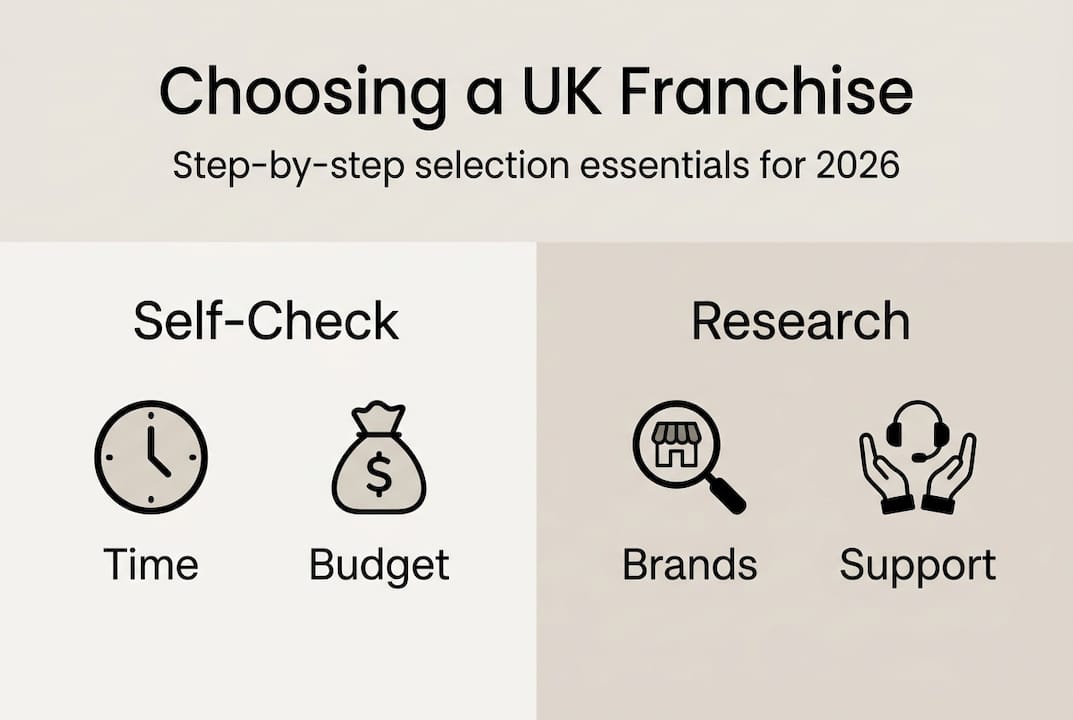
Once you’ve shortlisted potential franchises, request their franchise disclosure documents. These legal documents reveal critical information about fees, obligations, and franchisor performance. Thorough market research and vetting exposes red flags before you invest. Review financial performance representations carefully, noting average revenues, profit margins, and failure rates.
Speaking with existing franchisees provides invaluable ground-truth insights. Ask franchisors for contact details of current operators, then conduct structured interviews. Question them about actual earnings versus projections, quality of franchisor support, hidden costs, and whether they’d invest again. Their candid feedback often reveals realities that marketing materials gloss over.
Analyse the franchise agreement with forensic attention. Understand initial fees, ongoing royalties, marketing fund contributions, and renewal terms. Check territorial exclusivity provisions and restrictions on business operations. These contractual details govern your relationship for years, so clarity now prevents disputes later.
Evaluate the franchisor’s support infrastructure thoroughly. Quality franchisors provide comprehensive initial training covering operations, marketing, and compliance. Ongoing support should include field visits, helplines, updated marketing materials, and technology platforms. When you research franchise opportunities, prioritise systems with proven support records.
- Use reputable franchise directories to identify opportunities matching your criteria
- Request and review franchise disclosure documents for financial transparency
- Interview at least three current franchisees about their experiences
- Analyse franchise fees, royalties, and contract terms with professional help
- Assess training quality, ongoing support, and franchisor responsiveness
| Evaluation Criterion | Why It Matters | What to Check |
|---|---|---|
| Initial investment | Determines affordability and cash flow needs | Total costs including fees, equipment, premises, working capital |
| Ongoing fees | Affects long-term profitability | Royalty percentages, marketing fund contributions, technology fees |
| Territory rights | Protects your market and revenue potential | Exclusivity terms, protected radius, expansion opportunities |
| Training programme | Impacts operational competence and confidence | Duration, comprehensiveness, ongoing education availability |
| Franchisor track record | Indicates system stability and support quality | Years operating, franchisee retention rates, litigation history |
| Support systems | Determines success likelihood | Field support frequency, helpline access, marketing assistance |
Pro Tip: Always engage a solicitor experienced in franchise law to review the franchise agreement before signing. Their expertise identifies problematic clauses and negotiation opportunities that protect your interests, typically saving far more than their fees cost.
Investigate the franchisor’s reputation beyond their marketing materials. Check online reviews, industry forums, and regulatory bodies for complaints or concerns. Explore various franchise industries to understand sector-specific challenges and opportunities that might affect your chosen franchise.
Avoiding common mistakes when choosing a franchise
Many franchise failures stem from preventable errors during selection. The most damaging mistake is inadequate due diligence. Rushing through research because you’re excited about an opportunity leads to overlooking critical warning signs. Many franchisees fail due to inadequate due diligence and unrealistic profit expectations.
Underestimating total costs ranks as another frequent error. Franchisees focus on the initial franchise fee whilst ignoring working capital requirements, equipment costs, premises expenses, and ongoing royalties. This miscalculation creates cash flow crises within months of launch. Always budget for at least six months of operating expenses beyond startup costs.
Ignoring lifestyle fit causes profound dissatisfaction even when the franchise proves profitable. A high-street retail franchise demanding 70-hour weeks doesn’t suit someone prioritising family time, regardless of earning potential. Conversely, a home-based franchise might frustrate someone craving customer interaction and team management. Honest self-assessment about your preferred working style prevents these mismatches.
Overlooking the franchisor’s track record represents dangerous optimism. New franchise systems lack proven operational models and support infrastructure. Established franchisors with high franchisee retention rates and years of profitability demonstrate system viability. Research their litigation history, franchisee turnover, and financial stability before committing.
Due diligence isn’t optional paperwork, it’s your primary defence against costly franchise mistakes. Every hour spent researching, interviewing franchisees, and reviewing contracts potentially saves thousands of pounds and years of regret.
Common mistakes include:
- Skipping comprehensive financial analysis and relying on best-case projections
- Failing to speak with multiple current franchisees about real experiences
- Ignoring red flags such as high franchisee turnover or frequent litigation
- Underestimating time commitment required for successful operations
- Choosing based on passion alone without assessing market viability
- Neglecting to have solicitors review franchise agreements thoroughly
- Overlooking compatibility between franchise model and personal strengths
Another critical error involves misunderstanding the franchise relationship. Franchising isn’t buying a guaranteed income; it’s purchasing a proven business system that still requires your effort, skill, and adaptation to local markets. Franchisees who expect passive income inevitably face disappointment. Success demands active engagement with the franchisor’s systems whilst applying entrepreneurial initiative within established guidelines.
Some aspiring franchisees chase trends without assessing sustainability. A franchise concept popular today might saturate quickly or fade as consumer preferences shift. Evaluate whether the franchise addresses enduring customer needs or capitalises on temporary fads. Understanding franchise investment mistakes helps you avoid following crowds into oversaturated markets.
What to expect after choosing your franchise
Once you’ve selected your franchise and completed due diligence, the post-selection phase begins. Understanding these steps reduces anxiety and helps you prepare effectively for launch. The process typically unfolds systematically, though timelines vary by franchise type and complexity.
First, you’ll finalise the franchise agreement and complete financial transactions. This involves signing contracts, paying the initial franchise fee, and potentially securing financing if needed. Your solicitor should review all documents one final time before you commit legally. Ensure you understand every obligation, restriction, and right detailed in the agreement.
Next comes comprehensive training provided by the franchisor. Quality franchises offer structured programmes covering operations, customer service, marketing, financial management, and compliance requirements. Training duration ranges from days for simple models to weeks for complex operations. Engage fully with this education; it forms your operational foundation.
Setting up your franchise follows training. This phase includes securing premises (if required), purchasing equipment, implementing technology systems, and recruiting staff. The franchisor typically provides specifications and approved supplier lists. Following their guidelines ensures brand consistency and leverages their negotiated supplier relationships. Post-selection support varies by franchise but proves essential for smooth launches.
Developing your localised business plan represents another critical step. Whilst the franchise provides the overall business model, you must adapt it to your specific market conditions, competitive landscape, and customer demographics. Your plan should detail marketing strategies, financial projections, operational schedules, and growth milestones. Resources for creating a comprehensive franchise business plan help structure this document effectively.
Engaging with ongoing franchisor support systems ensures you maximise available resources. Most franchises provide field representatives who visit regularly, helplines for operational questions, marketing materials and campaigns, and franchisee networks for peer support. Actively participating in these systems accelerates your learning curve and helps troubleshoot challenges quickly.
- Complete franchise agreement signing and pay initial fees
- Attend and fully engage with franchisor training programmes
- Secure premises, purchase equipment, and set up operational systems
- Recruit and train staff according to franchise standards
- Develop your localised business plan reflecting market realities
- Launch operations with franchisor support and guidance
Your first months require particular attention to following franchise systems precisely whilst gathering data about your local market. Track financial performance against projections, noting variances and their causes. Maintain regular communication with your franchisor, reporting challenges and requesting support when needed. Building strong relationships with fellow franchisees provides peer learning opportunities and emotional support during the demanding startup phase.
Many franchisors offer access to franchise service providers including accountants, marketing specialists, and technology vendors familiar with the franchise system. Leveraging these pre-vetted partners saves time and ensures compatibility with franchise requirements. Their experience with the franchise model helps you avoid common startup pitfalls.
Explore franchise opportunities with FranchiseLocal.co.uk
Applying the guidance in this article becomes easier with the right resources. FranchiseLocal.co.uk serves as the UK’s comprehensive franchise directory, connecting aspiring franchisees with opportunities across all investment levels and industries. The platform’s detailed search functionality lets you filter franchises by price point, operational model, and sector, streamlining your research process significantly.
Beyond listings, FranchiseLocal.co.uk provides expert guides covering every aspect of franchise ownership. Whether you need the ultimate guide to franchising or want to explore the extensive UK franchise directory, the platform offers educational resources that complement your due diligence. Access to verified franchise service providers including solicitors, accountants, and consultants ensures you receive professional support throughout your franchise journey. Start exploring today to find franchise opportunities that align with your goals and transform your business ambitions into reality.
Frequently asked questions
How much does it typically cost to buy a franchise in the UK?
Franchise costs vary widely, ranging from under £5,000 for simple home-based models to over £500,000 for established high-street brands. Most popular franchises fall between £20,000 and £100,000 for initial investment. Remember to budget working capital beyond the franchise fee, typically requiring an additional 20-50% of the initial investment to cover operating expenses during your startup phase. Total investment requirements depend on the sector, operational model, premises needs, and franchisor requirements.
What should you look for in a franchise agreement?
Franchise agreements must clearly outline fees, territorial rights, contract duration, renewal terms, and termination conditions. Pay particular attention to ongoing royalty structures, marketing fund contributions, and restrictions on business operations or exit strategies. Ensure the agreement specifies franchisor obligations for training, support, and system updates. Check provisions regarding territory exclusivity, competition restrictions, and your rights if the franchisor fails to deliver promised support. Always have an experienced franchise solicitor review the agreement essentials before signing to identify problematic clauses and negotiation opportunities.
How much support can franchisees expect from franchisors?
Good franchisors provide comprehensive training, ongoing operational guidance, marketing support, and access to established supply chains. Initial training typically covers all aspects of running the franchise, whilst ongoing support includes field representative visits, helplines, updated marketing materials, and franchisee networks. Support quality varies significantly between franchisors, so investigate thoroughly during due diligence. Interview current franchisees specifically about support responsiveness, training quality, and whether the franchisor delivers on support promises. Quality franchise training and support often distinguishes successful franchise systems from mediocre ones.
How long does it take to become profitable with a franchise?
Profitability timelines vary dramatically by franchise type, location, and your execution quality. Simple service franchises might reach profitability within three to six months, whilst retail or food franchises often require 12-24 months. Your business plan should project conservative timelines based on franchisor data and existing franchisee experiences. Factors affecting profitability include initial investment size, ongoing costs, local market conditions, competition levels, and your adherence to franchise systems. Always maintain sufficient working capital to sustain operations until you reach consistent profitability, typically requiring reserves for at least six months of expenses.
Can you negotiate franchise terms and fees?
Negotiation possibilities depend on the franchisor and market conditions. Established franchises with high demand rarely negotiate fees or core terms, maintaining consistency across their franchise network. Newer franchises or those expanding into new territories sometimes offer incentives or flexible terms to attract quality franchisees. Focus negotiation efforts on territory size, renewal terms, or exit provisions rather than core fees. Some franchisors offer veterans, multi-unit investors, or conversion candidates preferential terms. Always approach negotiations professionally with solicitor guidance, understanding that demanding excessive changes might signal misalignment between you and the franchise system.