

Choosing a franchise in 2026 is not as simple as picking a popular brand and signing on the dotted line. Many aspiring franchisees make costly mistakes because they assess opportunities based on gut instinct rather than solid market intelligence. The UK franchise sector is shifting rapidly, shaped by new technology, changing consumer habits, and evolving regulation. Understanding which trends are genuinely driving growth, and which are simply noise, is what separates a savvy investor from one who learns expensive lessons. This guide cuts through the confusion and gives you a clear, grounded view of where UK franchising is heading.
Key Takeaways
| Point | Details |
|---|---|
| UK franchise resilience | Franchising remains robust in the UK, outperforming many independent business launches. |
| Sector opportunities | High-growth sectors include services, technology, and B2B, offering prime opportunities for new investors. |
| Tech and marketing | Embracing digital trends and innovative marketing is crucial for future franchise success. |
| Risk management | Smart investors blend trend awareness with diligent risk assessment before choosing a franchise. |
The evolving landscape of franchising in the UK
The UK franchise industry has proven remarkably durable. Even against a backdrop of rising costs, cautious consumer spending, and post-pandemic adjustment, franchising continues to hold its ground as a credible route into business ownership. That resilience is not accidental. It comes from a structural advantage: franchisees operate under a tested system with established branding, training support, and a replicable model.
Franchise survival rates consistently outperform independent business launches, offering aspiring investors a compelling reason to look closely at the sector before considering a start-up from scratch. This advantage becomes especially significant during periods of economic uncertainty, when consumers and business owners alike favour familiarity and trust.
Three primary forces are reshaping the UK franchise landscape right now:
- Regulatory shifts: Changes to employment law, minimum wage thresholds, and data protection requirements are altering operating costs and compliance obligations for franchisees across all sectors.
- Consumer behaviour: Customers increasingly expect personalised, digital-first experiences. Franchises that cannot deliver this are losing ground to more agile competitors.
- Technology adoption: From AI-driven scheduling tools to cloud-based customer relationship management systems, technology is becoming a non-negotiable part of franchise operations.
Here is a snapshot of how the UK franchise industry has been performing:
| Metric | Figure |
|---|---|
| Franchised businesses in the UK | Over 48,000 |
| People employed in franchising | Approximately 700,000 |
| Annual franchise industry turnover | £17.2 billion |
| Franchisees reporting profitability | Over 90% |
These figures underscore why franchise investment continues to attract serious attention. To understand the foundational principles driving these numbers, it helps to revisit UK franchising fundamentals before exploring specific trends.
With the landscape shifting, it is essential to understand the specific trends guiding the future.
Key sectors shaping franchise opportunities
Not all franchise sectors are growing at the same pace. Some industries are experiencing a surge of new entrants and consumer demand, while others are maturing or facing structural headwinds. Knowing which sectors offer genuine momentum in 2026 is a critical part of your investment decision.
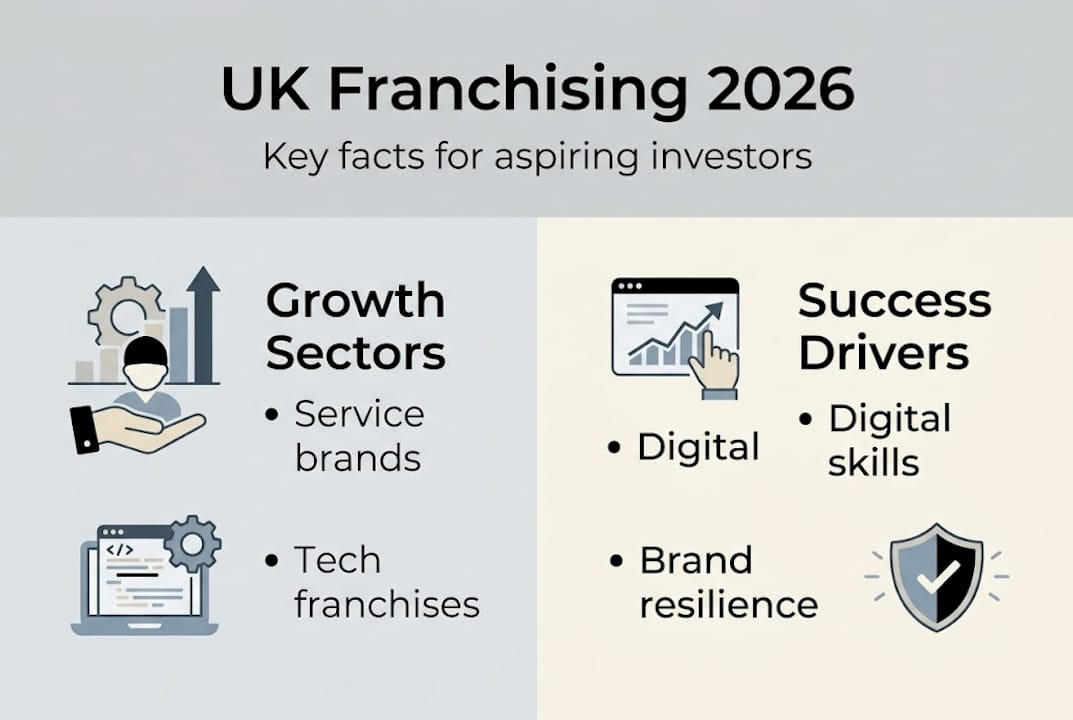
Top service franchises and technology-centred brands are among the top UK performers this year, reflecting broader shifts in how both businesses and consumers spend their money.

Here is how key sectors compare:
| Sector | Growth outlook | New entrants in 2025/26 |
|---|---|---|
| Health and wellness | Strong | High |
| B2B services | Strong | Moderate |
| Technology and IT support | Very strong | High |
| Food and beverage | Moderate | Moderate |
| Education and tutoring | Moderate | Low |
| Senior care | Very strong | High |
The sectors showing the most dynamic opportunity for aspiring franchisees in 2026 are:
- Senior care and homecare: An ageing UK population is creating sustained demand that shows no sign of slowing.
- Technology and IT support: Small and medium-sized businesses need specialist tech support, and franchise models are filling that gap efficiently.
- Health and wellness: From fitness studios to specialist therapy services, consumer health awareness is fuelling consistent growth.
- B2B professional services: Accounting, HR, and consultancy franchises are benefiting from businesses outsourcing non-core functions.
- Sustainable and eco-focused services: Green cleaning, energy efficiency, and eco-friendly home improvement franchises are attracting a new generation of conscious consumers.
You can explore opportunities across all of these through the franchise industry list or browse latest franchise opportunities updated regularly on the directory.
Pro Tip: To spot an emerging sector before it goes mainstream, watch for a rising number of independent businesses in that space. When independents begin clustering around a need, franchise brands usually follow within 12 to 24 months.
Knowing the key drivers, let us look at how technology and consumer expectations are reshaping what it takes to succeed.
Technology, marketing, and consumer engagement trends
Digital transformation is no longer a future concern for franchisees. It is a present-day operational requirement. Customers research, compare, and contact businesses almost entirely through digital channels before making a purchasing decision. If your franchise cannot meet them there, you are already at a disadvantage.
Successful UK franchises are doubling down on data-driven marketing and customer experience innovation as their primary growth levers. This is not simply about having a website. It means using customer data intelligently, automating follow-up communications, and delivering a seamless experience from first click to purchase.
The technologies making the biggest difference for UK franchisees right now include:
- Artificial intelligence: AI tools are being used for scheduling, customer service chatbots, and predictive sales analytics.
- Mobile-first platforms: Franchise brands that prioritise mobile app functionality are seeing stronger customer retention and repeat purchasing.
- CRM systems: Customer relationship management software enables franchisees to track leads, manage customer journeys, and measure marketing performance with precision.
- Automated marketing tools: Email sequences, social media scheduling, and targeted digital advertising are now standard in competitive franchise systems.
“Franchise brands that invest in customer experience technology are not just keeping pace with competitors, they are building the loyalty infrastructure that protects revenue during downturns.”
Pro Tip: Not every technology investment delivers equal returns. Before spending on new tools, ask your franchisor which platform integrations are already included in your franchise package. Many franchisees duplicate costs by purchasing software their franchisor already provides centrally.
Understanding marketing impact for franchises is increasingly essential when evaluating any prospective franchise system. A brand with a weak digital marketing infrastructure will cost you more time and money to compensate for, regardless of how strong the product or service is.
With sector trends in focus, the next step is understanding how to translate this knowledge into a sound investment strategy.
Navigating risks and maximising opportunity as an investor
Being aware of trends is only useful if you can act on them intelligently. The real skill for aspiring franchisees is converting market intelligence into a disciplined investment process. Due diligence and market trend awareness directly shape whether your franchise investment succeeds or underperforms.
Here are the core steps for incorporating trend insights into your franchise selection process:
- Align sector trends with your skills: If you have a background in healthcare, a health and wellness franchise gives you a natural advantage. Match market opportunity with personal strengths.
- Review the franchise disclosure document through a trend lens: Look for evidence that the franchisor is investing in technology, marketing support, and sector-relevant training.
- Speak to existing franchisees: Ask them directly whether they feel the brand is keeping pace with industry changes. Their answers tell you more than any brochure.
- Assess the brand’s innovation pipeline: Franchisors that actively develop new products, services, or tools are better positioned for long-term growth.
- Consider the franchisor’s regulatory readiness: Brands that have already adapted to current UK employment and data compliance requirements carry less risk.
Pro Tip: Use comparative trend data to benchmark the growth trajectory of a sector against a franchise’s own reported performance. If the sector is growing rapidly but the franchise is flat, that gap deserves a direct question to the franchisor.
Common risks you should weigh carefully include:
- Market saturation: Popular sectors attract high numbers of new franchises, which can erode your territory’s potential if not carefully assessed.
- Rapid regulatory change: New legislation can shift cost structures quickly, particularly in care, food safety, and environmental compliance.
- Capital misallocation: Investing in a franchise without sufficient working capital for the first trading year is one of the most common reasons for early failure.
- Poor sector fit: Entering a high-growth sector that does not match your lifestyle or skills often leads to disengagement and underperformance.
Exploring profitable franchises in the UK with a critical eye, rather than simply gravitating toward the most talked-about brands, is how experienced investors approach this decision.
A fresh perspective: What most guides miss about franchising trends
Most trend guides encourage you to chase momentum. Find the fastest-growing sector, identify the newest technology, and invest before the crowd arrives. That logic is seductive, but it has a flaw. Trends are, by nature, temporary. Business models are not.
What we consistently see at Franchise Local is that the investors who perform best over a five to ten year horizon are not necessarily those who picked the hottest sector in year one. They are the ones who chose a franchise with strong operational support, a franchisor who genuinely invests in franchisee success, and a model that suits their own working style and values.
Trends inform your shortlist. They should never replace the fundamentals of due diligence, personal fit, and financial planning. A wellness franchise riding a consumer trend is only a good investment if the underlying why UK franchises succeed factors are firmly in place: proven systems, robust training, and a track record of franchisee profitability.
Chase trends intelligently. But never let trend excitement override the boring, essential work of scrutinising a franchise properly.
Explore franchise opportunities and support
Having a sharp eye on trends is crucial; finding the right support makes all the difference when it comes to converting insight into action. At Franchise Local, we provide aspiring franchisees with the tools and information needed to make confident, well-informed investment decisions. Whether you are just starting to explore your options or are ready to compare specific opportunities, our complete guide to franchising gives you a structured foundation to build from. For browsing live opportunities across every sector and budget, the largest franchise directory in the UK is your most practical next step.

Frequently asked questions
Which franchise sectors are forecast to grow fastest in 2026?
Service and technology franchises are expected to see the most robust growth in the UK, alongside senior care and B2B professional services.
How do new technology trends impact franchise investment?
Emerging technology increases operational efficiency and customer engagement, but investors should assess what the franchisor provides centrally before spending on additional tools. UK franchises investing in data-driven marketing are showing stronger customer retention.
What risks should I consider when investing in a franchise in 2026?
Market saturation, rapid regulatory shifts, and capital misallocation are the most common pitfalls. Strong due diligence and market awareness are your best protection.
Are franchises a safer investment than starting my own business?
Generally, yes. UK franchises show higher survival rates than independent start-ups over several years, largely due to proven systems and ongoing franchisor support.