

Franchise investments in the UK offer 93% profitability rates, yet many aspiring franchisees remain uncertain about what truly drives financial success. Common misconceptions suggest franchises carry high risk, but data reveals established franchise units consistently outperform independent startups. Understanding the specific factors that influence profitability, from operational costs to franchisor support, empowers you to identify viable opportunities and make informed investment decisions. This guide examines the critical elements affecting franchise profitability, helping you assess which opportunities align with your financial goals and risk tolerance.
Key Takeaways
| Point | Details |
|---|---|
| Key profitability metrics | Understanding turnover and profit margins helps compare opportunities and set realistic earnings expectations. |
| Brand maturity matters | Established brands tend to generate higher turnover and provide more predictable cash flow. |
| Due diligence essential | A thorough review of financial disclosures and franchisor support helps identify viable opportunities and manage risk. |
| Fees and financing impact profits | Initial franchise fees, ongoing royalties and required working capital shape the true profit potential. |
Understanding franchise profitability: key metrics and data
Profitability in franchising extends beyond simple revenue figures. Turnover represents total sales before expenses, whilst profit margin reflects the percentage remaining after costs. For UK franchisees, understanding these metrics provides clarity on realistic earnings expectations and helps differentiate franchise opportunities from independent business ventures.
Brand maturity significantly influences profitability outcomes. 60% of franchise units achieve turnover above £250k, with established brands showing consistently stronger performance. Franchises benefit from proven business models, reducing the trial and error phase that drains independent startup resources. This advantage translates directly into faster break-even periods and more predictable cash flow patterns.
Failure rates tell a compelling story. Franchise businesses fail at substantially lower rates than independent startups, largely due to established operational frameworks and ongoing franchisor guidance. This resilience stems from tested systems, bulk purchasing power, and collective marketing strength that individual operators cannot replicate.
Cash flow sustainability determines long-term viability. Consistent revenue streams allow franchisees to manage working capital, reinvest in growth, and weather economic fluctuations. Understanding the franchise profit model explained reveals how different franchise structures generate and distribute profits across the system.
Essential financial metrics for assessment:
- Average unit turnover across existing franchise locations
- Net profit margins after all fees and operational costs
- Time to break-even for typical franchise units
- Cash flow patterns throughout seasonal cycles
- Return on investment timelines for established franchisees
Pro Tip: Request Item 19 disclosure documents from franchisors operating in markets with mandatory financial disclosure. Whilst UK law doesn’t require this, many international franchisors provide earnings claims that offer valuable profitability insights.
Evaluating these metrics requires comparing multiple franchise opportunities within your target investment range. Look beyond headline turnover figures to understand net profitability after accounting for all franchise fees, operational expenses, and working capital requirements. The strongest franchise opportunities demonstrate consistent profitability across multiple units, not just flagship locations.
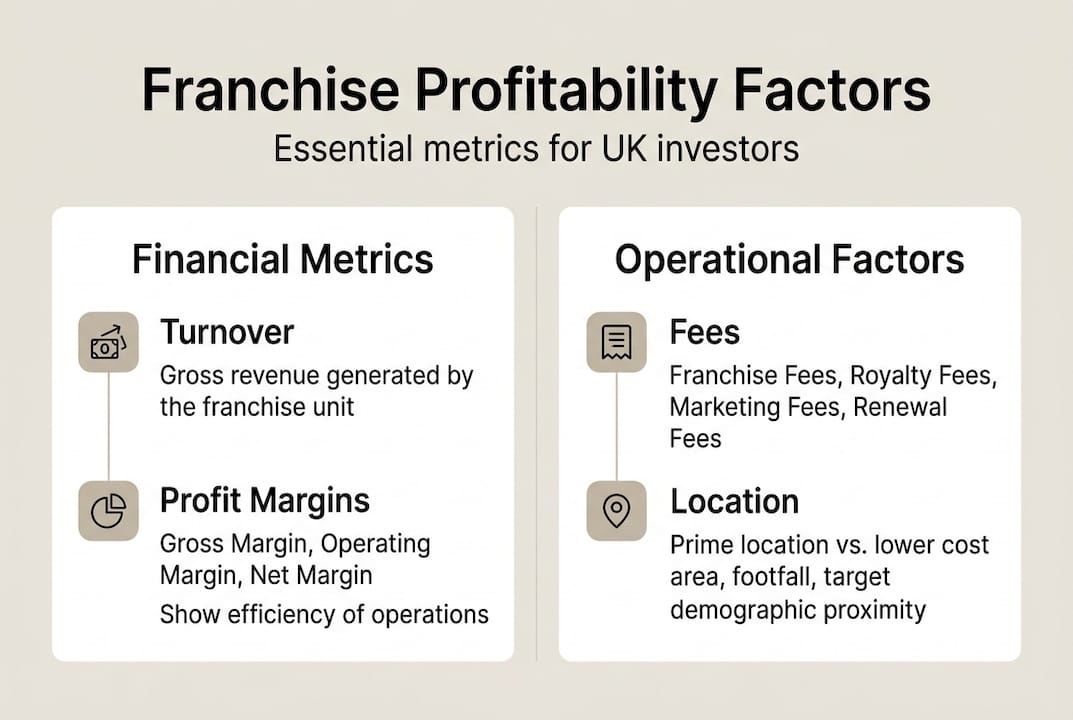
Primary factors affecting franchise profitability
Franchise fees represent your first major profitability consideration. Initial franchise fees typically range from £10,000 to £50,000, covering training, territory rights, and system access. Ongoing royalty fees, usually 5% to 10% of gross revenue, directly impact your bottom line throughout the franchise relationship. Understanding the franchise fee explained UK helps you calculate true profit potential after these mandatory payments.

Operational efficiency separates highly profitable franchises from marginal performers. Established franchise systems provide standardised procedures that reduce waste, optimise labour costs, and streamline supply chains. These efficiencies compound over time, creating significant cost advantages compared to independent operators who must develop systems through expensive trial and error.
Location and market demand fundamentally determine revenue potential. A franchise in a high-footfall area with strong demographic alignment will naturally generate higher turnover than an identical franchise in a poor location. Territory exclusivity provisions protect your investment by preventing franchisor-created competition within your designated area.
Marketing support amplifies individual franchisee efforts through collective brand building. National advertising campaigns, digital marketing infrastructure, and brand recognition drive customer acquisition at lower costs than independent marketing efforts. The essential franchise marketing strategies demonstrate how coordinated marketing programmes boost franchisee profitability across entire systems.
Critical profitability factors to evaluate:
- Total fee structure including initial, ongoing, and hidden costs
- Operational systems that reduce labour and material expenses
- Territory demographics and competitive landscape analysis
- Marketing fund contributions and campaign effectiveness
- Training quality and ongoing operational support programmes
“Lower costs and effective franchisee support correlate with higher profit margins, making these factors essential evaluation criteria for prospective franchisees.”
Franchisee training and operational guidance directly impact your ability to execute the franchise system effectively. Comprehensive initial training programmes reduce startup mistakes, whilst ongoing support helps you adapt to market changes and operational challenges. Franchisors investing heavily in franchisee success typically see stronger system-wide profitability metrics.
Pro Tip: Interview existing franchisees about actual profitability versus franchisor projections. Ask specific questions about unexpected costs, seasonal variations, and how long it took to reach projected profit levels. These conversations reveal realistic profitability timelines and potential challenges.
The interaction between these factors determines overall profitability outcomes. A franchise with higher fees but superior operational systems and marketing support may deliver better net profits than a lower-fee franchise lacking robust support infrastructure. Evaluate the complete package rather than focusing solely on individual cost components.
Comparing franchise models and their profitability potential
Franchise models vary significantly in investment requirements, operational complexity, and profit potential. Single-unit franchises represent the most common entry point, where you operate one location under the franchise system. Multi-unit franchises involve owning several locations, creating economies of scale but requiring substantial capital and management capability. Master franchises grant territorial development rights, allowing you to sub-franchise to others whilst operating your own units.
Single-unit franchises typically require £25,000 to £150,000 in total investment, depending on the sector and brand. Profit potential ranges from £30,000 to £100,000 annually once established, with owner-operators often achieving higher margins through direct involvement. These franchises suit first-time franchisees seeking manageable complexity and hands-on operational control.
Multi-unit franchises demand £200,000 to £500,000 or more in capital, but offer accelerated growth potential and operational efficiencies. Successful multi-unit operators leverage centralised management, shared resources, and bulk purchasing to achieve profit margins 15% to 25% higher than single-unit equivalents. However, this model requires strong management skills and the ability to delegate effectively.
Master franchises represent the highest investment tier, often exceeding £500,000 in initial capital requirements. Profit streams include royalties from sub-franchisees plus income from company-owned units. Established franchises (5+ years) show higher profitability consistency, making mature brands particularly attractive for master franchise development.
| Franchise model | Typical investment | Annual profit potential | Management complexity | Growth timeline |
|---|---|---|---|---|
| Single-unit | £25,000-£150,000 | £30,000-£100,000 | Low to moderate | 1-2 years to profitability |
| Multi-unit | £200,000-£500,000+ | £100,000-£300,000+ | Moderate to high | 2-4 years to full deployment |
| Master franchise | £500,000+ | £200,000-£500,000+ | High | 3-5 years to mature system |
Risk profiles differ substantially across models. Single-unit franchises concentrate risk in one location but limit exposure to manageable levels. Multi-unit franchises spread risk across locations whilst increasing overall capital at stake. Master franchises carry development obligations that may require opening units on specific timelines regardless of market conditions. Understanding why select franchise model key benefits helps align your choice with personal risk tolerance and growth ambitions.
Steps to evaluate which model fits your investment profile:
- Calculate available capital including reserves for working capital and unexpected costs
- Assess your management experience and capacity to oversee multiple locations
- Evaluate market opportunity within your target territory or region
- Consider your timeline for achieving desired income levels
- Analyse your risk tolerance for capital deployment and operational complexity
- Review franchisor requirements and qualifications for each model tier
Your chosen model should align with both financial capacity and operational capability. Many successful franchisees start with single-unit operations, prove the concept, then expand into multi-unit ownership once they’ve mastered the system and built financial reserves. This progressive approach reduces risk whilst maintaining growth potential.
Practical steps to evaluate and maximise franchise profitability
Due diligence represents your most critical profitability safeguard. Thorough investigation reveals the true financial performance of franchise systems, uncovering both opportunities and potential problems before you commit capital. Due diligence and operational choices significantly influence franchise profit margins, making this research phase essential for investment success.
Financial and operational due diligence checklist:
- Review franchise disclosure documents thoroughly, noting all fees and obligations
- Analyse financial statements from at least five existing franchisees in similar markets
- Verify franchisor financial stability through company accounts and credit reports
- Evaluate territory demographics against franchise target customer profiles
- Assess competitive intensity within your proposed territory
- Interview current franchisees about actual profitability versus projections
- Consult franchise solicitors to review agreements and identify unfavourable terms
- Engage accountants to model cash flow scenarios and break-even timelines
Negotiation strategies can substantially improve your profitability outlook. Whilst franchise agreements appear standardised, many franchisors negotiate terms for qualified candidates, particularly in competitive markets or for multi-unit commitments. The franchise negotiation process guide outlines approaches for securing favourable terms without damaging the franchisor relationship.
Negotiable elements that impact profitability:
- Reduced initial franchise fees for multi-unit commitments
- Lower royalty rates during startup phase or for high-volume operators
- Extended territory boundaries providing larger customer base
- Waived or reduced marketing fund contributions initially
- Flexible payment terms for initial fees and setup costs
Cost control and revenue maximisation require ongoing attention beyond initial setup. Successful franchisees continuously optimise operations, identifying efficiency improvements and revenue opportunities within system guidelines. Monitor key performance indicators weekly, comparing your metrics against franchisor benchmarks and top-performing franchisees.
Leveraging franchisor resources maximises your support investment. Attend all training sessions, participate in franchisee advisory councils, and utilise field support consultants proactively. Understanding why franchises succeed UK reveals how top performers extract maximum value from franchise systems through active engagement and continuous improvement.
Pro Tip: Create a profitability improvement plan with quarterly targets for cost reduction and revenue growth. Track progress against these targets systematically, adjusting strategies based on results. This disciplined approach compounds small improvements into substantial profit gains over time.
Sustainable growth requires balancing reinvestment with profit extraction. Allocate profits strategically between personal income, business reinvestment, and reserves for economic downturns. Many successful franchisees reinvest 20% to 30% of profits during growth phases, building stronger businesses that generate higher long-term returns.
Discover franchise opportunities and expert support
Navigating the UK franchise landscape requires comprehensive information and expert guidance. Franchiselocal connects aspiring franchisees with detailed franchise profiles, helping you identify opportunities that match your investment criteria, lifestyle preferences, and profitability goals. Our platform aggregates hundreds of franchise opportunities across all sectors and investment levels, streamlining your research process.
Explore our ultimate guide to franchising for in-depth resources covering every aspect of franchise ownership, from initial evaluation through ongoing operations. Access our curated directory of franchise service providers including solicitors, accountants, and consultants specialising in franchise investments. Search the UK’s most comprehensive franchise directory to discover opportunities filtered by investment level, industry sector, and operational model. Whether you’re exploring your first franchise or expanding an existing portfolio, Franchiselocal provides the tools and information to make confident, profitable investment decisions.
Frequently asked questions
What are the main financial indicators to assess franchise profitability?
Focus on average unit turnover, net profit margins after all fees, and time to break-even across existing franchise locations. Request detailed financial performance data from franchisors and verify figures through conversations with current franchisees. Cash flow consistency matters more than peak revenue periods, as sustainable profitability requires steady income throughout the year.
How do franchise fees impact overall profitability?
Initial franchise fees represent one-time costs that extend your break-even timeline but don’t affect ongoing profitability. Ongoing royalty fees, typically 5% to 10% of gross revenue, directly reduce net profit margins throughout your franchise ownership. Calculate net profit after all fees rather than focusing solely on gross revenue projections when evaluating opportunities.
What operational costs should I evaluate when assessing franchise profitability?
Examine labour costs as a percentage of revenue, occupancy expenses including rent and utilities, inventory and supply costs, and marketing fund contributions. Request detailed profit and loss statements from existing franchisees showing actual cost structures. Hidden costs like equipment maintenance, insurance, and technology fees can significantly impact profitability if not identified during due diligence.
Why is franchisor support important for franchise profitability?
Comprehensive training reduces costly startup mistakes whilst ongoing operational support helps you optimise performance continuously. Marketing support provides brand recognition and customer acquisition at lower costs than independent efforts. Franchisors investing heavily in franchisee success typically demonstrate stronger system-wide profitability metrics, making support quality a critical evaluation factor.
How can I reduce risk whilst maximising franchise profit potential?
Conduct thorough due diligence including financial analysis, franchisee interviews, and professional legal and accounting review. Start with single-unit operations to learn the system before expanding. Maintain adequate working capital reserves beyond initial investment requirements. Choose established franchise brands with proven profitability track records across multiple units and market conditions.