

Starting a business from scratch carries enormous risk, and most UK entrepreneurs know it. Franchising offers a sharply different path: a proven brand, a ready-made system, and the kind of structure that dramatically reduces the chance of failure. In fact, UK franchise failure rates sit below 1% annually, compared to around 50% for new startups within five years. This guide walks you through every stage of setting up a franchise in the UK, from understanding the model to launching your unit and sustaining long-term profitability. Whether you are weighing up your options or ready to commit, here is exactly what you need to know.
Key Takeaways
| Point | Details |
|---|---|
| Lower risk than startups | UK franchises have far lower failure rates compared to independent new businesses. |
| Preparation is key | Comprehensive research and business planning are vital before committing to a franchise. |
| Stepwise legal process | Setting up a franchise involves a clear sequence of application, due diligence, and compliance steps. |
| Ongoing support matters | Continued training and operational guidance from the franchisor dramatically boost long-term success. |
Understanding the franchise model and its UK advantages
A franchise is a licensing arrangement where a franchisor grants you the right to operate under their established brand, using their systems, products, and support in exchange for a fee and ongoing royalties. You are not buying a job. You are buying a business blueprint that has already been tested and refined by someone else.
The UK franchise sector is one of the most robust in the world. With 50k+ franchise units generating £19 billion in annual turnover, and between 89% and 93% of franchisee-owned units reporting profitability, the numbers make a compelling case. Compare that with the uncertainty of independent startups, and the appeal becomes obvious.
Understanding the franchise versus startup differences helps you make a more informed decision from the start. Here is what the franchise model typically requires from you:
- Payment of an initial franchise fee (often £10,000 to £50,000+)
- Sufficient working capital for the first 6 to 12 months
- A willingness to follow established operational frameworks
- Active involvement in day-to-day management, at least initially
- Commitment to ongoing training and brand standards
| Feature | Franchise | Independent startup |
|---|---|---|
| Brand recognition | Established | Built from zero |
| Operational systems | Provided | Developed yourself |
| Annual failure rate | Under 1% | Around 50% in 5 years |
| Initial investment | Structured fee | Variable and unpredictable |
| Ongoing support | Usually included | None by default |
“Franchising in the UK is not just popular; it is one of the most reliable routes into business ownership available to aspiring entrepreneurs today.”
The key insight is this: the franchise model does not eliminate risk entirely, but it dramatically reduces the most dangerous risks faced by first-time business owners. That is a significant advantage worth understanding deeply before you proceed.
Essential preparation before starting your franchise journey
Once you are confident franchising is right for you, preparation becomes the foundation for a successful setup. Rushing into a franchise agreement without thorough groundwork is one of the most common and costly mistakes prospective franchisees make.

Start by researching the British Franchise Association (BFA). BFA membership is a meaningful quality signal, indicating that the franchisor meets specific ethical and operational standards. Not every franchise is BFA-accredited, but those that are have passed scrutiny that protects you as a prospective franchisee.
When choosing a UK franchise, consider these preparation essentials:
- Financial readiness: Know your budget before approaching franchisors. Factor in the franchise fee, fit-out costs, working capital, and legal fees.
- Local market research: Assess demand for the franchise’s product or service in your target area.
- Personal skills audit: Identify where your strengths align with the franchise requirements.
- Support network: Establish relationships with an accountant and a solicitor experienced in franchise law.
| Preparation area | Action required | Typical cost or timeframe |
|---|---|---|
| Financial assessment | Review savings and funding options | 1 to 2 weeks |
| Legal advice | Appoint a franchise solicitor | £1,000 to £5,000 |
| Market research | Analyse local demand | 2 to 4 weeks |
| Business plan | Draft projections and goals | 2 to 3 weeks |
| BFA research | Shortlist BFA-accredited brands | Ongoing |
A solid franchise business plan is not just a formality. Franchisors use it to assess your suitability, and lenders use it to evaluate funding applications. Make it detailed, realistic, and specific to your local market.
Pro Tip: Many high street banks in the UK, including NatWest and HSBC, have dedicated franchise lending teams. They are often more willing to support franchisees than independent startup applicants because of the lower risk profile associated with established franchise systems.
The franchise setup steps: From application to agreement
With preparation complete, it is time to step confidently through the UK franchise setup process, stage by stage. In 2024, there were 1,009 franchise systems and 50,421 operating units across the UK, which means you have a wide range of options at every investment level.
- Submit your application. Contact the franchisor directly and submit your business plan, personal statement, and financial evidence. Think of this as a job interview where both sides are assessing fit.
- Attend a discovery day. Most franchisors invite shortlisted candidates to a formal discovery day to meet the team, see the operation, and ask questions in person.
- Conduct due diligence. This is non-negotiable. Investigate the franchisor’s financial health, speak to existing franchisees, and review trading history. The UK franchise application process involves more verification than most people expect.
- Review the franchise agreement. Never sign without having a qualified franchise solicitor review every clause. Pay close attention to territory rights, renewal terms, and exit conditions.
- Negotiate where possible. Some terms are fixed, but the franchise negotiation process may allow flexibility on territory boundaries or fit-out timelines.
- Understand total costs. Beyond the headline fee, factor in pricing your franchise correctly to ensure your projections are accurate from day one.
- Sign and pay. Once all parties are satisfied, execute the agreement and transfer the initial franchise fee.
Pro Tip: Always request a list of current and former franchisees from the franchisor. Speaking directly with people who have lived the experience gives you insight that no brochure or website ever will.
Launching your franchise: Opening, support, and ongoing success
Once you have signed on the dotted line, the journey is just beginning. Here is how to launch successfully and keep growing from day one.
The pre-launch phase typically covers premises fit-out (if applicable), staffing, stock or inventory, local marketing, and systems setup. Your franchisor should provide a structured onboarding plan, but your energy and attention to detail during this period will define your early results.
Use this UK franchise launch checklist to ensure nothing falls through the cracks:
- Secure premises and complete all fit-out work to brand standards
- Recruit and train staff using the franchisor’s training programme
- Set up accounting, payroll, and point-of-sale systems
- Launch local marketing campaigns ahead of opening day
- Notify suppliers and establish ordering processes
- Complete all regulatory registrations, including HMRC and food safety where relevant
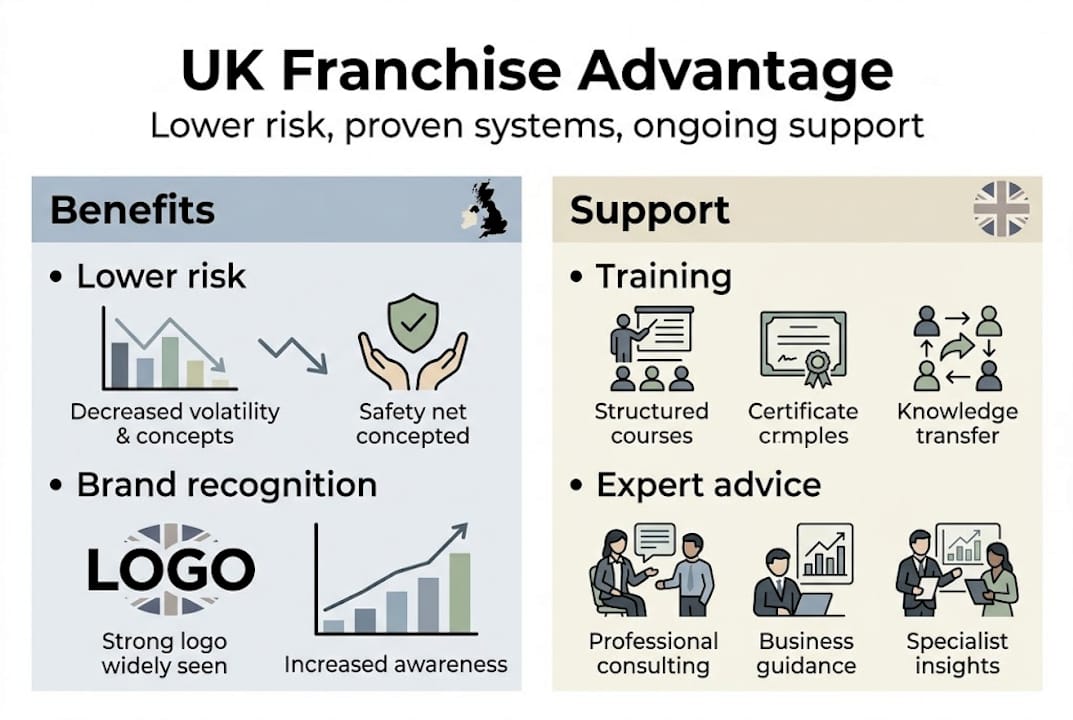
The franchise support systems provided by your franchisor are one of the most valuable assets you have. Use them fully. Regular contact with your franchise business development manager, attending network events, and tapping into peer franchisee groups all accelerate your learning curve significantly.
“Franchises in the UK average £400,000 turnover per unit and maintain a 0.5% failure rate, but these results come from franchisees who engage fully with their support networks.”
Avoiding early mistakes is just as important as executing the right moves. Review the most common errors by exploring avoiding franchise pitfalls so you enter launch with your eyes open.
Pro Tip: The first 90 days of trading are the most important for establishing customer habits and local brand awareness. Invest heavily in local marketing during this window, even if the franchisor does not require it. The return is disproportionately high early on.
Why most franchises succeed in the UK—and what others miss
Here is something the glossy franchise brochures rarely tell you: buying a franchise does not guarantee success. It dramatically improves your odds, but it does not remove the need for personal commitment, commercial awareness, and genuine hard work.
The UK’s persistently high franchise profitability and sub-1% annual failure rate are real and impressive. But they reflect the outcomes of franchisees who follow the system, use their support networks, and treat their business with the same seriousness as any independent entrepreneur would.
The BFA’s standards and UK regulatory frameworks offer important protection, but they cannot manufacture the discipline or customer focus that separates thriving franchise owners from those who struggle. The system gives you the tools. You still have to use them.
What the most successful UK franchisees share is a habit of benchmarking. They regularly compare their unit performance against network averages, ask tough questions when they fall short, and act quickly when problems appear. They also stay close to their franchise failure reasons, treating risk awareness as an ongoing discipline rather than a one-off exercise during due diligence.
Franchising works brilliantly in the UK. But the people who get the most from it treat the model as a platform, not a safety net.
Connect with the right franchise and expert support
Ready to begin your franchise journey? Exploring the right opportunities with the right information behind you makes every step more confident and more effective. At Franchise Local, we connect aspiring franchisees with hundreds of vetted UK opportunities across every budget, sector, and lifestyle preference.
Start by browsing UK franchising essentials to ground yourself in the fundamentals. When you are ready to move forward, connect with professional franchise support from solicitors, accountants, and consultants who specialise in UK franchise setups. And when it is time to explore your options, browse franchise industries to find opportunities that match your skills, capital, and ambitions. Your next step is closer than you think.
Frequently asked questions
How long does it take to set up a franchise in the UK?
Most franchise setups in the UK take between 3 to 6 months from initial inquiry to launch, depending on the brand, sector, and how quickly due diligence is completed. Complex or high-investment franchises may take longer.
What is the typical investment required for a UK franchise?
Many UK franchises require an initial investment between £5,000 and £250,000. With average unit turnover around £400,000, most franchisees see a healthy return relative to their initial outlay.
Is it safer to start a franchise than a new business?
Yes. UK franchises carry an annual failure rate below 1%, far lower than the approximately 50% failure rate for independent startups within their first five years.
Do UK franchises get ongoing support?
Most reputable UK franchises provide structured ongoing support covering training, marketing, and operations. Support systems are a core reason why UK franchise units consistently maintain high profitability over time.